
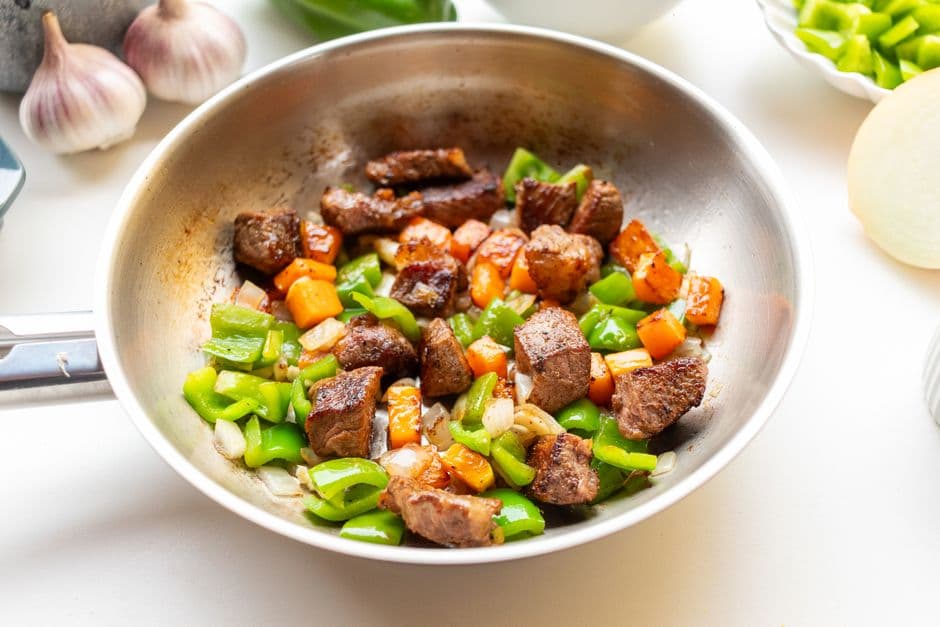
Tibs Wat (Ethiopian Spiced Sautéed Beef)
Cubes of beef seared hard with onion, garlic and the fiery red berbere spice blend, finished with niter kibbeh spiced butter — Ethiopia's beloved celebration dish for guests and Sundays.
About This Recipe
Tibs wat sits at the crossroads of Ethiopia's two great cooking categories: tibs (quickly sautéed meat) and wat (long-simmered spiced stew). The 'wat' version means tibs cooked with berbere — the fiery, complex Ethiopian spice blend of dried chillies, fenugreek, ajwain, cardamom, ginger, garlic and a dozen other warming spices — and finished with niter kibbeh, the brown-butter clarified ghee infused with kororima, cumin and basil that perfumes nearly every dish in the Ethiopian repertoire. The method is fast and showy: a cast-iron skillet or a clay tigaden is heated almost to smoking; cubes of beef tenderloin or shoulder are added with chopped red onion and seared hard for just a few minutes until the meat is brown-edged but blush-pink inside; in goes the berbere, a generous spoon of tomato paste, fresh garlic and ginger, jalapeño slices and finally a swirl of niter kibbeh. The pan hisses, the kitchen fills with the smell of toasted chilli and brown butter, and the dish is brought directly to the table — often still sizzling in the cast iron — set on a vast platter of injera, the spongy fermented teff flatbread that serves as both plate and cutlery. Diners tear off pieces of injera, scoop bundles of tibs wat into them, and eat with their right hand, chasing the heat with cold honey wine or sweet shai tea. It is the dish of Saturday gatherings, holiday meals and welcoming honoured guests across Addis Ababa, Gondar and the Ethiopian diaspora.
Ingredients
Serves 4
- 700 gbeef tenderloin or sirloin, cut into 2.5 cm cubes(shoulder works too if simmered slightly longer)
- 3 tbspniter kibbeh (Ethiopian spiced clarified butter)(or sub ghee plus pinch ground cardamom and cumin)
- 1 largered onion, halved and sliced into half-moons
- 4garlic cloves, crushed, plus 1 thumb ginger grated
- 2 tbspberbere spice blend(Ethiopian groceries or quality online brands; quality matters here)
- 1 tbsptomato paste
- 2fresh jalapeños or serranos, sliced into rings
- 2Roma tomatoes, deseeded and cut into 8 wedges each
- sea salt, fresh rosemary sprig, injera or warm flatbread to serve
Instructions
- 1
Prep the beef
Pat beef cubes very dry with paper towel — moisture is the enemy of searing. Season lightly with salt only (the berbere is salty enough later). Let sit at room temperature 15 minutes while you prep aromatics.
Cold meat from the fridge steams instead of searing; tempering is essential.
- 2
Heat the pan hard
Place a heavy cast-iron skillet over high heat until it just starts to smoke faintly — about 4 minutes. Add 1 tbsp of the niter kibbeh; it should immediately foam and brown.
- 3
Sear the beef
Add the beef cubes in a single layer and don't touch them for 60 seconds — let a hard crust form. Toss once and sear another 60 seconds. The beef should be brown on two sides and still raw inside. Lift out to a warm plate.
- 4
Sweat onion and aromatics
Reduce heat to medium. Add another tbsp niter kibbeh and the red onion. Cook 4 minutes, stirring, until softened and edged with brown. Add garlic, ginger, and the rosemary sprig and cook 60 seconds until fragrant — Ethiopian tibs almost always uses fresh rosemary, an Italian-era hangover.
- 5
Add berbere and tomato paste
Push aromatics aside, add tomato paste to a clear spot in the pan and cook 60 seconds until it darkens. Sprinkle in the berbere and stir to coat the onions — toast 30 seconds only, no more, or the berbere will burn and turn bitter.
- 6
Return the beef and finish
Return the beef cubes and any plate juices. Add the tomato wedges, jalapeño slices, and remaining tbsp of niter kibbeh. Toss everything together over medium-high heat 2–3 minutes — the tomatoes should just slacken but still hold their shape, and the beef should reach medium-rare to medium (warm pink centre). The sauce will be thick, glossy, and clinging to the meat rather than pooling.
- 7
Taste and serve sizzling
Taste for salt — adjust. The tibs should be intensely savoury, fragrant with butter and chilli, with the beef still tender. Serve immediately, ideally still in the hot cast-iron pan, set on a large platter of injera with extra injera rolls on the side for scooping.
Did you make this?
Rate it and help other cooks find the recipes that actually work.
One tap to sign in, and we'll save the rating you just picked.
Everything you need to plan your week — free
- Meal calendar
- Grocery list
- AI recipe ideas
Track what you eat
Snap your meal to log calories and macros, run fasting timers and track water in the free SnapCal app.
Pro Tips
- →
Quality berbere makes or breaks the dish — buy from an Ethiopian or Eritrean shop, never use generic 'African' supermarket spice mixes.
- →
If you can't get niter kibbeh, infuse ghee gently with cardamom pods, cumin seeds and basil leaves for 10 minutes, then strain.
- →
Don't overcook — proper tibs wat is medium-rare with crusty edges. Well-done beef becomes leathery in this method.
- →
The fresh rosemary is unexpected but essential; it's a legacy of Italian colonial-era influence in Addis Ababa.
Variations
- •
Awaze tibs — finish with awaze (berbere-honey-wine paste) instead of dry berbere for a sweeter, glossier sauce.
- •
Yebeg tibs — use lamb shoulder cubes for a richer, gamier version popular at Easter (Fasika).
- •
Doro tibs — chicken thigh chunks, marinated 30 minutes in lemon juice first to balance the berbere heat.
- •
Vegetable shiro tibs — replace beef with cubed mushrooms and add 100 g chickpea flour for a Lenten-friendly version.
Storage
Refrigerate up to 3 days; reheat hard and fast in a cast-iron pan to re-crisp the edges. Does not freeze well — the texture of the beef changes. Make fresh for the best experience.
History & Origin
Tibs is one of the oldest dishes in the Ethiopian highland repertoire, traditionally prepared to welcome guests and to mark Sundays — when fasting rules of the Ethiopian Orthodox Church paused. The 'wat' (spiced stew) treatment with berbere developed in the medieval Solomonic period when the chilli pepper, introduced via Portuguese contact in the 1500s, was incorporated into local spice traditions.
Frequently Asked Questions
How spicy is berbere?
Quite spicy but more complex than purely hot — it has cinnamon, cardamom and fenugreek balancing the chillies. Two tablespoons in this recipe gives a confident medium-hot dish. Reduce to 1 tbsp for milder palates.
Can I make niter kibbeh ahead?
Yes — it keeps refrigerated for months. Melt 250 g unsalted butter slowly with 1 tsp each cardamom, cumin, ground ginger, fenugreek, plus a sprig of basil. Skim foam, simmer 30 minutes, strain.
What cut of beef is best?
Tenderloin is most luxurious. Sirloin or top round are excellent and more economical. Shoulder works but needs an extra 8 minutes covered cooking after the sear to tenderize.
Where do I buy injera?
Most Ethiopian and Eritrean groceries sell it fresh or frozen. To make it from scratch is a multi-day fermentation project; for one meal, buy ready-made or substitute with warm pita.
Nutrition Facts
Per serving (280g / 9.9 oz) · 4 servings total
Time Summary
Have Questions?
Ask our AI cooking assistant anything about this recipe — substitutions, techniques, scaling.
Chat with AI Chef →Featured in Guides
This recipe is featured in the following curated guides:
More Ethiopian Recipes
You Might Also Like
Similar dishes from other cuisines around the world.
Browse by Ingredient
More recipes built around the same core ingredients.
Free Kitchen Tools
Calculators and converters that pair with this page — no signup needed.
Put This Into a Plan
Schedule it, shop for it, and track what you already have.
Read Next
Longer reads that go deeper on the ideas behind this dish.
Community
Join the conversation
Sign in to leave a comment and save your favourite recipes