britishlunch✨ New
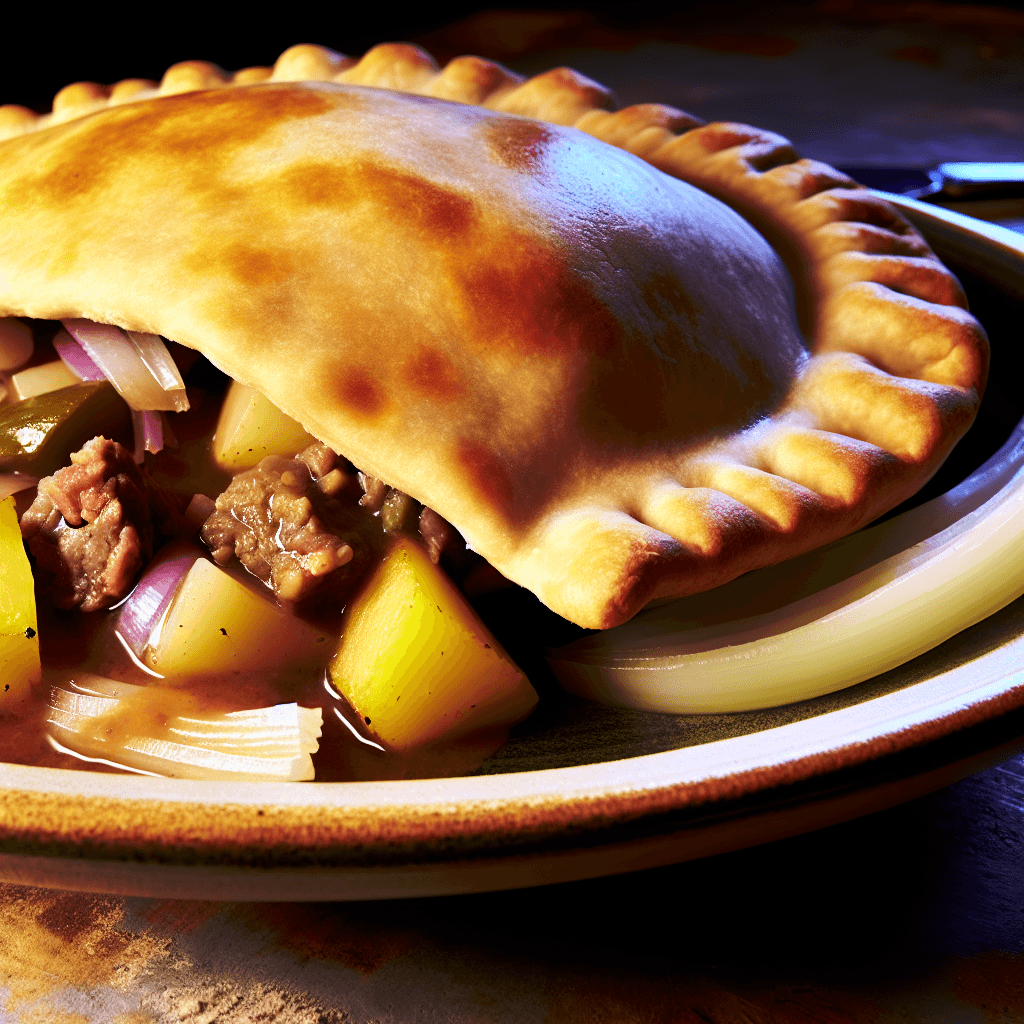
Traditional Cornish Pasty
Crimped pastry filled with beef, potato, swede, and onion.
Prep
40 min
Cook
50 min
Servings
4
Difficulty
Medium
★★★★★
4.7(2,100 ratings)#british#pastry#beef#cornish#handheld
About This Recipe
The Cornish pasty is a hand-held meal with centuries of history — a sturdy shortcrust shell crimped along one edge, enclosing a filling of diced beef skirt, potato, swede, and onion seasoned simply with salt and pepper. Baked until golden, the pastry steams the filling inside, creating its own rich gravy. It is portable perfection, born from the tin mines of Cornwall.
Ingredients
Serves 4
- 500 gstrong bread flour
- 125 gunsalted butter, cold, cubed
- 125 glard, cold, cubed
- 1 tspsalt
- 120 mlcold water
- 350 gbeef skirt, diced into 1 cm pieces
- 200 gpotato, peeled, diced small
- 150 gswede (rutabaga), peeled, diced small
- 1 mediumonion, finely chopped
- 1 largeegg, beaten, for glaze
Instructions
- 1
Make the pastry
Rub butter and lard into flour and salt until it resembles breadcrumbs. Add cold water gradually, mixing until the dough just comes together. Wrap in cling film and chill for 30 minutes.
- 2
Prepare the filling
Combine diced beef, potato, swede, and onion in a bowl. Season generously with salt and pepper. Toss to mix evenly.
- 3
Shape the pasties
Divide pastry into 4 equal pieces. Roll each into a circle about 20 cm across. Place a quarter of the filling along one half. Brush edges with beaten egg, fold over, and crimp the edge tightly by pinching and folding.
- 4
Bake
Place pasties on a lined baking tray. Brush with beaten egg. Bake at 200 °C (400 °F) for 15 minutes, then reduce to 160 °C (325 °F) for a further 35 minutes until deep golden. Rest for 10 minutes before eating.
Pro Tips
- →
Dice all filling ingredients to the same small size for even cooking.
- →
The traditional crimp should be along the side, not the top.
- →
Do not pre-cook the filling — it steams inside the pastry and creates its own gravy.
- →
Taste and adjust salt at the very end — flavors concentrate as liquids reduce, and a final pinch of flaky salt sharpens the whole dish.
Variations
- •
Make a cheese and onion version for vegetarians using strong Cheddar.
- •
Use lamb instead of beef for a Cornish-meets-Welsh variation.
- •
Vegetarian: swap the protein for roasted king oyster mushrooms, smoked tofu or cooked chickpeas — adjust seasoning slightly upward to compensate.
- •
Spicier: add a finely chopped fresh chile or a teaspoon of crushed Aleppo/Urfa pepper to the aromatics for warm, layered heat instead of a single sharp hit.
Storage
Cool completely, then refrigerate up to 3 days. Reheat at 180 °C for 15 minutes. Freeze baked or unbaked for up to 3 months.
History & Origin
Traditional Cornish Pasty is a hearty fixture of British kitchens where pub culture and Sunday tables shape the canon. Regional variations are the rule rather than the exception — neighboring villages, families and even individual cooks adapt the dish to what's in the pantry and what's in season, which is why no two versions taste exactly alike and why the recipe has stayed alive for so long.
Frequently Asked Questions
Can I make this ahead of time?
Yes — most of the components can be prepared up to a day in advance and refrigerated separately. Reheat gently and assemble just before serving so textures stay distinct.
What can I substitute if I don't have all the ingredients?
Stay close to the role each ingredient plays: swap aromatics for similar ones (shallot for onion, lime for lemon), and keep the fat-acid-salt balance intact. Spice blends can usually be approximated with what's in the cupboard.
How do I know it's authentic?
Authenticity sits on a spectrum — what matters more is honoring the technique and balance of flavors. If the dish tastes harmonious and respects how cooks in its home region would build it, you're on solid ground.
Why didn't mine turn out as expected?
The two most common issues are under-seasoning and rushing the heat. Taste as you go, season in layers, and give aromatics and proteins the time they need to develop color and depth before moving on.
Nutrition Facts
Per serving (300g / 10.6 oz) · 4 servings total
Calories620kcal
Protein28g
Carbohydrates52g
Fat34g
Fiber4g
Protein28g
Carbs52g
Fat34g
Time Summary
Prep time40 min
Cook time50 min
Total time90 min
Have Questions?
Ask our AI cooking assistant anything about this recipe — substitutions, techniques, scaling.
Chat with AI Chef →More British Recipes
Community
Join the conversation
Sign in to leave a comment and save your favourite recipes