
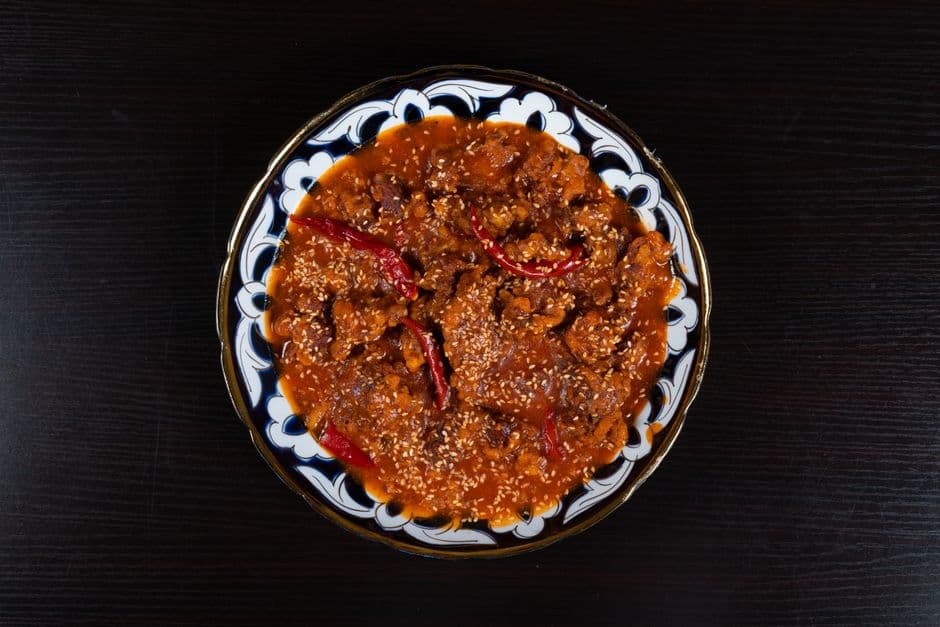
Tukir
Slow-simmered pork ribs with tamarind and chilli, a festive East Timorese favourite.
About This Recipe
Tukir is East Timor's great celebration braise — a long, unhurried pot of pork ribs cooked in a broth that balances the sharpness of tamarind against the heat of fresh red chillies and the deep savouriness of slow-rendered pork fat. The dish belongs to feast days, communal gatherings, and the post-harvest celebrations that punctuate life in the Timorese highlands, where a whole pot of tukir signals abundance and generosity. The technique is structurally simple but relies on time. The ribs are first seared over high heat — this is non-negotiable, because the browning on the meat's surface creates the savoury base that distinguishes tukir from a flat boiled pork dish. Tamarind paste is added to the braising liquid, and its natural acidity slowly breaks down the collagen in the ribs over 80–90 minutes of covered simmering, ultimately thickening the sauce and concentrating its tang into something deeply complex. Lemongrass, added during the braise, contributes a citrusy top note that lifts the richness. The finishing step — uncovering the pot and reducing the sauce for 10 minutes — is where tukir takes its final character. The sauce thickens to coat the ribs like a glaze, lacquering them in a deep amber colour. At the table, tukir is always served with a mountain of steamed rice and whatever fresh greens are in season, with the braising sauce spooned lavishly over everything.
Ingredients
Serves 4
- 800 gpork ribs, cut into individual rib portions
- 3 tbsptamarind paste (block tamarind dissolved in warm water preferred)
- 4long red chillies, sliced
- 5 clovesgarlic, crushed
- 2 stalkslemongrass, bruised and halved
- 1 tspsalt
- 500 mlwater
Instructions
- 1
Sear the ribs
Pat ribs completely dry with paper towel. Heat a heavy-based pot or Dutch oven over high heat until smoking. Add ribs in a single layer — do not crowd them — and sear for 3–4 minutes per side until deep mahogany brown. Work in two batches if needed. The browning is critical for flavour depth; pale grey ribs will produce a wan, flat braise.
Dry ribs brown; wet ribs steam. If the ribs release liquid, increase heat or work in smaller batches.
- 2
Build the aromatics
Reduce heat to medium. Push the seared ribs to the sides and add crushed garlic and sliced chillies to the centre of the pot. Stir for 1 minute until fragrant and the garlic begins to colour lightly. The oil rendered from the pork fat is enough to fry the aromatics — no additional oil is needed at this stage.
- 3
Add braising liquid
Add tamarind paste, lemongrass stalks, salt, and water to the pot. Stir to distribute the tamarind evenly. Bring the liquid to a rolling boil over high heat, scraping up any browned bits from the base of the pot with a wooden spoon — those sticky fond pieces contain concentrated flavour.
Tamarind from a block (dissolved in 100 ml warm water and strained) gives a more rounded, fruity acidity than commercial paste.
- 4
Braise low and slow
Reduce heat to low, cover the pot tightly, and braise for 75–80 minutes. Check every 20 minutes to ensure the liquid has not reduced too far — add 100 ml water if needed. By the end of the braise the meat should pull away from the bone when pressed with a spoon, and the braising liquid should be a deep amber colour.
- 5
Reduce the sauce
Remove the lemongrass stalks. Uncover the pot and increase heat to medium-high. Cook uncovered for 8–10 minutes, turning the ribs occasionally, until the braising liquid reduces to a thick, glossy sauce that clings to the ribs. Taste and adjust salt and tamarind balance — a splash more tamarind paste will sharpen a too-mellow sauce.
Stand over the pot during reduction — the sauce can go from glossy to scorched quickly once it thickens.
- 6
Serve
Arrange ribs on a platter or in individual bowls over steamed jasmine rice. Spoon the reduced sauce generously over everything. Serve with blanched water spinach or fresh cucumber on the side to balance the richness.
Did you make this?
Rate it and help other cooks find the recipes that actually work.
One tap to sign in, and we'll save the rating you just picked.
Everything you need to plan your week — free
- Meal calendar
- Grocery list
- AI recipe ideas
Cook this hands-free
Get AI meal plans, step-by-step cooking mode, and your saved recipes in the free Bento app.
Pro Tips
- →
Leave a split lemongrass stalk in the pot for the full braise — it contributes a citrus perfume that cuts through the richness of the pork fat far more effectively than lime juice added at the end.
- →
Skim the surface of the braising liquid after the first 20 minutes of covered cooking — the fat that rises can be removed for a cleaner, less greasy sauce.
- →
If your tamarind paste is very thick and concentrated, dissolve it in a small cup of warm water before adding it to the pot so it distributes evenly rather than pooling in one place.
- →
The braise is better the next day — overnight resting in the refrigerator allows the fat to solidify on the surface (lift it off) and the flavours to deepen substantially.
- →
For a more complex sauce, add 2 tablespoons of palm sugar to the braise along with the tamarind — the interplay of sweet and sour is characteristic of Timorese cuisine's relationship with both Portuguese and Indonesian flavour traditions.
Variations
- •
Beef short rib tukir: substitute 900 g beef short ribs cut flanken-style; braise for 2 hours as beef collagen requires longer to break down fully.
- •
Hearty potato version: add 400 g peeled waxy potatoes cut into 4 cm chunks in the final 30 minutes of braising; they absorb the tamarind broth beautifully.
- •
Spicier festival version: double the chillies and add 1 teaspoon of crushed dried chilli flakes to the aromatics stage for the kind of heat typical of highland Timorese cooking.
- •
Pressure cooker method: after searing and adding all braising ingredients, cook at high pressure for 35 minutes, then release naturally. Brown the sauce uncovered over medium heat for 5 minutes to concentrate.
Storage
Tukir keeps refrigerated in an airtight container for up to 3 days and improves markedly overnight as the flavours meld. The sauce will gel when cold — reheat gently in a covered pan over low heat with 2 tablespoons of water to loosen. Tukir also freezes well for up to 2 months; thaw overnight in the refrigerator.
History & Origin
Pork holds deep ceremonial significance in Timorese culture, where sacrificial pigs have been central to ritual feasts for centuries. The tamarind braise style found in tukir reflects the layered culinary influences of Timor-Leste: tamarind is a flavouring shared across the Indonesian archipelago, while the preference for long, slow cooking over open fire or in a covered pot reflects Portuguese influence from the colonial period. The name 'tukir' is believed to derive from a Tetum-language root describing the slow reduction of liquid.
Frequently Asked Questions
Can I use a pressure cooker for tukir?
Yes — after searing the ribs and adding all braising ingredients, cook at high pressure for 35 minutes then allow the pressure to release naturally over 10 minutes. The result is very similar; just finish by reducing the sauce uncovered for 5 minutes over medium-high heat to achieve the same glossy consistency as the stovetop version.
My sauce tastes too sour — how do I fix it?
Tamarind intensity varies considerably between brands and preparations. If the sauce is overly sharp, add 1–2 teaspoons of palm sugar or regular sugar and simmer for 2 minutes — the sweetness will balance the acidity without dulling the complexity. A small pinch of extra salt also helps round out a too-tart sauce.
Can I make tukir with boneless pork shoulder instead of ribs?
Yes — cut 800 g boneless shoulder into 5 cm chunks and proceed exactly as written. Boneless shoulder braises in roughly the same time as ribs and produces an even more tender result, though you lose the visual drama of whole rib pieces.
Where can I buy tamarind paste or block?
Both are available in Asian, Indian, and Middle Eastern grocery stores. Block tamarind (a compressed brick) produces the most flavourful result — dissolve a walnut-sized piece in 100 ml warm water, then strain out the fibres. Ready-made tamarind concentrate in jars is more convenient but can be sharper in flavour.
Nutrition Facts
Per serving (350g / 12.3 oz) · 4 servings total
Time Summary
Have Questions?
Ask our AI cooking assistant anything about this recipe — substitutions, techniques, scaling.
Chat with AI Chef →More East-timorese Recipes
You Might Also Like
Similar dishes from other cuisines around the world.
Free Kitchen Tools
Calculators and converters that pair with this page — no signup needed.
Put This Into a Plan
Schedule it, shop for it, and track what you already have.
Read Next
Longer reads that go deeper on the ideas behind this dish.
Community
Join the conversation
Sign in to leave a comment and save your favourite recipes