britishlunch✨ New
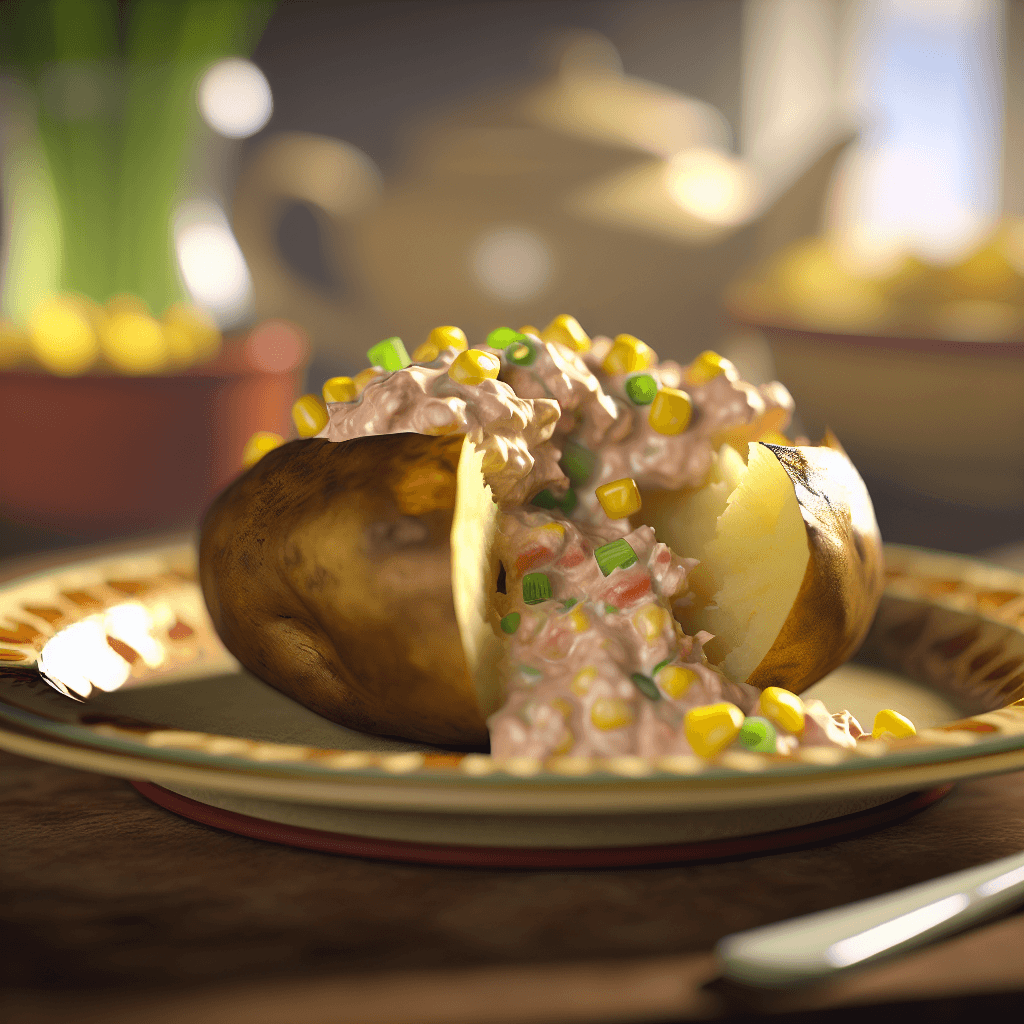
Tuna Mayo Jacket Potato
Fluffy microwave baked potato with creamy tuna mayo filling.
Prep
3 min
Cook
9 min
Servings
1
Difficulty
Easy
★★★★★
4.3(2,200 ratings)#quick#15-minute#easy#british#potato#tuna#lunch
About This Recipe
The jacket potato is a beloved British staple, and this express version uses the microwave to deliver a fluffy interior in a fraction of the time. Split open and loaded with a creamy tuna mayo mixed with sweetcorn and spring onions, it is a satisfying one-plate meal that hits the spot on busy weeknights.
Ingredients
Serves 1
- 1 largebaking potato (about 250 g)
- 1 can (145 g)tuna in spring water, drained
- 2 tbspmayonnaise
- 2 tbspsweetcorn, drained
- 1 stalkspring onion, sliced
- 1 tsplemon juice
- 10 gbutter
- 1 pinchsalt and black pepper
Instructions
- 1
Microwave the potato
Pierce the potato all over with a fork. Microwave on high for 8–9 minutes, turning halfway, until soft when squeezed. Let rest for 1 minute.
- 2
Make the filling
While the potato cooks, mix drained tuna with mayonnaise, sweetcorn, spring onion, lemon juice, salt, and pepper.
- 3
Split and butter
Cut a deep cross in the top of the potato. Squeeze the sides to open it up. Add butter and let it melt into the flesh.
- 4
Fill and serve
Pile the tuna mayo mixture into the potato. Season with extra pepper and serve with a side salad if desired.
Pro Tips
- →
Pricking the potato prevents it from exploding in the microwave.
- →
For a crispier skin, finish under a hot grill for 2 minutes after microwaving.
- →
Taste and adjust salt at the very end — flavors concentrate as liquids reduce, and a final pinch of flaky salt sharpens the whole dish.
- →
Mise en place pays for itself: chop, measure and pre-mix everything before the heat goes on, especially for any step that moves fast.
Variations
- •
Swap tuna for canned salmon and add capers.
- •
Top with grated cheddar and flash under the grill until bubbly.
- •
Vegetarian: swap the protein for roasted king oyster mushrooms, smoked tofu or cooked chickpeas — adjust seasoning slightly upward to compensate.
- •
Spicier: add a finely chopped fresh chile or a teaspoon of crushed Aleppo/Urfa pepper to the aromatics for warm, layered heat instead of a single sharp hit.
Storage
Filling keeps refrigerated up to 1 day. Potato is best freshly cooked.
History & Origin
Tuna Mayo Jacket Potato is a hearty fixture of British kitchens where pub culture and Sunday tables shape the canon. Regional variations are the rule rather than the exception — neighboring villages, families and even individual cooks adapt the dish to what's in the pantry and what's in season, which is why no two versions taste exactly alike and why the recipe has stayed alive for so long.
Frequently Asked Questions
Can I make this ahead of time?
Yes — most of the components can be prepared up to a day in advance and refrigerated separately. Reheat gently and assemble just before serving so textures stay distinct.
What can I substitute if I don't have all the ingredients?
Stay close to the role each ingredient plays: swap aromatics for similar ones (shallot for onion, lime for lemon), and keep the fat-acid-salt balance intact. Spice blends can usually be approximated with what's in the cupboard.
How do I know it's authentic?
Authenticity sits on a spectrum — what matters more is honoring the technique and balance of flavors. If the dish tastes harmonious and respects how cooks in its home region would build it, you're on solid ground.
Why didn't mine turn out as expected?
The two most common issues are under-seasoning and rushing the heat. Taste as you go, season in layers, and give aromatics and proteins the time they need to develop color and depth before moving on.
Nutrition Facts
Per serving (350g / 12.3 oz) · 1 servings total
Calories450kcal
Protein30g
Carbohydrates48g
Fat16g
Fiber4g
Protein30g
Carbs48g
Fat16g
Time Summary
Prep time3 min
Cook time9 min
Total time12 min
Have Questions?
Ask our AI cooking assistant anything about this recipe — substitutions, techniques, scaling.
Chat with AI Chef →More British Recipes
Community
Join the conversation
Sign in to leave a comment and save your favourite recipes