
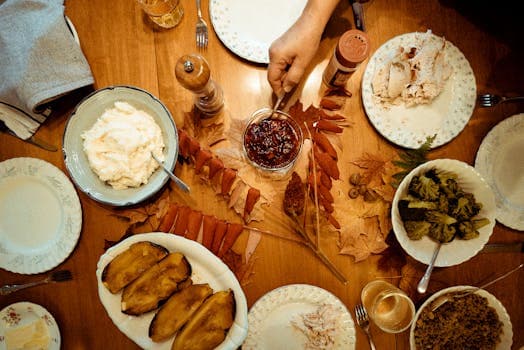
Turkey Gravy
Classic turkey gravy made from roasting-pan drippings, stock, and a flour roux.
About This Recipe
Turkey gravy is the savory finish to any Thanksgiving feast, made by transforming the flavorful drippings left in the roasting pan into a smooth, rich sauce. Fat and browned bits from the roasted bird form the base, thickened with a flour roux and loosened with turkey or chicken stock until silky. A splash of the pan juices carries deep, roasted flavor that no jarred gravy can match. The key is whisking constantly to avoid lumps and simmering long enough to cook out the raw flour taste. Ladled over turkey, mashed potatoes, and dressing, this gravy ties the whole plate together.
Ingredients
Serves 8
- 0.25 cupturkey pan drippings (fat)
- 0.25 cupall-purpose flour
- 3 cupsturkey or chicken stock
- 0.5 cupreserved pan juices
- 1 tspfresh thyme leaves
- 0.5 tspblack pepper
- 0.5 tspsalt
- 1 tbspunsalted butter (optional)
Instructions
- 1
Separate the drippings
Pour the roasting-pan drippings into a fat separator, reserving the fat and the flavorful juices separately.
If you don't have a separator, let the fat rise and spoon it off.
- 2
Make the roux
Return 1/4 cup of the fat to the roasting pan or a saucepan over medium heat, whisk in the flour, and cook for 2-3 minutes until golden and bubbling.
Cooking the roux removes the raw flour taste.
- 3
Whisk in stock
Gradually pour in the stock while whisking constantly to keep the gravy smooth and lump-free.
Add the liquid slowly, a little at a time, for the silkiest texture.
- 4
Add the pan juices
Stir in the reserved pan juices and any scraped browned bits from the roasting pan for extra flavor.
- 5
Simmer
Simmer gently, whisking often, for 5-8 minutes until the gravy thickens to a coating consistency.
- 6
Season
Add the thyme, salt, and pepper, then taste and adjust. Whisk in a pat of butter for extra gloss if desired.
- 7
Strain and serve
Strain the gravy through a fine sieve for a perfectly smooth finish and serve hot.
Straining catches any stray lumps or herbs.
Did you make this?
Rate it and help other cooks find the recipes that actually work.
One tap to sign in, and we'll save the rating you just picked.
Everything you need to plan your week — free
- Meal calendar
- Grocery list
- AI recipe ideas
Track what you eat
Snap your meal to log calories and macros, run fasting timers and track water in the free SnapCal app.
Pro Tips
- →
Use the roasting pan to capture all the browned flavor bits.
- →
Whisk constantly when adding stock to prevent lumps.
- →
Cook the roux until golden to avoid a pasty taste.
- →
Strain for an ultra-smooth gravy.
- →
Thin with extra stock if it gets too thick.
Variations
- •
Add a splash of white wine or sherry while simmering.
- •
Stir in chopped giblets for giblet gravy.
- •
Whisk in a spoonful of Dijon for tang.
- •
Add sautéed mushrooms for a richer sauce.
Storage
Refrigerate for up to 4 days or freeze for 2 months; reheat gently, whisking in stock to loosen as needed.
History & Origin
Gravy made from pan drippings is a centuries-old technique in European and American cooking, born of the thrifty impulse to waste nothing from a roast. Turkey gravy became inseparable from the American Thanksgiving table as the roast turkey rose to prominence.
Frequently Asked Questions
How do I fix lumpy gravy?
Whisk vigorously to break up lumps, and if that fails, pour the gravy through a fine-mesh sieve or blend it briefly with an immersion blender. To prevent lumps in the first place, add the stock gradually while whisking constantly, and make sure the roux is smooth before introducing any liquid.
Can I make turkey gravy without drippings?
Yes, make a roux with butter instead of pan fat and use a good-quality turkey or chicken stock. For deeper flavor, brown the roux well and add a splash of soy sauce or a bouillon concentrate. It won't have quite the roasted depth of drippings-based gravy but is still delicious.
Why does my gravy taste like flour?
A raw, pasty flour taste means the roux wasn't cooked long enough. Always cook the flour and fat together for two to three minutes until it smells nutty and turns golden before adding liquid. Simmering the finished gravy for several more minutes also cooks out any lingering rawness.
Nutrition Facts
Per serving (80g / 2.8 oz) · 8 servings total
Time Summary
Have Questions?
Ask our AI cooking assistant anything about this recipe — substitutions, techniques, scaling.
Chat with AI Chef →Featured in Guides
This recipe is featured in the following curated guides:
More American Recipes
You Might Also Like
Similar dishes from other cuisines around the world.
Free Kitchen Tools
Calculators and converters that pair with this page — no signup needed.
Put This Into a Plan
Schedule it, shop for it, and track what you already have.
Read Next
Longer reads that go deeper on the ideas behind this dish.
Community
Join the conversation
Sign in to leave a comment and save your favourite recipes