
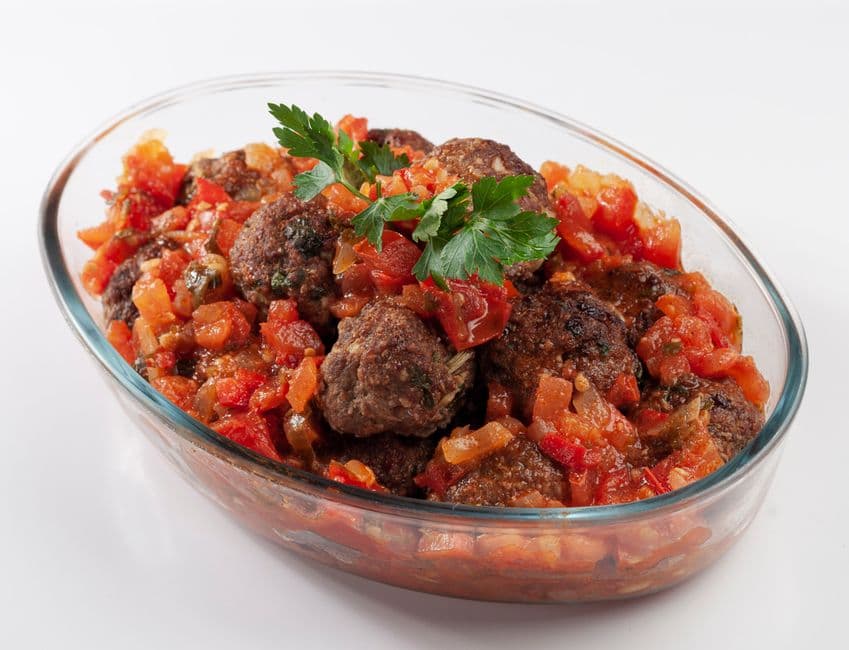
Juicy Baked Turkey Meatballs
Tender, well-seasoned turkey meatballs baked until golden.
About This Recipe
Turkey meatballs are a lighter take on the classic, but with the right technique they are every bit as juicy and flavorful as beef. The challenge with lean ground turkey is dryness, solved here with a panade of milk-soaked breadcrumbs that locks in moisture, plus grated Parmesan, garlic, and fresh herbs for savory depth. Rolled and baked on a sheet pan, they brown beautifully without the mess of frying, then can be simmered in marinara, tossed with pasta, or piled into a sub. Quick to make and freezer-friendly, they are a versatile, protein-rich staple. The panade is the single most important step for keeping lean turkey meatballs tender rather than rubbery.
Ingredients
Serves 5
- 1.5 lbsground turkey(93% lean)
- 0.75 cuppanko breadcrumbs
- 0.33 cupmilk
- 1large egg
- 0.5 cupgrated Parmesan
- 3 clovesgarlic(minced)
- 0.25 cupfresh parsley(chopped)
- 1 tspsalt
- 0.5 tspblack pepper
- 0.5 tspdried oregano
- 1 tbspolive oil
Instructions
- 1
Make a panade
Stir the panko and milk together in a large bowl and let sit 5 minutes until the crumbs absorb the liquid into a paste. This panade is the secret to moist, tender turkey meatballs.
Never skip soaking the crumbs; it prevents dry, dense meatballs.
- 2
Mix the ingredients
Add the ground turkey, egg, Parmesan, garlic, parsley, salt, pepper, and oregano to the panade. Mix gently with your hands just until combined; overmixing makes the meatballs tough.
- 3
Roll the meatballs
With damp hands, roll the mixture into 1.5-inch balls, about 20 total. Keeping your hands wet stops the sticky turkey mixture from clinging as you shape uniform meatballs.
Uniform size ensures they cook evenly.
- 4
Arrange and oil
Place the meatballs on a parchment-lined baking sheet, spacing them apart, and brush or drizzle with olive oil. The oil helps them brown in the oven without frying.
- 5
Bake
Bake at 400F for 20-25 minutes until golden and cooked through, reaching 165F internally. They will firm up and develop a lightly browned exterior without drying out.
- 6
Serve
Serve the meatballs straight from the oven, or simmer them briefly in marinara sauce to soak up flavor before plating over pasta, in a sub, or with mashed potatoes.
Did you make this?
Rate it and help other cooks find the recipes that actually work.
One tap to sign in, and we'll save the rating you just picked.
Everything you need to plan your week — free
- Meal calendar
- Grocery list
- AI recipe ideas
Track what you eat
Snap your meal to log calories and macros, run fasting timers and track water in the free SnapCal app.
Pro Tips
- →
Always use a panade of soaked breadcrumbs to keep lean turkey moist.
- →
Mix gently and avoid overworking the meat, which toughens the meatballs.
- →
Wet your hands to roll the sticky turkey mixture cleanly.
- →
Use a thermometer; 165F is the safe internal temperature for turkey.
Variations
- •
Simmer in marinara for classic spaghetti and meatballs.
- •
Add Italian sausage seasoning and fennel for a sausage-style flavor.
- •
Make them buffalo-style with hot sauce and serve with blue cheese dip.
- •
Use them in meatball subs with melted provolone and marinara.
Storage
Refrigerate cooked meatballs up to 4 days. They freeze excellently for up to 3 months, either raw and rolled or fully cooked. Reheat gently in sauce or the oven to keep them moist.
History & Origin
Meatballs arrived in America with European immigrants, especially Italians, whose spaghetti and meatballs became an American invention rather than an Italian one. Ground turkey gained popularity in the late 20th century as a leaner alternative to beef, and turkey meatballs emerged as a lighter spin on the beloved classic.
Frequently Asked Questions
How do I keep turkey meatballs from being dry?
Lean ground turkey dries out easily, so moisture-boosting techniques are essential. The most important is a panade, breadcrumbs soaked in milk, which holds water inside the meatballs as they cook. Avoid overmixing the meat, do not overbake, and pull them at 165F. Grated cheese and a little olive oil also add fat and richness that combat dryness.
Should I bake or fry turkey meatballs?
Baking is easier, healthier, and more hands-off, browning the meatballs evenly on a sheet pan without splattering oil. Frying gives a slightly crustier exterior but requires more attention and added fat. For weeknight cooking and batch preparation, baking at 400F is ideal. You can also simmer baked meatballs in sauce afterward for extra flavor and moisture.
Can I make these meatballs ahead or freeze them?
Yes, turkey meatballs are excellent for meal prep. Roll them and freeze raw on a tray, then bag them, or fully cook and freeze for up to three months. Bake frozen raw meatballs with a few extra minutes, or reheat cooked ones in sauce. Refrigerated cooked meatballs keep for about four days.
What can I substitute for breadcrumbs?
For the panade, you can use crushed crackers, rolled oats, or even torn fresh bread soaked in milk. For a gluten-free version, use gluten-free breadcrumbs or almond flour, though the texture will be slightly denser. The goal is a moisture-retaining binder, so any starch that absorbs the milk will help keep the meatballs tender.
Nutrition Facts
Per serving (220g / 7.8 oz) · 5 servings total
Time Summary
Have Questions?
Ask our AI cooking assistant anything about this recipe — substitutions, techniques, scaling.
Chat with AI Chef →Featured in Guides
This recipe is featured in the following curated guides:
More American Recipes
You Might Also Like
Similar dishes from other cuisines around the world.
Browse by Ingredient
More recipes built around the same core ingredients.
Free Kitchen Tools
Calculators and converters that pair with this page — no signup needed.
Put This Into a Plan
Schedule it, shop for it, and track what you already have.
Read Next
Longer reads that go deeper on the ideas behind this dish.
Community
Join the conversation
Sign in to leave a comment and save your favourite recipes