
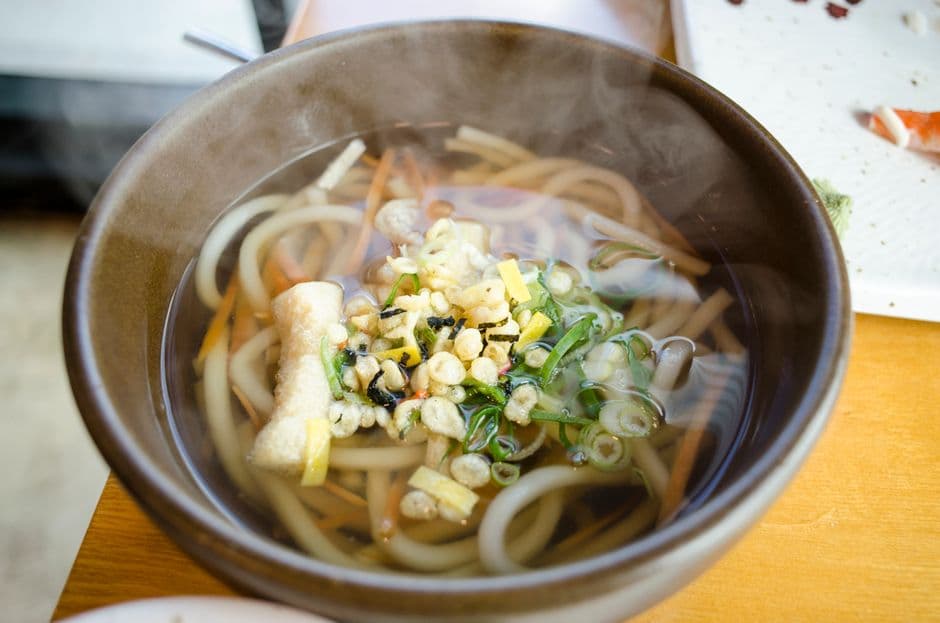
Udon Tempura (Japanese Tempura Noodle Soup)
Thick, chewy udon noodles in a light dashi broth, topped with crispy tempura vegetables and shrimp.
About This Recipe
Udon tempura (or tempura udon) is a simple, comforting Japanese noodle dish that combines two beloved elements: thick, chewy udon noodles in a light, clear broth, topped with crispy tempura (battered and fried vegetables and shrimp). The broth is a basic dashi, optionally enriched with a splash of soy sauce and mirin, creating a delicate, subtle flavor that lets the udon and tempura shine. The contrast between the soft noodles, hot broth, and crispy tempura topping makes this a textural masterpiece. Udon tempura is served in two styles: hot (kakigori) with the broth served in a separate bowl for dipping, or in a bowl with broth (tsuki). The dish is quick to prepare if you have pre-made dashi and tempura, making it an accessible home-cooked meal. Udon tempura is served throughout Japan in casual restaurants (udon-ya) and homes, often as a late-night snack or casual lunch.
Ingredients
Serves 2
- 4 cupsdashi broth (made from kombu and bonito, or instant dashi)
- 1 tbspsoy sauce (shoyu)
- 1 tbspmirin (sweet rice wine)
- 1 tspsalt (adjust to taste)
- 300 gfresh udon noodles (or 150g dried udon, cooked)
- 200 gmixed vegetables for tempura (shiitake mushrooms, onion, sweet potato, green pepper, carrot)
- 150 gmedium shrimp (about 6–8), peeled and deveined
- 100 gall-purpose flour (for dredging)
- 100 gcake flour or tempura flour (for batter)
- 150 mlcold water (for tempura batter)
- 1 largeegg yolk (for tempura batter)
- for fryingvegetable oil (about 500 ml)
- 1 small bunchgreen onions (negi), sliced (for garnish)
- 1 small pieceshichimi togarashi (optional, for serving)
- 2 tbsptentsuyu dipping sauce (optional alternative to broth)
Instructions
- 1
Make or prepare the dashi broth
If making fresh dashi: place a 5x5 cm piece of kombu in a pot with 4 cups of cold water. Heat gently until steam rises (don't boil). Remove kombu and bring to a simmer. Add a handful of bonito flakes (katsuobushi), remove from heat immediately, and let steep for 5 minutes. Strain through a fine-mesh sieve. If using instant dashi, prepare according to package directions.
- 2
Season the broth
To the warm dashi, add soy sauce, mirin, and salt. Taste and adjust — the broth should be delicate and savory, not overly salty. Set aside and keep warm.
- 3
Prepare the tempura ingredients
Cut vegetables into bite-sized pieces or attractive shapes (mushrooms halved, onion in thick slices, sweet potato in thin rounds, pepper in strips, carrot in thin matchsticks). Pat shrimp and vegetables very dry with paper towels — any moisture will cause dangerous oil splattering and prevent crisping.
- 4
Make the tempura batter
In a bowl, whisk together egg yolk and cold water. In another bowl, combine cake flour and a tiny pinch of salt. Just before frying, gently fold the wet mixture into the flour using chopsticks or a fork — the batter should be lumpy and thick, not smooth. Do not overmix or the tempura will be heavy. A slightly lumpy batter produces the lightest, crispiest result.
- 5
Heat the oil
In a deep pot, heat vegetable oil to 160–170°C (320–340°F). Use a thermometer — temperature is critical. Too hot and the outside burns before the inside cooks; too cool and the tempura absorbs oil instead of crisping.
- 6
Fry the tempura
Working in batches, dredge vegetables and shrimp lightly in flour (this helps the batter adhere), then dip into tempura batter and gently place into the hot oil. Fry for 1–2 minutes per side until golden and crispy. The tempura should sound crispy when tapped. Transfer to a plate lined with paper towels.
- 7
Cook the udon noodles
Bring a pot of water to a boil. If using fresh udon, gently separate the noodles and add to the boiling water. Cook for 1–2 minutes until tender but with a slight chew. If using dried udon, cook for 6–8 minutes. Drain and divide between two serving bowls.
- 8
Assemble the bowls
Pour hot dashi broth over the drained udon noodles. Top with the hot tempura (vegetables and shrimp arranged on top). Scatter sliced green onions over everything. If desired, add a pinch of shichimi togarashi (seven-spice powder) for a touch of heat.
- 9
Serve immediately
Serve immediately while the broth is hot and the tempura is still crispy. The goal is to eat the tempura before it loses its crispness — within 2–3 minutes of plating.
Did you make this?
Rate it and help other cooks find the recipes that actually work.
One tap to sign in, and we'll save the rating you just picked.
Everything you need to plan your week — free
- Meal calendar
- Grocery list
- AI recipe ideas
Track what you eat
Snap your meal to log calories and macros, run fasting timers and track water in the free SnapCal app.
Pro Tips
- →
The tempura batter should be lumpy — this creates the signature light, crunchy texture. Do not overmix or the tempura becomes heavy and greasy.
- →
Cold water in the batter is essential — the cold temperature keeps the gluten from developing and keeps the batter light.
- →
Dry all ingredients thoroughly before frying — moisture prevents crisping and causes oil splattering.
- →
Eat the tempura quickly after plating. Sitting in hot broth will soften the crust over time.
Variations
- •
With kakigori style (dipping) — serve the hot udon noodles on a plate and the broth in a separate dipping bowl. Dip each bite of noodle and tempura into the broth.
- •
With shrimp only — use only shrimp tempura (no vegetables) for a lighter, more refined dish.
- •
Vegetarian tempura udon — use only vegetables and omit the shrimp.
- •
With different dipping sauce — instead of dashi broth, use tentsuyu (a thicker dipping sauce made with dashi, soy, and mirin).
Storage
Tempura udon is best eaten immediately. The broth and noodles can be made ahead and reheated, but tempura must be made fresh just before serving. Do not refrigerate tempura — it becomes soggy within hours.
History & Origin
Udon is a thick wheat noodle central to Japanese cuisine, with regional versions throughout Japan. Tempura (battered and fried ingredients) was introduced to Japan by Portuguese traders in the 16th century. Combining the two into udon tempura is a natural pairing, combining the comfort of noodles with the textural contrast of crispy tempura.
Frequently Asked Questions
What's the difference between tempura and deep-fried?
Tempura is fried with a specific light batter made from flour and cold water. Standard deep-frying uses breadcrumbs. Tempura is lighter and crunchier due to the technique and the lumpy batter.
Can I make the dashi from scratch if I don't have kombu and bonito?
Instant dashi powder (available at Asian markets) is acceptable and widely used in Japan. You can also use a light chicken or vegetable broth, though it's less traditional.
Why is my tempura greasy?
The oil wasn't hot enough, you overmixed the batter, or you mixed wet ingredients with flour too far in advance. Use a thermometer, mix the batter at the last moment, and keep it lumpy.
Can I prep the tempura batter ahead?
It's best to mix the batter at the last moment, just before frying. If you mix it ahead, it becomes smooth and heavy. You can prepare the flour-water mixture separately and combine just before frying.
Nutrition Facts
Per serving (380g / 13.4 oz) · 2 servings total
Time Summary
Have Questions?
Ask our AI cooking assistant anything about this recipe — substitutions, techniques, scaling.
Chat with AI Chef →Featured in Guides
This recipe is featured in the following curated guides:
More Japanese Recipes
You Might Also Like
Similar dishes from other cuisines around the world.
Browse by Ingredient
More recipes built around the same core ingredients.
Free Kitchen Tools
Calculators and converters that pair with this page — no signup needed.
Put This Into a Plan
Schedule it, shop for it, and track what you already have.
Read Next
Longer reads that go deeper on the ideas behind this dish.
Community
Join the conversation
Sign in to leave a comment and save your favourite recipes