
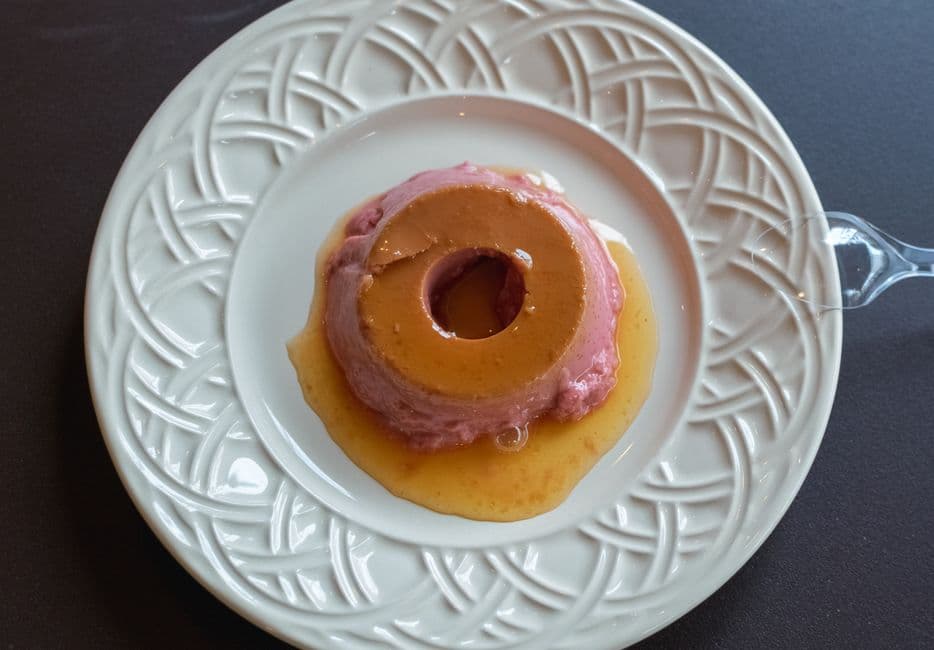
'Ufi Pudding
Creamy steamed yam pudding sweetened with coconut cream and sugar.
About This Recipe
'Ufi Pudding is one of the most distinctive sweets in Tongan cuisine, built around 'ufi — the white or yellow-fleshed yam (Dioscorea alata) that has held a position of cultural prestige in Tonga for centuries. Unlike sweet potato or cassava, true yam has a starchier, drier texture and a subtly earthy, nutty flavour that becomes almost chestnut-like when cooked. Mashed smooth with coconut cream and sugar, it produces a pudding that sits somewhere between a firm custard and a dense mousse — set enough to unmould cleanly from a ramekin, yet yielding and moist at the spoon. The two-stage cooking process — boiling first to soften the yam, then steaming the mixed pudding to set it — is essential to achieving the right texture. Boiling alone produces something too loose; baking produces something too dry. The steaming step gently heats the coconut cream from within the pudding, causing the natural starches to bind into a cohesive, sliceable mass without the eggs or gelatine that Western puddings require. The technique is entirely plant-based and naturally gluten-free. In Tonga, 'ufi pudding is celebratory food — it appears at the Sunday to'ona'i feast and at the 'inasi (yam harvest festival), where the first yams of the season are presented to the king as a mark of respect and gratitude. Eating it is, in a real sense, participating in Tonga's deepest agricultural and spiritual traditions. At home it is a straightforward, forgiving recipe that rewards careful attention to one critical detail: draining the cooked yam completely before mashing, because any residual water makes the finished pudding watery and loose.
Ingredients
Serves 6
- 700 gwhite yam ('ufi / Dioscorea alata), peeled and cubed
- 200 mlfull-fat coconut cream
- 80 gwhite sugar
- 1 pinchsalt
- 1 tspvanilla extract (optional but recommended)
Instructions
- 1
Cook the yam
Place peeled, cubed yam in a large saucepan and cover with cold water by 3 cm. Bring to a boil over high heat, then reduce to a vigorous simmer. Cook for 22–28 minutes until the yam is completely tender all the way through — a knife should slide in with zero resistance. Undercooked yam will produce a lumpy, starchy pudding that never sets smoothly.
Different varieties of yam vary in starchiness and cooking time. Check at 22 minutes and add more time if needed.
- 2
Drain and dry
Drain the cooked yam in a colander and leave to steam-dry for 5 minutes. Shake the colander once or twice to encourage moisture to escape. The drier the yam at this stage, the firmer and more cohesive the finished pudding. Do not skip this drying step — excess water is the single most common reason 'ufi pudding fails to set.
- 3
Mash and mix
Transfer the drained yam to a large bowl and mash thoroughly with a potato masher or pass through a ricer for an ultra-smooth result. Add coconut cream, sugar, vanilla extract (if using), and salt. Beat vigorously with a wooden spoon or electric hand mixer until the mixture is completely smooth, with no lumps remaining. Taste for sweetness — the pudding should be pleasantly sweet but not cloying.
An electric hand mixer makes fast work of the mashing and produces a smoother pudding in 2 minutes that would take 5 minutes by hand.
- 4
Fill moulds
Lightly grease 6 individual ramekins (150 ml capacity) or one 900 ml pudding basin with coconut oil or butter. Divide the yam mixture evenly among the ramekins, pressing it in firmly and smoothing the top level with the back of a spoon. The moulds should be filled to within 5 mm of the top as the pudding does not rise.
- 5
Steam until set
Set up your steamer by bringing water to a rolling boil. Arrange filled ramekins in the steamer basket with space between them for steam to circulate. Cover tightly and steam for 15–18 minutes. The pudding is set when the surface appears matte and no longer looks wet or jiggly in the centre, and the edges have pulled away from the ramekin walls very slightly.
Check water level at 10 minutes — if your steamer runs low it will start to spit, which can leave water spots on the pudding surface.
- 6
Rest and unmould
Remove ramekins from the steamer and allow to rest for 5 minutes before attempting to unmould — the pudding firms further as it cools slightly. Run a thin knife or spatula around the inside edge of each ramekin, place a serving plate on top, and invert in one firm motion. Serve immediately with a generous pour of extra coconut cream alongside.
Did you make this?
Rate it and help other cooks find the recipes that actually work.
One tap to sign in, and we'll save the rating you just picked.
Everything you need to plan your week — free
- Meal calendar
- Grocery list
- AI recipe ideas
Track what you eat
Snap your meal to log calories and macros, run fasting timers and track water in the free SnapCal app.
Pro Tips
- →
Drain the cooked yam in a colander for at least 5 minutes after boiling — any residual cooking water incorporated into the pudding will prevent it from setting firmly enough to unmould cleanly.
- →
Vanilla extract is a small addition that dramatically improves the pudding's fragrance — use pure vanilla extract rather than artificial vanilla flavouring for the best results.
- →
Taste the mash for sweetness before filling the moulds and adjust sugar to your preference; true Tongan yam is more savoury than sweet potato and may need the full 80 g of sugar.
- →
Greasing the ramekins generously with coconut oil rather than butter reinforces the coconut flavour of the pudding from the outside in.
- →
If you don't have individual ramekins, the mixture can be steamed in a single greased bowl or pudding basin — increase steaming time to 25–30 minutes for a large single mould.
Variations
- •
Sweet potato version: substitute 700 g orange sweet potato (kumara) for the yam — the result is sweeter and softer, and the pudding will have a vibrant orange colour; reduce sugar to 60 g to compensate for the sweet potato's natural sweetness.
- •
Pandan-scented pudding: add 1 teaspoon of pandan extract to the mash along with the coconut cream — the floral, tropical note complements the yam's earthiness beautifully and is popular in Polynesia-influenced Pacific cooking.
- •
Lime zest version: fold the finely grated zest of 2 limes into the mash before steaming for a bright, citrus-forward pudding that is especially refreshing served cold.
- •
Layered presentation: press half the mixture into greased ramekins, add a thin layer of palm sugar mixed with toasted desiccated coconut, then top with the remaining mixture before steaming — the caramelised middle layer becomes a surprise when the pudding is unmoulded.
Storage
Unmoulded 'ufi puddings keep refrigerated, loosely covered, for up to 3 days. The texture firms when cold — serve at room temperature for the softest result, or warm briefly by returning to a steamer for 3–4 minutes. The puddings can also be refrigerated in their moulds and unmoulded to serve cold, where they develop a pleasant denser chew.
History & Origin
Yam ('ufi) has occupied the highest position in Tongan agricultural and social life for well over a thousand years. The varieties of Dioscorea alata cultivated in Tonga include some of the most prized in the Pacific, and the annual 'inasi festival — a harvest ceremony in which the year's finest yams are formally presented to the Tu'i Tonga (the paramount chief) before the rest of the community may eat — has been documented by European observers since at least the 18th century. Steamed and mashed yam preparations have been served at these ceremonial feasts for as long as yam has been grown, making 'ufi pudding one of the oldest surviving Tongan dessert traditions.
Frequently Asked Questions
Can I use sweet potato instead of true yam for this pudding?
Yes, sweet potato (kumara) is the most practical substitute and produces a delicious pudding, though it will be noticeably sweeter and much softer in texture than one made with true yam. Reduce sugar to 60 g when using sweet potato. The orange colour of most sweet potato varieties also gives the pudding a striking golden hue rather than the pale ivory of an 'ufi pudding.
Where can I find white yam ('ufi)?
White yam (Dioscorea alata, also sold as 'purple yam', 'water yam', or 'ube' depending on variety) is available at Caribbean, West African, and Pacific Island grocery stores. In areas with large Tongan or Samoan communities it may be sold fresh. Frozen yam chunks are also available in many Asian supermarkets. Do not confuse it with American yam (which is actually a sweet potato) or Chinese yam (shan yao).
Why didn't my pudding set firmly enough to unmould?
Insufficient draining of the boiled yam is the most likely cause — excess water prevents the starches from binding properly during steaming. The fix for next time is to drain longer and steam-dry in the colander. If you have already made the pudding and it is too soft, re-cover the ramekins with foil and steam for an additional 5–8 minutes, which should drive off more moisture and help the pudding firm up.
Can I bake 'ufi pudding instead of steaming it?
Baking works but changes the character of the pudding — it will develop a lightly golden surface and a drier, denser texture throughout rather than the uniformly moist and tender result that steaming produces. If baking, place ramekins in a deep roasting tray, fill with boiling water to halfway up the sides (a bain-marie), and bake at 160 °C for 25 minutes.
Nutrition Facts
Per serving (180g / 6.3 oz) · 6 servings total
Time Summary
Have Questions?
Ask our AI cooking assistant anything about this recipe — substitutions, techniques, scaling.
Chat with AI Chef →Featured in Guides
This recipe is featured in the following curated guides:
More Tongan Recipes
You Might Also Like
Similar dishes from other cuisines around the world.
Free Kitchen Tools
Calculators and converters that pair with this page — no signup needed.
Put This Into a Plan
Schedule it, shop for it, and track what you already have.
Read Next
Longer reads that go deeper on the ideas behind this dish.
Community
Join the conversation
Sign in to leave a comment and save your favourite recipes