
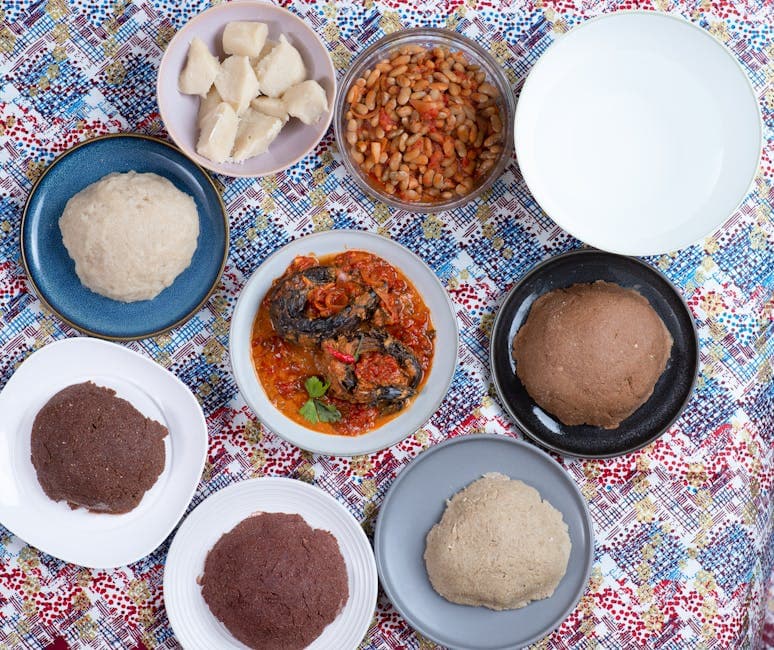
Ugali na Sukuma Wiki
Kenya's staple of stiff white-maize porridge with sautéed collard greens — the meal that 'pushes the week' through.
About This Recipe
Ugali na sukuma wiki is the everyday plate of Kenya and much of East Africa: a firm white-maize porridge eaten with sautéed leafy greens (sukuma wiki, literally 'push the week', because greens are the cheap dish that stretches families to payday). The ugali is cooked until it's stiff enough to slice with a knife — eaten by hand, broken into pieces, rolled into a small ball with a thumb-press divot to scoop the greens. Sukuma wiki is most often collard greens cooked with onion, tomato, and a touch of cumin. Together they are filling, almost completely fat-free, fortifying, and beloved enough that ugali has been declared part of Kenya's intangible cultural heritage.
Ingredients
Serves 4
- 1 Lwater
- 0.5 tspsalt
- 350 gwhite maize flour (unga wa mahindi)
- 500 gcollard greens (sukuma wiki) or kale, very thinly sliced into ribbons
- 2 tbspneutral oil
- 1 largered onion, diced
- 3 clovesgarlic, minced
- 2tomatoes, diced
- 1 tspground cumin
- 0.5 tspground coriander
- 1 smallgreen chili, minced (optional)
- 1 tspsalt
- 1 tbsplemon juice
Instructions
- 1
Boil water
In a heavy-bottomed pot, bring water and salt to a rolling boil.
- 2
Add flour gradually
Reduce heat to medium-low. Add a third of the flour, stirring constantly with a wooden spoon (mwiko) to a smooth paste. Cook 2 minutes.
- 3
Build the ugali
Add the remaining flour in two more additions, stirring vigorously each time. The mass will get stiff and harder to stir.
If the mass tears your spoon hand, you're on the right track — proper ugali requires a real workout.
- 4
Steam-finish
Once you have a firm dough that pulls cleanly from the pot sides, lower heat to minimum. Press the ugali into a smooth mound with the spoon. Cover and steam 5 minutes. The ugali should be glossy and slice cleanly.
- 5
Turn out
Invert the pot onto a plate — the ugali should drop out as one smooth dome. Cover loosely while you finish the greens.
- 6
Make sukuma wiki
Heat oil in a wide pan. Sauté onion 4 minutes until soft. Add garlic, cumin, coriander, and chili; bloom 1 minute. Stir in tomatoes; cook 3 minutes until they break down.
- 7
Wilt greens
Add ribboned greens in two batches, wilting between additions. Add salt and a splash of water. Cover and cook 6–8 minutes until tender but still bright green. Finish with lemon juice.
- 8
Serve
Place a wedge of ugali on each plate alongside a generous pile of sukuma wiki. Eat with the right hand: break off ugali, press a thumb divot, scoop greens.
Did you make this?
Rate it and help other cooks find the recipes that actually work.
One tap to sign in, and we'll save the rating you just picked.
Everything you need to plan your week — free
- Meal calendar
- Grocery list
- AI recipe ideas
Track what you eat
Snap your meal to log calories and macros, run fasting timers and track water in the free SnapCal app.
Pro Tips
- →
Use white maize flour (unga), not yellow cornmeal — yellow cornmeal makes polenta, not ugali. Find unga at African groceries or order online.
- →
Slice greens into thin ribbons (chiffonade) — chunks won't wilt evenly and the dish will feel chunky rather than silky.
- →
Ugali should be eaten warm. It firms rapidly as it cools and reheats poorly — make it last in your cooking timeline.
Variations
- •
Sukuma wiki with peanut paste: stir in 2 tbsp peanut butter in the last minute for a richer Tanzanian-style version.
- •
Ugali wa wimbi: use millet flour for a darker, earthier porridge (Western Kenya style).
- •
Add diced beef or chunks of fried fish to the greens for a heartier plate.
Storage
Ugali is best fresh. Leftovers can be sliced and pan-fried in oil the next day. Sukuma wiki refrigerates 3 days; gently reheat.
History & Origin
Ugali came to East Africa with the introduction of maize from the Americas in the 16th century, replacing earlier porridges of sorghum and millet. The phrase 'sukuma wiki' — to push the week — entered Kenyan Swahili in the colonial period when collards were the cheapest weekday vegetable.
Frequently Asked Questions
How do I know when ugali is done?
It's done when the mass pulls cleanly from the pot sides, holds a sliced edge, and the wooden spoon stands upright when stuck in. If it sags or sticks, cook 2 more minutes.
What can I substitute for sukuma wiki?
Any sturdy leafy green works: collards, kale, mustard greens, even cabbage in a pinch. Avoid spinach (too watery) and lettuce (too delicate).
Can I eat ugali with a fork?
You can, but the traditional way is by hand: tear a piece, press a thumb-shaped well, scoop the greens or stew. The contact with hot ugali also cools each bite to eating temperature.
Is ugali the same as polenta or fufu?
All are starch-based porridges, but ugali is specifically white-maize, stiff enough to slice. Polenta is yellow corn and softer. Fufu is West African and usually made from cassava, yam, or plantain.
Nutrition Facts
Per serving (380g / 13.4 oz) · 4 servings total
Time Summary
Have Questions?
Ask our AI cooking assistant anything about this recipe — substitutions, techniques, scaling.
Chat with AI Chef →Featured in Guides
This recipe is featured in the following curated guides:
More Kenyan Recipes
You Might Also Like
Similar dishes from other cuisines around the world.
Free Kitchen Tools
Calculators and converters that pair with this page — no signup needed.
Put This Into a Plan
Schedule it, shop for it, and track what you already have.
Read Next
Longer reads that go deeper on the ideas behind this dish.
Community
Join the conversation
Sign in to leave a comment and save your favourite recipes