
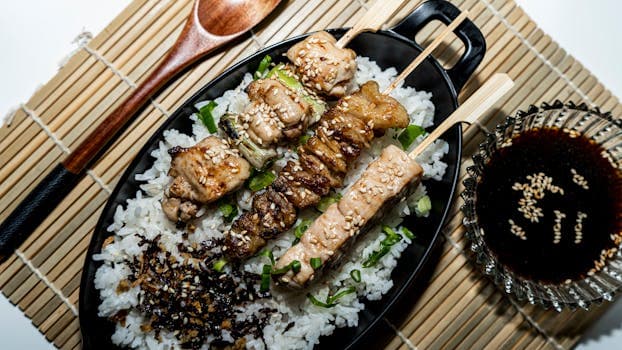
Yakitori
Japanese grilled chicken skewers with sweet-savory tare sauce — smoky, charred, irresistible.
About This Recipe
Yakitori — literally 'grilled bird' — is the backbone of the Japanese izakaya, the kind of food meant to be eaten skewer by skewer over conversation and cold drinks. Bite-sized pieces of juicy chicken thigh are threaded onto soaked bamboo skewers, often alternated with sweet wedges of green onion (the classic combination known as negima), then grilled over fierce heat until the edges char and the fat renders. Repeated brushings of tare — a glossy reduction of soy, mirin, sake, and sugar — build a lacquered, caramelized coat layer by layer. The payoff is smoky, savory, and faintly sweet, with crisp skin giving way to tender meat. A dusting of shichimi togarashi at the end adds gentle heat and a citrusy lift.
Ingredients
Serves 4
- 600 gchicken thighs, boneless skin-on
- 6green onions (white and light green parts)
- 12bamboo skewers, soaked 30 minutes
- 1/2 cupsoy sauce
- 1/2 cupmirin
- 1/4 cupsake
- 3 tbspsugar
- 1 tbspfresh ginger, grated
- 1 tbspneutral oil
- togarashi or shichimi pepper (for serving)
Instructions
- 1
Make tare sauce
Combine the soy sauce, mirin, sake, sugar, and grated ginger in a small saucepan and simmer over medium heat 10-15 minutes until reduced by half and lightly syrupy. Let it cool; it thickens further as it sits.
Set aside a small portion of unused tare for dipping — never reuse sauce that has touched raw chicken.
- 2
Prep chicken
Cut the boneless thighs into even 2cm cubes, keeping the skin on for flavor and crisp edges. Uniform pieces cook at the same rate, so nothing dries out while you wait for larger chunks to finish.
- 3
Cut green onions
Cut the white and light-green parts of the onions into 2cm batons. These should be sturdy enough to skewer and will turn sweet and slightly charred on the grill.
- 4
Skewer
Thread the chicken onto soaked skewers, alternating with green onion pieces, about 4-5 chicken cubes each. Push the pieces snugly together so they stay juicy and don't spin when turned.
Pack pieces tightly rather than spread out; loose, gappy skewers dry out and burn at the edges.
- 5
Heat grill
Heat a charcoal grill, gas grill, or grill pan to high and brush the grates with oil. High, dry heat is essential for the char and caramelization that define yakitori.
- 6
First grill
Grill the skewers about 3 minutes per side, turning to color all faces, 6-8 minutes total, until the chicken is nearly cooked through and the skin has crisped. Grill plain at this stage so the meat sears cleanly.
- 7
Glaze
Brush both sides generously with tare and grill 1 minute per side until the glaze bubbles and caramelizes, then repeat once more for a deeper lacquer. Watch closely — the sugar in the tare burns fast.
Move skewers to a slightly cooler zone while glazing so the sauce caramelizes instead of scorching.
- 8
Serve
Sprinkle the finished skewers with shichimi togarashi and serve immediately, while the glaze is glossy and the meat hot, with the reserved tare alongside for dipping.
Did you make this?
Rate it and help other cooks find the recipes that actually work.
One tap to sign in, and we'll save the rating you just picked.
Everything you need to plan your week — free
- Meal calendar
- Grocery list
- AI recipe ideas
Track what you eat
Snap your meal to log calories and macros, run fasting timers and track water in the free SnapCal app.
Pro Tips
- →
Soak bamboo skewers at least 30 minutes so they don't catch fire over the coals.
- →
Don't glaze too early — the sugar in tare burns, so brush it on only in the last 2-3 minutes.
- →
Keep the skin on the thigh; it crisps up and adds essential richness and flavor.
- →
Reduce the tare until it coats a spoon — thin sauce slides off and won't lacquer the meat.
- →
Pack the skewers tightly so the chicken stays juicy and turns without spinning.
Variations
- •
Negima: the classic alternation of chicken and green onion.
- •
Tsukune: skewers of seasoned ground-chicken meatballs, often served with a raw egg-yolk dip.
- •
Yakitori shio: seasoned with just salt instead of tare to highlight the chicken.
- •
Other cuts: skewer chicken skin (kawa), thigh-and-thigh, or mushrooms and shishito peppers for variety.
Storage
Best fresh off the grill. Refrigerate leftovers up to 2 days and reheat gently in a hot pan or under a broiler for a minute to re-crisp the glaze; avoid the microwave, which makes the chicken rubbery.
History & Origin
Skewered grilled chicken has roots stretching back centuries in Japan, but yakitori became widespread street and izakaya food in the 20th century, especially in the lean postwar years when offal and every part of the bird were grilled cheaply. Today specialist shops elevate it to a refined craft.
Frequently Asked Questions
Can I use chicken breast?
You can, but boneless thighs stay far juicier over high grill heat, while breast tends to dry out quickly. If you prefer breast, cut it slightly larger, watch it closely, and pull it off the moment it's cooked through to limit moisture loss, glazing generously to compensate.
Do I need a charcoal grill?
Charcoal gives the most authentic smoky char, but a gas grill or a heavy cast-iron grill pan works well too. The key is high, dry heat to sear and caramelize the tare. Indoors, ventilate well and finish under the broiler for a minute if you want extra color.
What exactly is tare and can I reuse it?
Tare is the sweet-savory glaze of soy, mirin, sake, and sugar reduced to a syrup. Traditional shops keep a perpetual tare going for years, but at home always split it: brush with one portion and keep a clean portion for dipping, discarding anything that touched raw chicken.
Nutrition Facts
Per serving (250g / 8.8 oz) · 4 servings total
Time Summary
Have Questions?
Ask our AI cooking assistant anything about this recipe — substitutions, techniques, scaling.
Chat with AI Chef →Featured in Guides
This recipe is featured in the following curated guides:
More Japanese Recipes
You Might Also Like
Similar dishes from other cuisines around the world.
Browse by Ingredient
More recipes built around the same core ingredients.
Free Kitchen Tools
Calculators and converters that pair with this page — no signup needed.
Put This Into a Plan
Schedule it, shop for it, and track what you already have.
Read Next
Longer reads that go deeper on the ideas behind this dish.
Community
Join the conversation
Sign in to leave a comment and save your favourite recipes