
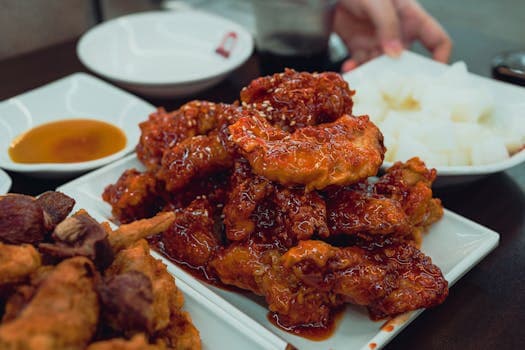
Yangnyeom Tongdak
Korean double-fried chicken in sweet and spicy gochujang glaze — crispy, sticky, addictive.
About This Recipe
Yangnyeom tongdak — 'seasoned chicken' — is the sweet-fiery icon of Korean fried chicken: wings double-fried until the crust shatters, then tossed in a glossy glaze of gochujang, garlic, honey, soy, and vinegar. Two techniques set Korean fried chicken apart from every other style. First, a thin potato-starch batter made with ice water, which fries into a delicate, crackly shell rather than a thick breading. Second, the double fry: a lower-temperature first fry cooks the meat, a rest lets steam escape, and a hotter second fry dehydrates the skin into glass-like crispness that survives even a heavy sauce. Served with cubed pickled radish and cold beer — the beloved 'chimaek' pairing — it's one of modern Korea's greatest culinary exports.
Ingredients
Serves 4
- 1 kgchicken wings or drumettes
- 1 tspsalt
- 1 tspwhite pepper
- 1 tbsprice wine (mirin)
- 1 cuppotato starch
- 1/2 cupall-purpose flour
- 1 tspbaking powder
- 3/4 cupice cold water
- neutral oil for deep frying
- 3 tbspgochujang (Korean chili paste)
- 2 tbspketchup
- 3 tbsphoney
- 2 tbsprice vinegar
- 2 tbspsoy sauce
- 1 tbspbrown sugar
- 5 clovesgarlic, minced
- 1 tspfresh ginger, grated
- 1 tspsesame oil
- 1 tbsptoasted sesame seeds
Instructions
- 1
Marinate chicken
Pat the chicken thoroughly dry, then toss with salt, white pepper, and rice wine and let it sit for 15 minutes. The brief marinade seasons the meat and the rice wine tamps down any poultry funk — a standard Korean kitchen move.
Dry chicken is critical for crispness; surface moisture thins the batter and causes oil to spatter violently.
- 2
Make batter
Whisk the potato starch, flour, baking powder, and ice-cold water until just combined — a few lumps are fine and even desirable. The cold water slows gluten development, and the starch-heavy ratio fries into a thin, brittle shell rather than a doughy crust.
Make the batter right before frying and keep it cold; warm, overmixed batter turns chewy instead of crackly.
- 3
Make sauce
Stir the gochujang, ketchup, honey, vinegar, soy sauce, brown sugar, garlic, and ginger together in a saucepan and heat over medium until bubbling, then simmer 3 minutes until glossy and slightly thickened. Set aside somewhere warm — it should be fluid, not stiff, when tossing time comes.
- 4
First fry
Heat the oil to 160°C. Working in batches, dip the chicken in the batter, let excess drip off, and fry for about 8 minutes until cooked through but only light golden. Lift onto a rack and rest at least 5 minutes — steam escaping during this rest is what sets up the second fry.
- 5
Second fry
Raise the oil to 180°C and fry the rested chicken again for 4–5 minutes until deep golden brown and audibly crisp when tapped with tongs. This second, hotter fry drives remaining moisture out of the crust, creating the shatter that defines Korean fried chicken.
Let the oil fully recover to 180°C between batches — a thermometer here is the difference between crackly and greasy.
- 6
Glaze
Transfer the hot chicken to a large bowl, pour over the warm sauce, and toss quickly with a spatula or by flipping the bowl until every piece is evenly lacquered. Work fast and toss just before serving — the less time sauce sits on crust, the longer the crunch lasts.
- 7
Serve
Pile the glazed chicken onto a platter, drizzle with sesame oil, and shower with toasted sesame seeds. Serve immediately with cubes of pickled radish (chicken-mu) and, in proper chimaek fashion, very cold beer.
Did you make this?
Rate it and help other cooks find the recipes that actually work.
One tap to sign in, and we'll save the rating you just picked.
Everything you need to plan your week — free
- Meal calendar
- Grocery list
- AI recipe ideas
Track what you eat
Snap your meal to log calories and macros, run fasting timers and track water in the free SnapCal app.
Pro Tips
- →
Double frying is non-negotiable — the rest between fries releases steam, and the hotter second fry crisps the shell so it survives the glaze.
- →
Toss in sauce at the last possible moment; sauced chicken starts softening within minutes.
- →
Potato starch, not cornstarch alone, gives the signature light, glassy Korean crust.
- →
Use a thermometer and refry in small batches — oil temperature control is 80% of this recipe.
- →
Gochujang brands vary in heat and sweetness; taste your sauce and adjust honey or vinegar before glazing.
Variations
- •
Soy-garlic (ganjang) version: swap the gochujang sauce for a glaze of soy, garlic, honey, and mirin.
- •
Banban ('half-half'): sauce only half the batch and serve the rest plain crispy — the classic Korean chicken-shop order.
- •
Extra-fiery: add gochugaru flakes or a spoonful of Korean mustard to the sauce.
- •
Boneless: use chunks of thigh meat for popcorn-style yangnyeom chicken that's easier for parties.
Storage
Best devoured immediately. Leftovers keep refrigerated 2 days; re-crisp in an air fryer or oven at 180°C for 5–6 minutes — never the microwave, which steams the crust soft. Store unsauced chicken and sauce separately if planning ahead.
History & Origin
Fried chicken arrived in Korea via American influence after the Korean War, but Korean cooks transformed it in the 1970s–80s with the double-fry method and sweet-spicy yangnyeom sauce, widely credited to chicken franchise pioneers of that era. The dish exploded alongside the 'chimaek' (chicken and beer) culture and rode the Korean Wave to global fame, with Korean fried chicken chains now spanning the world.
Frequently Asked Questions
Why double fry the chicken?
The first fry at 160°C gently cooks the meat through while the crust sets but stays pale. During the rest, steam migrates out of the skin and coating. The second fry at 180°C then dehydrates and browns that surface into a rigid, glass-crisp shell. A single fry can't do both jobs — you'd get either undercooked meat or a crust that sogs out within minutes of saucing.
How spicy is yangnyeom chicken?
Moderately — the gochujang brings a fermented, fruity heat that's tempered by honey, ketchup, and brown sugar, landing closer to sweet-spicy barbecue than fiery hot wings. Most spice-tolerant eaters find it mild-medium. Scale the gochujang down to 2 tablespoons for a gentler glaze, or boost it with gochugaru chili flakes if you want genuine burn.
Can I make this in an air fryer?
You can get a respectable version: skip the wet batter, instead tossing marinated wings in seasoned potato starch, spraying well with oil, and air-frying at 200°C for about 20 minutes, flipping halfway, then 5 more minutes for crispness. It won't match the deep-fried shell's shatter — the wet batter needs hot oil — but glazed in the same sauce it's still very good.
What is chicken-mu and do I need it?
Chicken-mu is the cubed sweet-and-sour pickled radish served free with every fried chicken order in Korea — crunchy, cold, and sharply refreshing against the rich, sticky chicken. It's genuinely worth having: make a quick version by soaking daikon cubes in equal parts vinegar, sugar, and water with a pinch of salt for a few hours. Cold beer completes the ritual.
Nutrition Facts
Per serving (350g / 12.3 oz) · 4 servings total
Time Summary
Have Questions?
Ask our AI cooking assistant anything about this recipe — substitutions, techniques, scaling.
Chat with AI Chef →Featured in Guides
This recipe is featured in the following curated guides:
More Korean Recipes
You Might Also Like
Similar dishes from other cuisines around the world.
Browse by Ingredient
More recipes built around the same core ingredients.
Free Kitchen Tools
Calculators and converters that pair with this page — no signup needed.
Put This Into a Plan
Schedule it, shop for it, and track what you already have.
Read Next
Longer reads that go deeper on the ideas behind this dish.
Community
Join the conversation
Sign in to leave a comment and save your favourite recipes