
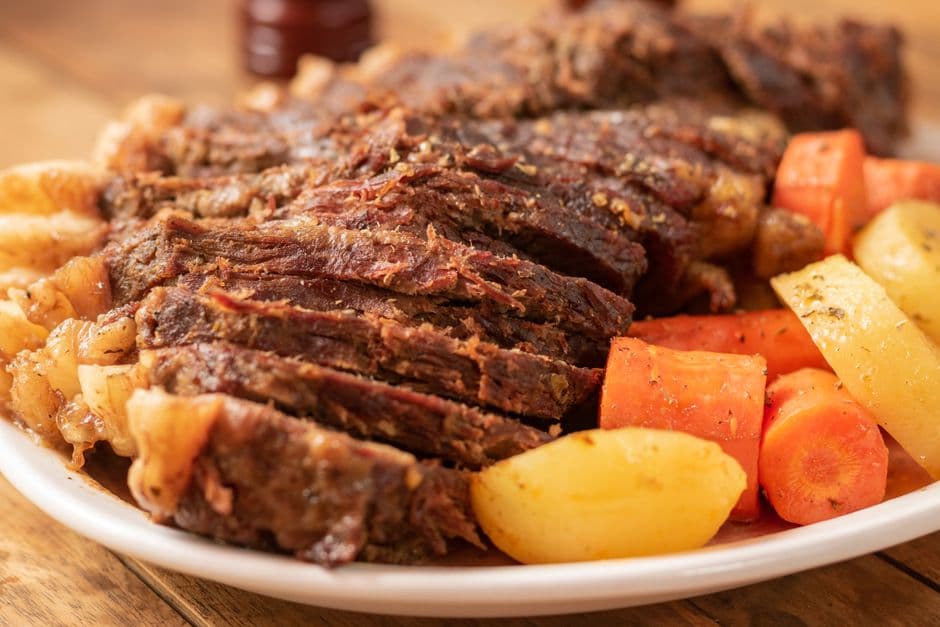
Yankee Pot Roast
Fork-tender braised beef chuck with root vegetables and gravy.
About This Recipe
Yankee pot roast is New England comfort cooking at its finest, a humble chuck roast slowly braised with carrots, potatoes, onions, and herbs until the meat is fork-tender and the vegetables are infused with savory flavor. The key is a well-marbled chuck roast, seared hard to build a deep crust, then braised low and slow in a flavorful liquid of broth, a little tomato, and aromatics. As it cooks, the collagen melts into the gravy, producing rich, velvety results. The braising liquid is finished into a glossy gravy to spoon over everything. It is a one-pot Sunday dinner that rewards patience and fills the house with an irresistible aroma. Searing and a long, gentle braise are non-negotiable for tenderness.
Ingredients
Serves 6
- 3.5 lbsbeef chuck roast
- 2 tbspvegetable oil
- 1 largeonion(quartered)
- 4carrots(cut in chunks)
- 1.5 lbsYukon Gold potatoes(halved)
- 3 ribscelery(cut in chunks)
- 4 clovesgarlic(smashed)
- 2 tbsptomato paste
- 3 cupsbeef broth
- 2bay leaves
- 2 sprigsfresh thyme
- 2 tbspall-purpose flour(for gravy)
Instructions
- 1
Sear the roast
Pat the chuck roast dry, season generously with salt and pepper, and sear in the oil over high heat 4-5 minutes per side until deeply browned. This crust is the foundation of the roast's rich flavor.
Dry meat and a hot pan are essential for a good sear.
- 2
Build the braising base
Remove the roast and add the onion, smashed garlic, and tomato paste to the pot. Cook 2-3 minutes, scraping up the browned bits, until the paste darkens and the onions soften.
- 3
Deglaze and add liquid
Pour in the beef broth and add the bay leaves and thyme, stirring to dissolve all the fond from the bottom of the pot. Return the roast to the liquid.
- 4
Braise low and slow
Cover and braise in a 325F oven for 2.5 hours, turning the roast once halfway. The low, gentle heat melts the connective tissue into tender, succulent meat.
Keep the liquid at a bare simmer, never a hard boil.
- 5
Add the vegetables
Add the carrots, potatoes, and celery to the pot and braise another 45-60 minutes until the vegetables are tender and the meat shreds easily with a fork.
- 6
Make the gravy
Transfer the meat and vegetables to a platter. Whisk the flour with a little water and stir into the braising liquid, simmering until it thickens into a glossy gravy. Slice the roast and serve smothered.
Did you make this?
Rate it and help other cooks find the recipes that actually work.
One tap to sign in, and we'll save the rating you just picked.
Everything you need to plan your week — free
- Meal calendar
- Grocery list
- AI recipe ideas
Track what you eat
Snap your meal to log calories and macros, run fasting timers and track water in the free SnapCal app.
Pro Tips
- →
Use a well-marbled chuck roast; lean cuts turn dry and tough.
- →
Sear the meat hard for a deep crust that flavors the whole dish.
- →
Braise low and slow so the collagen melts into tenderness.
- →
Add vegetables partway through so they cook without falling apart.
Variations
- •
Add a cup of red wine to the braising liquid for deeper flavor.
- •
Include parsnips or turnips with the root vegetables.
- •
Make it in a slow cooker on low for 8 hours after searing.
- •
Stir in pearl onions and mushrooms for a more elegant presentation.
Storage
Refrigerate up to 4 days; pot roast tastes even better the next day. Store the meat in its gravy to stay moist. It freezes well for up to 3 months. Reheat gently on the stovetop or in the oven.
History & Origin
Yankee pot roast is a New England adaptation of European braised beef traditions, named for the frugal Yankee approach of slow-cooking tough, inexpensive cuts into tender meals. The braising technique, often with root vegetables and sometimes a splash of vinegar or tomato, became a beloved Sunday supper across the northeastern United States.
Frequently Asked Questions
What is the best cut for pot roast?
Beef chuck roast is the classic and best choice. It comes from the shoulder and is well marbled with fat and connective tissue that break down during long braising, yielding tender, juicy, flavorful meat. Other braising cuts like brisket or bottom round can work, but lean cuts dry out. Avoid tender, quick-cooking cuts, which turn stringy when braised.
Why is my pot roast tough?
A tough pot roast is almost always undercooked, not overcooked. Chuck needs enough time at a low temperature for its collagen to dissolve into gelatin, which makes the meat tender. If it is still chewy, it simply needs more time in the braising liquid. Keep the liquid at a gentle simmer rather than a hard boil, which toughens meat.
Can I make pot roast in a slow cooker?
Yes. For the best flavor, sear the roast and saute the aromatics on the stove first, then transfer everything to the slow cooker with the broth and herbs. Cook on low for about 8 hours until fork-tender, adding the vegetables in the last few hours so they do not turn to mush. Thicken the liquid into gravy at the end.
How do I thicken the gravy?
The simplest method is a slurry: whisk a few tablespoons of flour or cornstarch with cold water and stir it into the simmering braising liquid until it thickens. You can also reduce the liquid by boiling it down. The melted collagen from the chuck already gives the gravy body, so it usually needs only light thickening.
Nutrition Facts
Per serving (450g / 15.9 oz) · 6 servings total
Time Summary
Have Questions?
Ask our AI cooking assistant anything about this recipe — substitutions, techniques, scaling.
Chat with AI Chef →Featured in Guides
This recipe is featured in the following curated guides:
More American Recipes
You Might Also Like
Similar dishes from other cuisines around the world.
Browse by Ingredient
More recipes built around the same core ingredients.
Free Kitchen Tools
Calculators and converters that pair with this page — no signup needed.
Put This Into a Plan
Schedule it, shop for it, and track what you already have.
Read Next
Longer reads that go deeper on the ideas behind this dish.
Community
Join the conversation
Sign in to leave a comment and save your favourite recipes