
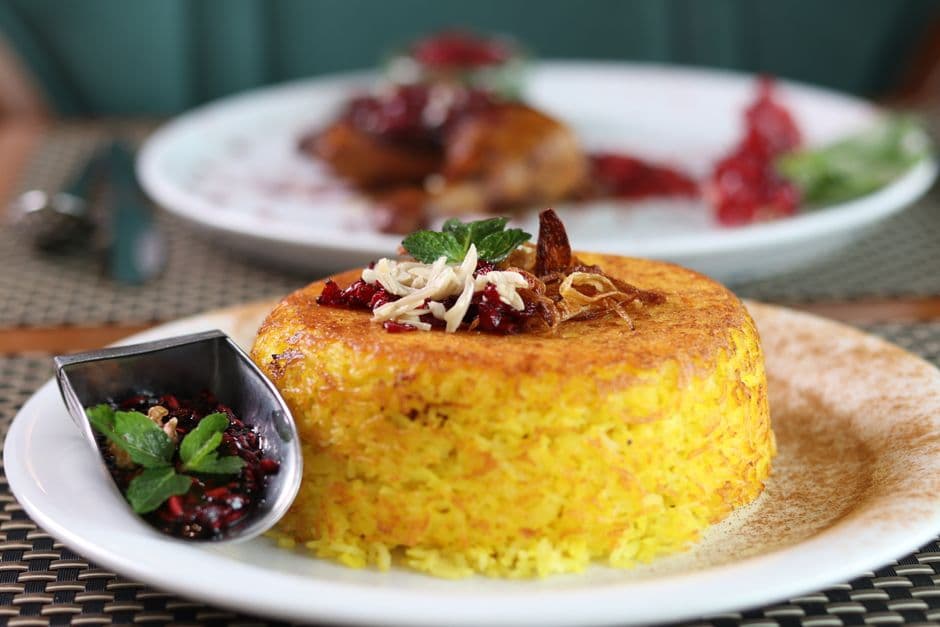
Zereshk Polo Morgh
Persian saffron-fragrant rice jewelled with tart barberries, served alongside tender braised chicken — Iran's most celebrated celebratory dish.
About This Recipe
Zereshk Polo Morgh — barberry rice with chicken — is arguably the most beloved dish in Persian cuisine, served at weddings, celebrations and family gatherings across Iran and the Iranian diaspora. It combines two of Persian cooking's greatest achievements: perfectly steamed rice with a glorious crispy crust (tahdig) and a gently spiced, saffron-golden chicken braise. The barberries (zereshk) that give the dish its name are tiny, intensely tart dried fruits that gleam like rubies against the golden rice. Creating the perfect tahdig — the crusty, caramelised rice base that is the most prized element of any Persian meal — requires practice but rewards patience.
Ingredients
Serves 4
- 400 gbasmati rice
- 800 gchicken thighs and drumsticks(bone-in, skin-on)
- 1 largeonion(thinly sliced)
- 0.5 teaspoonground turmeric
- 1 teaspoonground cinnamon
- 0.5 teaspoonground cardamom
- 250 mlchicken stock or water
- 1 pinchsaffron threads(about 0.3g)
- 3 tablespoonsboiling water(for blooming saffron)
- 80 gdried barberries (zereshk)(rinsed)
- 2 tablespoonssugar
- 80 gunsalted butter or ghee(divided)
- 3 tablespoonsvegetable oil
- 1.5 teaspoonsfine salt(plus more for parboiling)
- 0.5 teaspoonblack pepper
Instructions
- 1
Bloom the saffron and braise the chicken
Crush the saffron with a pinch of sugar in a mortar, add 3 tablespoons of boiling water and steep for 15 minutes. In a heavy pot, heat oil over medium-high heat, brown the chicken pieces on all sides (8 minutes) then remove. Sauté the onion in the same pot until golden (10 minutes). Return the chicken, add turmeric, cinnamon, cardamom, salt, pepper, stock and half the saffron water. Cover and simmer on low heat for 40–45 minutes until the chicken is very tender.
Do not rush the browning — colour on the chicken builds flavour in the braise.
- 2
Parboil the rice
Wash the rice in several changes of water until it runs clear. Soak for 30 minutes in salted cold water, then drain. Bring a large pot of generously salted water to a vigorous boil. Add the rice and cook for 6–7 minutes until almost tender but with a slight bite at the centre. Drain and rinse with cold water.
- 3
Create the tahdig
In a heavy non-stick pot, melt 3 tablespoons of butter or ghee with 2 tablespoons of water over medium heat. When sizzling, add a thin layer of parboiled rice (about a quarter of the total) and gently press flat to cover the base. Mound the remaining rice in a cone shape on top. Use the handle of a wooden spoon to poke 5–6 holes down through the rice to the base for steam to escape.
- 4
Steam the rice
Drape a clean tea towel or double layer of paper towel over the pot rim before placing the lid. Cover and cook over medium heat for 10 minutes, then reduce to the lowest possible heat and cook for a further 35–40 minutes. The base should smell nutty and the rice should be perfectly cooked.
- 5
Prepare the barberries and serve
In a small pan, melt 1 tablespoon of butter over medium heat, add the rinsed barberries and sugar and stir for 2–3 minutes until the berries glisten. Stir in the remaining saffron water. To serve: mound the rice on a platter, scatter the barberries over the top. Invert the pot briefly onto a plate to reveal the golden tahdig alongside. Arrange the chicken pieces around the rice, spooning the braising juices over.
Did you make this?
Rate it and help other cooks find the recipes that actually work.
One tap to sign in, and we'll save the rating you just picked.
Everything you need to plan your week — free
- Meal calendar
- Grocery list
- AI recipe ideas
Track what you eat
Snap your meal to log calories and macros, run fasting timers and track water in the free SnapCal app.
Pro Tips
- →
The towel under the lid is essential — it absorbs steam that would otherwise make the rice wet.
- →
For a golden yoghurt tahdig, mix the first layer of rice with 2 tablespoons of full-fat yoghurt and the remaining saffron water before pressing into the pan.
- →
Barberries are available in Iranian grocery stores and online — dried cranberries are the most accessible substitute.
- →
Taste and adjust salt at the very end — flavors concentrate as liquids reduce, and a final pinch of flaky salt sharpens the whole dish.
Variations
- •
Vegetarian version: replace the chicken with roasted butternut squash and chickpeas in a similar spice braise.
- •
Add slivered toasted almonds and pistachios to the barberry topping for extra texture.
- •
Make with lamb shanks instead of chicken for an even richer celebratory version.
- •
Spicier: add a finely chopped fresh chile or a teaspoon of crushed Aleppo/Urfa pepper to the aromatics for warm, layered heat instead of a single sharp hit.
Storage
Refrigerate leftovers for up to 3 days. The tahdig loses its crunch upon storage but the rice and chicken reheat well. Reheat covered in a low oven or gently in a pot with a splash of water.
History & Origin
Zereshk Polo Morgh has been served at Persian feasts for centuries and is mentioned in medieval Persian culinary texts. Barberries (Berberis vulgaris) grow wild in Iran and have been used in Persian cooking and medicine for at least two thousand years. The dish reflects the Persian aesthetic of combining contrasting flavours — sweet, sour, savoury and aromatic — and the culture's reverence for beautifully presented rice.
Frequently Asked Questions
What can I substitute for barberries?
Dried cranberries are the most widely available substitute — they are less sour, so reduce or omit the added sugar. Dried sour cherries are another option. Pomegranate seeds added fresh at the end provide a similar jewelled effect.
How do I know when the tahdig is ready?
You will hear a gentle sizzling from the base of the pot and smell a slightly nutty aroma. After 35–40 minutes on very low heat, gently lift the edge of the rice near the pot wall with a spatula — if it is golden and pulls away cleanly, it is ready.
Can I make this without a non-stick pot?
Yes — line the bottom with a layer of thinly sliced potato or flatbread (lavash) instead of the plain rice layer to create a non-stick surface and an edible, extra-crispy tahdig.
Can I make this ahead of time?
Yes — most of the components can be prepared up to a day in advance and refrigerated separately. Reheat gently and assemble just before serving so textures stay distinct.
Nutrition Facts
Per serving (560g / 19.8 oz) · 4 servings total
Time Summary
Have Questions?
Ask our AI cooking assistant anything about this recipe — substitutions, techniques, scaling.
Chat with AI Chef →Featured in Guides
This recipe is featured in the following curated guides:
More Persian Recipes
You Might Also Like
Similar dishes from other cuisines around the world.
Browse by Ingredient
More recipes built around the same core ingredients.
Free Kitchen Tools
Calculators and converters that pair with this page — no signup needed.
Put This Into a Plan
Schedule it, shop for it, and track what you already have.
Read Next
Longer reads that go deeper on the ideas behind this dish.
Community
Join the conversation
Sign in to leave a comment and save your favourite recipes