
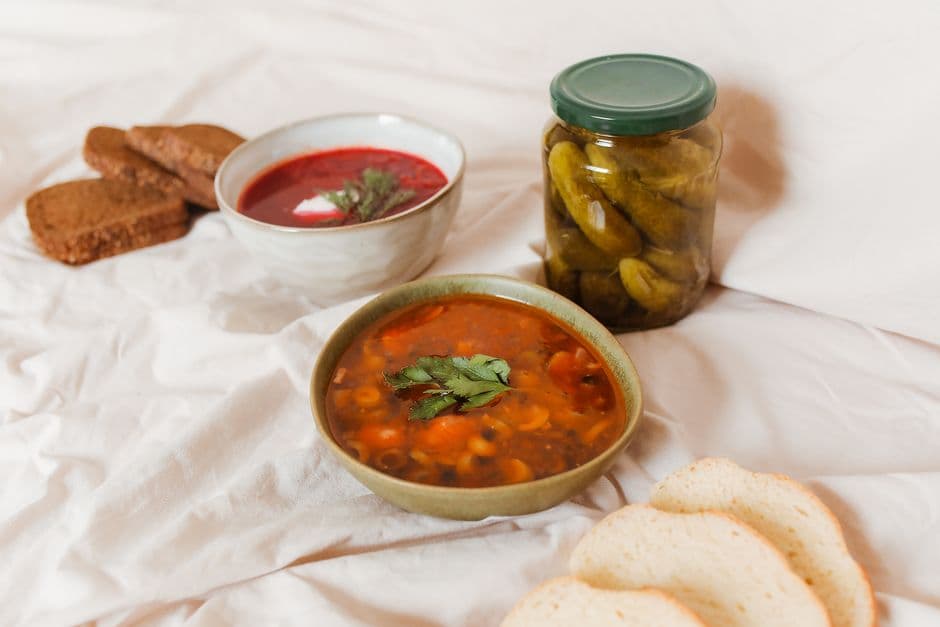
Żurek (Polish Sour Rye Soup)
Poland's extraordinary sour rye soup — a tangy, creamy broth made from fermented rye flour starter, served with boiled egg, kielbasa and horseradish. Easter's essential dish.
About This Recipe
Żurek is one of the most distinctive and unusual soups in European cooking — a soup based on a fermented rye flour starter (zakwas) that gives it a sharp, pleasantly sour, slightly thick character unlike anything in other cuisines. The sourness is not vinegar or lemon — it is the natural lactic acid produced by fermenting rye flour with water for 3–5 days, producing a living, bubbling starter. The soup is finished with cream, marjoram, garlic, and served with thick slices of kielbasa, hard-boiled eggs and grated horseradish. Żurek is the central dish of Polish Easter — every Polish household makes it for Wielka Sobota (Holy Saturday) and Wielkanoc (Easter Sunday).
Ingredients
Serves 4
- 250 mlżurek starter (zakwas)(see below, or buy ready-made liquid żurek)
- 1 litregood pork or chicken stock
- 200 mlsour cream
- 4garlic cloves(minced)
- 1 tspdried marjoram
- 1 tspwhite pepper
- 300 gsmoked kielbasa(sliced into thick rounds)
- 4eggs(hard-boiled, halved)
- 4 tbspprepared horseradish(to serve)
- 4 slicesrye bread(to serve)
- 2 tbspfresh chives(to garnish)
- 4 tbsprye flour(for quick zakwas (starter))
- 300 mlwarm water(for quick zakwas)
- 2garlic cloves(for quick zakwas)
Instructions
- 1
Make quick zakwas (3–5 days ahead)
Mix rye flour and warm water in a jar. Add 2 garlic cloves. Cover loosely with cloth and leave at room temperature 3–5 days, stirring daily, until sour and slightly bubbly. Alternatively, buy ready-made liquid żurek starter from Polish grocery stores.
- 2
Cook kielbasa
Simmer kielbasa slices in a little stock for 5 min. Remove and set aside.
- 3
Make soup base
Bring stock to a simmer. Add minced garlic and marjoram. Simmer 5 min.
- 4
Add zakwas
Slowly whisk the żurek starter into the hot stock. Bring back to a simmer and cook 10 min — the soup will thicken slightly and the sour flavour will develop. Do not boil vigorously.
Add the zakwas gradually, tasting as you go — the sourness varies between starters and you may not want to use all of it.
- 5
Add cream
Stir in sour cream and white pepper. Simmer gently 5 min. Taste and adjust seasoning.
- 6
Serve
Ladle into deep bowls. Add kielbasa slices and halved hard-boiled egg to each bowl. Add a spoonful of horseradish. Garnish with chives. Serve with rye bread.
Did you make this?
Rate it and help other cooks find the recipes that actually work.
One tap to sign in, and we'll save the rating you just picked.
Everything you need to plan your week — free
- Meal calendar
- Grocery list
- AI recipe ideas
Track what you eat
Snap your meal to log calories and macros, run fasting timers and track water in the free SnapCal app.
Pro Tips
- →
Ready-made liquid żurek starter is sold in jars at Polish grocery stores worldwide — it is perfectly acceptable and saves 5 days of fermenting.
- →
The sourness level varies dramatically between starters — taste before adding all of it.
- →
Taste and adjust salt at the very end — flavors concentrate as liquids reduce, and a final pinch of flaky salt sharpens the whole dish.
- →
Mise en place pays for itself: chop, measure and pre-mix everything before the heat goes on, especially for any step that moves fast.
Variations
- •
White borscht (biały barszcz): very similar soup made with kvass (fermented bread water) instead of rye starter
- •
Add diced boiled potato to the soup before serving
- •
Serve in a hollowed round bread loaf for the traditional Easter presentation
- •
Vegetarian: swap the protein for roasted king oyster mushrooms, smoked tofu or cooked chickpeas — adjust seasoning slightly upward to compensate.
Storage
The finished soup keeps 3 days refrigerated. The zakwas keeps 2 weeks refrigerated and continues to develop sourness.
History & Origin
Żurek is documented in Polish cooking from the 15th century and is closely associated with Polish Catholic religious observance. The fermented rye starter produces a soup that is simultaneously nourishing and mildly acidic — ideal for breaking the Lenten fast at Easter. The dish survived 500 years because the starter is self-perpetuating and requires no expensive ingredients.
Frequently Asked Questions
Is żurek the same as white borscht?
They are closely related but different. Żurek uses a fermented rye flour starter for its sourness. White borscht (biały barszcz) uses zakwas buraczany (fermented beet water) or bread kvass. Both are served at Easter with similar garnishes. Żurek is more common in central Poland; white borscht in the east and southeast.
Can I make this ahead of time?
Yes — most of the components can be prepared up to a day in advance and refrigerated separately. Reheat gently and assemble just before serving so textures stay distinct.
What can I substitute if I don't have all the ingredients?
Stay close to the role each ingredient plays: swap aromatics for similar ones (shallot for onion, lime for lemon), and keep the fat-acid-salt balance intact. Spice blends can usually be approximated with what's in the cupboard.
How do I know it's authentic?
Authenticity sits on a spectrum — what matters more is honoring the technique and balance of flavors. If the dish tastes harmonious and respects how cooks in its home region would build it, you're on solid ground.
Nutrition Facts
Per serving · 4 servings total
Time Summary
Have Questions?
Ask our AI cooking assistant anything about this recipe — substitutions, techniques, scaling.
Chat with AI Chef →Featured in Guides
This recipe is featured in the following curated guides:
More Polish Recipes
You Might Also Like
Similar dishes from other cuisines around the world.
Browse by Ingredient
More recipes built around the same core ingredients.
Free Kitchen Tools
Calculators and converters that pair with this page — no signup needed.
Put This Into a Plan
Schedule it, shop for it, and track what you already have.
Read Next
Longer reads that go deeper on the ideas behind this dish.
Community
Join the conversation
Sign in to leave a comment and save your favourite recipes