
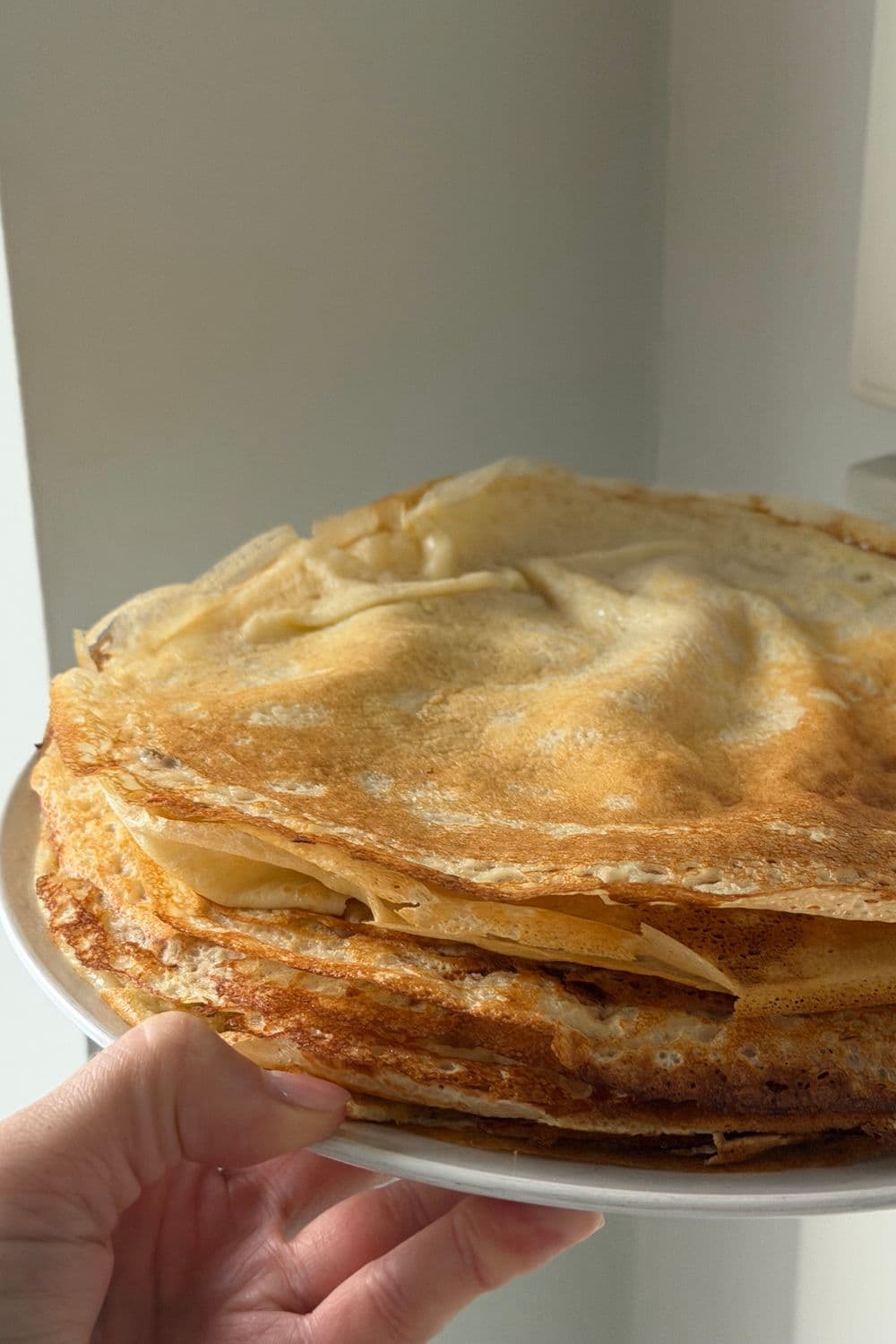
Klasik Fransız Krep Tarifi
Tatlı veya tuzlu dolgular için kenarları mükemmel şekilde gevrek ve ortası yumuşak olan kağıt inceliğinde Fransız krepleri. Bu kolay krep tarifi Nutella ve çileklerden jambon ve peynire kadar her şey için işe yarar.
Bu Tarif Hakkında
Uygun bir Fransız krepi o kadar ince olmalı ki neredeyse içini görebileceksiniz - kenarları dantelli ve altın rengi, ortası esnek. İşin sırrı, çok ince bir hamur, sıcak ve iyi baharatlanmış bir tava ve dökerken ve döndürürken kendine güvenmektir. Glutenin gevşemesi ve kreplerin yırtılmaması için hamurun 30 dakika dinlenmesi gerekir.
Malzemeler
Porsiyonlar 8
- 125 gsade un
- 2büyük yumurtalar
- 300 mltam yağlı süt
- 30 gtuzsuz tereyağı(eritilmiş, artı tava için daha fazlası)
- 0.5 çay kaşığıince tuz
- 1 çay kaşığıpudra şekeri(lezzetli krepleri ihmal edin)
- 1 çay kaşığıvanilya özü(tatlı krepler için)
Yapılışı
- 1
Hamuru yap
Bir kapta un ve tuzu çırpın. Bir kuyu yapın ve yumurtaları ekleyin. Pürüzsüz bir macun elde edene kadar çırpın. İnce, topaksız bir hamur oluşana kadar sütü yavaş yavaş çırpın. Eritilmiş tereyağını ve vanilyayı (kullanıyorsanız) çırpın. Oda sıcaklığında 30 dakika dinlendirin.
Dinlenmek tartışılamaz; gluteni rahatlatır ve lastiksi krepleri önler.
- 2
Krepleri pişirin
20 cm / 8 inç yapışmaz tavayı orta-yüksek ateşte ısıtın. Küçük bir parça tereyağını eritin. 3 yemek kaşığı hamuru dökün ve hemen tavayı ince bir şekilde kaplayacak şekilde çevirin. Kenarlar altın rengi oluncaya ve yüzey kuru görünene kadar 1-2 dakika pişirin.
- 3
Çevir ve bitir
Bir spatulayla çevirin (ya da cesurca bir bilek hareketiyle). İkinci tarafı 30 saniye pişirin. Katmanlar arasında pişirme kağıdı bulunan bir tabağa istifleyin.
Bunu pişirdin mi?
Puanla ve diğer kullanıcıların gerçekten işe yarayan tarifleri bulmasına yardım et.
Tek dokunuşla giriş yap, az önce seçtiğin puanı biz kaydedelim.
Haftanı planlamak için gereken her şey — ücretsiz
- Yemek takvimi
- Market listesi
- Yapay zeka tarif önerileri
Ne yediğini takip et
Öğününün fotoğrafını çekerek kalori ve makroları kaydet, aralıklı oruç zamanlayıcısı kullan ve su takibi yap — ücretsiz SnapCal uygulamasında.
Profesyonel İpuçları
- →
İlk krep her zaman bir deneme krepidir; kusurluysa cesaretiniz kırılmasın.
- →
Hamuru döktüğünüz anda tavayı döndürün; hız, ince, eşit bir katman oluşturur.
- →
Bir kepçe veya ölçüm kabı (kaşık değil) daha kontrollü miktarlar döker.
Varyasyonlar
- •
Crêpes Suzette: Portakal tereyağında kızartılmış ve klasik Fransız tatlısı Grand Marnier.
- •
Tuzlu galetteler: Geleneksel Breton galetleri (doğal olarak glütensiz) için sade un yerine karabuğday unu kullanın.
Depolama
Pişmiş krepleri her birinin arasına pişirme kağıdı koyun. 3 gün buzdolabında saklayın veya 1 ay dondurun. Kuru bir tavada 30 saniye boyunca tekrar ısıtın.
Tarih ve Köken
Krep, karabuğdayın kolayca yetiştiği Fransa'nın kuzeybatısındaki Brittany'de doğmuştur. Geleneksel Breton versiyonu (galette) karabuğdaydan yapılır ve lezzetli malzemelerle doldurulur. İnce buğday unu krepleri, Fransa'da Chandeleur (2 Şubat'ta Candlemas) ile ilişkilendirildi ve artık yıl boyunca yeniyor.
Sıkça Sorulan Sorular
Kreplerim neden kalın?
Hamur çok kalın. Yavaş yavaş daha fazla süt ekleyin; hamur ince krema kıvamında olmalıdır.
Kreplerim ters çevrildiğinde neden yırtılıyor?
Ya hamurun daha fazla dinlenmeye ihtiyacı vardı, ya tava yeterince sıcak değildi ya da çok erken çevirdiniz. Krep, kenarları altın rengine döndüğünde ve yüzeyi tamamen kuruduğunda çevrilmeye hazırdır.
Krep hamuru bir gece önceden yapılabilir mi?
Evet - hamur aslında buzdolabında bir gece dinlendirildikten sonra iyileşir. Kullanmadan önce oda sıcaklığına getirin ve karıştırın.
Krep ve krep arasındaki fark nedir?
Kreplerde mayalayıcı madde (kabartma tozu yok) kullanılmaz ve çok daha fazla sıvı kullanılır; bu da kalın, kabarık krepler yerine kağıt inceliğinde, esnek ambalajlar elde edilmesini sağlar.
Besin Değerleri
Porsiyon başına (150g) · 8 toplam porsiyon
Zaman Özeti
Sorularınız mı var?
Yapay zekalı pişirme asistanımıza bu tarifle ilgili her şeyi sorun (değiştirmeler, teknikler, ölçeklendirme).
AI Chef ile sohbet et →Kılavuzlarda Öne Çıkanlar
Bu tarif aşağıdaki seçilmiş kılavuzlarda yer almaktadır:
Daha Fazla Fransız Tarifi
Bunları da Beğenebilirsiniz
Dünyanın diğer mutfaklarından benzer yemekler.
Malzemeye Göre Keşfet
Aynı temel malzemelerle hazırlanan diğer tarifler.
Ücretsiz Mutfak Araçları
Bu sayfayla birlikte kullanabileceğiniz hesaplayıcılar ve çeviriciler — kayıt gerekmez.
Bunu Bir Plana Dönüştür
Takvime ekle, alışveriş listesi çıkar, elindekileri takip et.
Sıradaki Okuma
Bu yemeğin arkasındaki fikirleri derinleştiren uzun yazılar.
Fransız Mutfağı: Tam Bir Bistro Klasikleri, Ana Soslar ve Her Aşçının Bilmesi Gereken Teknikler
14 dk
Magnezyum Eksikliği: İnsanların %50'sinin Neden Düşük Olduğu ve Bunun Gıda Yoluyla Nasıl Düzeltileceği Hakkında Tam Bir Bilgi
12 dk
Orucu ne bozar? Test Edilen 40 Yiyecek ve İçecek — Tam Bir Kılavuz
17 dk
Topluluk
Sohbete katılın
Yorum bırakmak ve favori tariflerinizi kaydetmek için oturum açın