koreandinner🔥 Trending
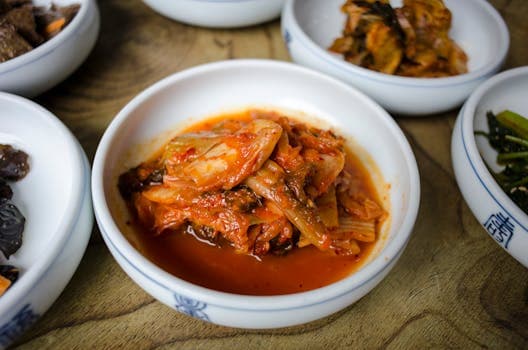
Kimchi Jjigae (Kimchi Stew)
Korea's beloved spicy kimchi and pork stew — deeply savoury, warming, and the ultimate comfort food.
Prep
10 min
Cook
30 min
Servings
4
Difficulty
Easy
★★★★★
4.8(9,870 ratings)#korean#kimchi#pork#stew#spicy#comfort
About This Recipe
Kimchi Jjigae is the most comforting dish in Korean cuisine. Aged kimchi (the older the better) is simmered with pork belly, tofu and a rich broth into a deeply savoury, spicy, umami-laden stew. It's eaten year-round but is most loved in winter, served bubbling hot in a stone pot alongside rice.
Ingredients
Serves 4
- 400 gaged kimchi(at least 2 weeks old, roughly chopped)
- 200 gpork belly(thinly sliced)
- 200 gfirm tofu(cubed)
- 600 mlwater or anchovy stock
- 3 tbspkimchi juice(from the kimchi jar)
- 2 tbspgochugaru (Korean chilli flakes)
- 1 tbspgochujang (Korean chilli paste)
- 1 tbspsoy sauce
- 1 tspsesame oil
- 3spring onions(sliced)
- 3garlic cloves(minced)
Instructions
- 1
Brown the pork
In a heavy pot, cook pork belly over medium-high heat until the fat renders and edges caramelise. This fat becomes the flavour base.
- 2
Add kimchi
Add kimchi and gochugaru. Stir-fry with the pork fat for 3–4 minutes, allowing the kimchi to caramelise slightly. Add gochujang, garlic and cook 1 more minute.
Using aged, sour kimchi is the secret — fresh kimchi doesn't have the fermented depth.
- 3
Add liquids
Add water/stock and kimchi juice. Bring to a boil, then simmer uncovered for 15 minutes.
- 4
Add tofu and season
Gently add tofu cubes. Simmer 5 more minutes — don't stir too aggressively or the tofu breaks. Season with soy sauce. Drizzle sesame oil. Top with spring onions.
- 5
Serve
Serve in the pot it was cooked in, still bubbling. Eat with steamed short-grain rice and additional kimchi on the side.
Pro Tips
- →
Aged kimchi is everything — buy it weeks ahead or use leftover kimchi that's gone sour.
- →
Anchovy stock gives authentic Korean depth — steep dried anchovies and kelp in cold water 30 minutes.
- →
The stew should be vigorously boiling when served — the bubbling enhances the flavour.
Variations
- •
Tuna kimchi jjigae: add a can of tuna instead of pork — a budget-friendly version.
- •
Vegetarian: skip pork, use mushroom stock, add shiitake mushrooms.
Storage
Keeps 4 days — it gets better each day as flavours deepen.
History & Origin
Kimchi jjigae evolved alongside kimchi fermentation culture, which dates back over 3,000 years in Korea. It became a staple during the Joseon Dynasty and remains South Korea's most commonly eaten stew. Every Korean family has their own version — the recipe varies by region and the age of the kimchi used.
Frequently Asked Questions
Can I use fresh kimchi?
Fresh kimchi lacks the fermented sourness that defines kimchi jjigae. If that's all you have, add a splash of rice vinegar and let it cook longer to develop some tang.
Nutrition Facts
Per serving (350g) · 4 servings total
Calories380kcal
Protein24g
Carbohydrates14g
Fat26g
Fiber4g
Protein24g
Carbs14g
Fat26g
Time Summary
Prep time10 min
Cook time30 min
Total time40 min
Have Questions?
Ask our AI cooking assistant anything about this recipe — substitutions, techniques, scaling.
Chat with AI Chef →More Korean Recipes
Community
Join the conversation
Sign in to leave a comment and save your favourite recipes