koreandinner🔥 Trending
Korean Fried Chicken Recipe — Double-Fried, Crispy & Glazed
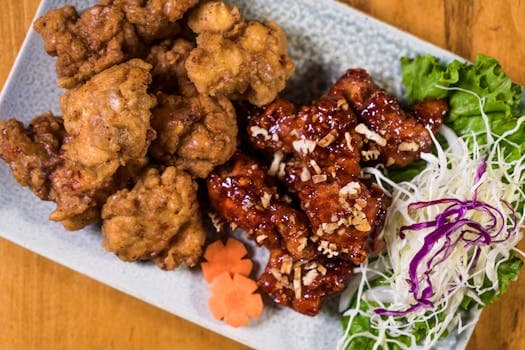
The crispiest Korean fried chicken — double-fried for a shatteringly thin, glass-like crust, tossed in a sweet-spicy gochujang glaze. This authentic Korean fried chicken recipe is the world's crispiest fried chicken.
Prep
20 min
Cook
30 min
Servings
4
Difficulty
Medium
★★★★★
4.9(9,180 ratings)#korean fried chicken#KFC#Korean#crispy chicken#gochujang#double fried#chicken wings#sweet spicy
About This Recipe
Korean fried chicken (yangnyeom chikin) is a revelation in fried chicken — the double-frying technique produces an almost glass-like crust that stays crispy for hours, unlike American fried chicken which softens quickly. The sweet-spicy gochujang glaze clings to every crevice. This is the dish that conquered the world of chicken, now a global street food phenomenon.
Ingredients
Serves 4
- 1 kgchicken wings(split into flats and drums)
- 100 gpotato starch or cornstarch
- 60 gplain flour
- 1 tspbaking powder
- 1 tspgarlic powder
- 1 tspsalt
- 1 litrevegetable oil(for frying)
- 3 tbspgochujang(Korean chilli paste, for glaze)
- 2 tbspsoy sauce
- 2 tbsphoney
- 1 tbsprice vinegar
- 2 clovesgarlic(minced, for glaze)
- 1 tbspsesame seeds(to garnish)
Instructions
- 1
Coat the chicken
Pat wings completely dry. Mix potato starch, flour, baking powder, garlic powder and salt. Toss wings in the coating until fully covered. Rest 10 minutes on a rack.
Potato starch (not cornstarch) gives the finest, most glass-like crust — use it if available.
- 2
First fry (cook through)
Heat oil to 160°C / 325°F. Fry wings in batches for 10–12 minutes until cooked through but pale. Drain on a rack. Rest 5 minutes.
- 3
Second fry (crisp up)
Increase oil to 190°C / 375°F. Fry wings again for 3–4 minutes until the crust is golden and shatteringly crispy. The difference from first to second fry is dramatic.
- 4
Make the glaze and toss
Simmer gochujang, soy, honey, vinegar and garlic in a pan for 2–3 minutes until slightly thickened. Toss hot wings immediately in the glaze. Garnish with sesame seeds.
Pro Tips
- →
Completely dry chicken before coating — surface moisture creates steam that prevents crisping.
- →
Baking powder in the coating reacts with the chicken's moisture to create extra bubbles and crunch.
- →
Double frying is essential for Korean chicken — the first fry cooks it through, the second fry crisps it.
Variations
- •
Soy garlic chicken: replace gochujang glaze with a sauce of soy, garlic, butter and sugar.
- •
Non-spicy: use just the soy-garlic glaze without gochujang for a milder but equally delicious version.
Storage
Best eaten immediately — Korean fried chicken's crunch holds for 1–2 hours but softens further. Reheat in a 220°C oven for 8 minutes to restore crunch.
History & Origin
Fried chicken came to Korea with American influence post-WWII, but Koreans reinvented it entirely. The double-frying technique and thin coating were innovations specific to Korean chicken shops (chikin-jip). The dish exploded globally in the 2010s, partly driven by Korean pop culture (K-pop) and the international spread of Korean cuisine.
Frequently Asked Questions
What makes Korean fried chicken different?
The double-frying technique and thin coating (potato starch) create a dramatically crispier, lighter crust than American fried chicken. The sweet-spicy glaze is also distinctively Korean.
What is gochujang?
Gochujang is a Korean fermented chilli paste with a deep, complex sweet-spicy-savoury flavour. It's available in most Asian supermarkets and online.
Can Korean fried chicken be made in an air fryer?
Yes — air fry at 200°C for 20 minutes, flipping halfway. The crust isn't quite as shatteringly crispy as oil-fried, but it's a great lighter option.
What is the difference between yangnyeom chicken and original Korean fried chicken?
Original Korean fried chicken (original) has no glaze — just the thin, crispy coating. Yangnyeom is the glazed, spicy version. Both are equally popular.
Nutrition Facts
Per serving (400g) · 4 servings total
Calories520kcal
Protein36g
Carbohydrates38g
Fat24g
Fiber1g
Protein36g
Carbs38g
Fat24g
Time Summary
Prep time20 min
Cook time30 min
Total time50 min
Have Questions?
Ask our AI cooking assistant anything about this recipe — substitutions, techniques, scaling.
Chat with AI Chef →More Korean Recipes
Community
Join the conversation
Sign in to leave a comment and save your favourite recipes