
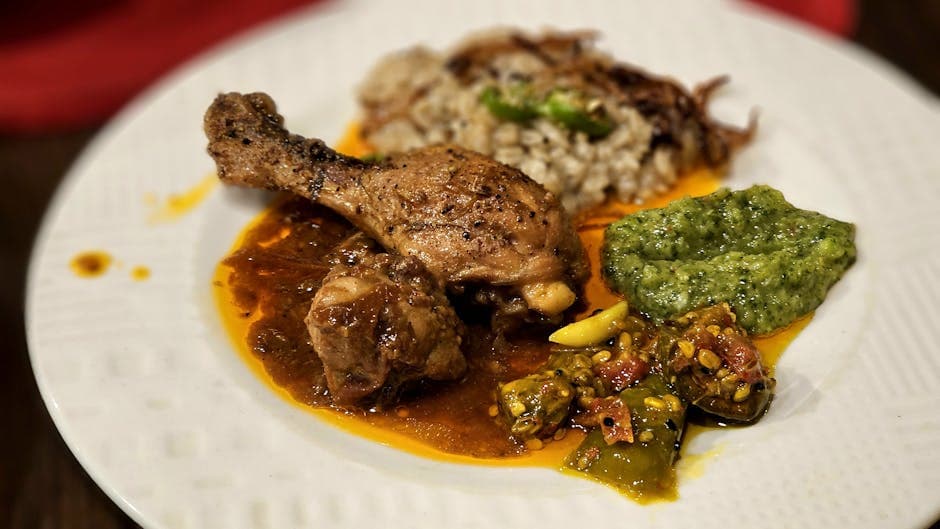
Chettinad 鸡(泰米尔纳德邦胡椒咖喱)
印度南部最美味的咖喱——泰米尔纳德邦鸡肉配以黑胡椒、茴香和烤椰子制成的烤香料马沙拉。
关于这个食谱
切蒂纳德鸡是南印度最具侵略性的咖喱,是泰米尔纳德邦商人切蒂亚尔社区的杰作,他们在 19 世纪的贸易财富使他们获得了最珍贵的完整香料。其特色是马萨拉:黑胡椒、茴香、八角、kalpasi(石花地衣)和烤椰子,全部干烤至深棕色,然后与红辣椒一起磨成粗而芳香的粉末。将鸡肉与咖喱叶、番茄、大量芥末籽和青葱一起放入马萨拉中慢炖,直到肉汁紧紧粘住。结果是深色、胡椒味和明显的南印度风味——在 Chettiar 家庭中与蒸米饭、dosa 或 appam 一起食用,香料架是家里最守卫的房间。
食材
服务 4
- 800 克带骨鸡腿和鸡腿
- 1 汤匙姜蒜酱
- 1 茶匙姜黄粉
- 1.5 茶匙盐
- 3 汤匙椰子油或芝麻油
- 2 中洋葱,切碎
- 2 中西红柿,切碎
- 20新鲜咖喱叶
- 2青辣椒,切开
- 1 茶匙黑芥末籽
- 8小葱,去皮
- 2 汤匙新鲜香菜,切碎
- 300 毫升热水
- 2 汤匙磨碎的新鲜椰子
- 5干克什米尔红辣椒,去籽
- 2干Byadgi红辣椒(或另外3个克什米尔辣椒)
- 1 汤匙黑胡椒
- 1 汤匙茴香籽
- 1 茶匙小茴香种子
- 1 茶匙香菜籽
- 1 stick肉桂(小)
- 4丁香
- 3绿豆蔻
- 1八角茴香
- 1 small piecekalpasi (dagad phool) — 可选
步骤
- 1
把鸡肉腌制一下
将鸡肉与姜蒜酱、姜黄和 1 茶匙盐混合。休息20分钟。
- 2
烤马沙拉香料
在干锅中,用中火烘烤花椒、茴香、小茴香、香菜、肉桂、丁香、小豆蔻、八角茴香和 kalpasi,直至散发出香味,大约 4 分钟。最后一分钟加入干辣椒。稍微凉一下。
- 3
烤椰子
在同一个平底锅中,将磨碎的椰子烤至深金黄色 — 3-4 分钟。凉爽的。
- 4
研磨马萨拉
在香料研磨机中将烤香料和椰子研磨成粗粉。质地应该像粗沙,而不是面粉。
- 5
塔卡和洋葱
在重锅中加热椰子油。加入芥菜籽;当它们爆开时,加入咖喱叶、青辣椒和整个青葱。煎1分钟。加入切碎的洋葱;煮至深金黄色 — 10 分钟。
- 6
煮西红柿
加入西红柿;煮6分钟,直到它们分解并且油分离。添加切蒂纳德马沙拉粉。在油中烤2分钟,不断搅拌。
- 7
添加鸡肉
加入腌制好的鸡肉。拌匀,涂上马沙拉。煮 5 分钟,将鸡肉密封在香料中。
- 8
煨
加入热水和剩余的盐。用文火煮,盖上锅盖,煮 25 分钟,直至鸡肉变软,肉汁紧紧地粘在鸡肉块上。
Chettinad 肉汁应该是浓稠的,而不是汤状的——最后 5 分钟揭开盖子,如果需要的话可以减少汁液的量。
- 9
完成
拌入新鲜香菜。休息5分钟。与蒸米饭、dosa 或 parotta 一起食用。
你做过这道菜吗?
给它评分,帮助其他人找到真正好用的食谱。
一键登录,我们会保存你刚刚选择的评分。
规划一周饮食所需的一切 — 免费
- 膳食日历
- 购物清单
- AI 食谱推荐
记录你的饮食
在免费的 SnapCal 应用中拍下餐食即可记录卡路里和宏量营养素,还能使用断食计时器和饮水记录。
专业提示
- →
如果你想要最大程度的控制,请单独烘烤每种香料——它们以不同的速度完成烘烤。
- →
Kalpasi(石花/dagad phool)赋予 Chettinad 烟熏泥土的主干;印度杂货店有存货。跳过它而不是替代它——没有真正的等价物。
- →
将每批新鲜的马萨拉磨碎;预研磨的 Chettinad 粉末在一周内就会失去 50% 的特性。
- →
使用椰子油最传统的风味;芝麻(姜汁)油是一种区域性替代品。
变化
- •
用羊肉或山羊肉代替——将炖时间延长至 60 分钟。
- •
Chettinad 咖喱鱼使用与石首鱼牛排相同的马萨拉;只需煮8分钟。
- •
添加一汤匙罗望子酱,以获得更酸味的马杜赖风格版本。
存储
冷藏最多3天;一夜之间味道加深。用 2 汤匙水轻轻重新加热。在密封容器中可冷冻 2 个月。
历史与起源
Chettinad 美食于 19 世纪在 Nattukottai Chettiars 中发展起来,Nattukottai Chettiars 是一个泰米尔贸易社区,他们的东南亚和缅甸贸易路线使他们能够以独特的方式获得八角茴香和 kalpasi 等香料。切蒂纳德鸡是该社区最著名的招牌香料菜肴。
常见问题解答
切蒂纳德鸡应该很辣吗?
是的,热量主要来自黑胡椒和新鲜辣椒,而不是干辣椒粉,后者会产生更强烈、更芳香的灼烧感。将花椒减少一半,以获得更温和的版本。
我可以用什么来代替劫?
没有什么味道能与它媲美——它带有烟熏泥土的麝香。跳过它并添加额外的丁香和一小撮肉豆蔻,接受这道菜会略有不同。
我可以用鸡胸肉代替带骨吗?
可以,但味道和质地会受到明显影响。如果使用鸡胸肉,请将其切块,腌制更长时间,并将炖时间缩短至 12 分钟,以免变干。
营养成分
每份 (340g) · 4 总份量
时间总结
更多印度食谱
你可能也喜欢
来自世界其他菜系的相似菜肴。
按食材浏览
使用相同核心食材的更多食谱。
免费厨房工具
与本页搭配使用的计算器和单位换算工具,无需注册。
把它变成计划
加入日历、生成购物清单、掌握家里已有的食材。
社区
加入对话
登录发表评论并保存您最喜欢的食谱