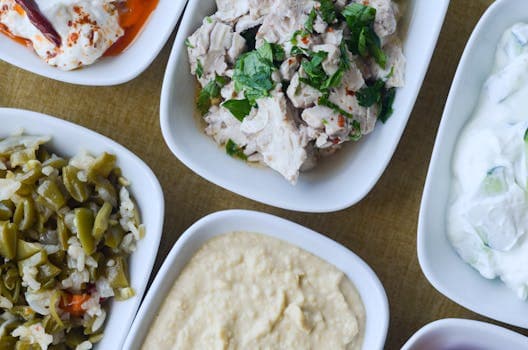
greekstarter
Greek Tzatziki – Thick Yogurt with Cucumber, Garlic and Dill
Creamy strained yogurt with grated cucumber, garlic and fresh dill — the essential Greek condiment and dip.
Prep
15 min
Cook
0 min
Servings
6
Difficulty
Easy
★★★★★
4.8(24,600 ratings)#greek#dip#yogurt#cucumber#vegetarian#gluten-free
About This Recipe
Tzatziki is one of the most universally beloved sauces in the world — a thick, cooling Greek yogurt dip with grated cucumber, garlic, fresh dill, and a generous drizzle of olive oil. It is served alongside virtually every Greek meal: as a dip with warm pita, alongside grilled meats and souvlaki, with fried fish, or dolloped over moussaka and pastitsio. The combination of cooling yogurt, fresh dill, and the slight sharpness of raw garlic is uniquely refreshing and palate-cleansing. Authentic Greek tzatziki uses strained yogurt (Greek yogurt in international markets) — a product that is thicker than regular yogurt because most of the whey has been removed. The cucumber must be grated and thoroughly squeezed to remove its water, preventing the tzatziki from becoming watery. The garlic should be pounded to a smooth paste with salt — grated or minced garlic leaves chunks and uneven flavour distribution. Tzatziki improves with an hour's rest in the fridge, which allows the garlic flavour to mellow and permeate the yogurt. Make it a few hours before serving, always.
Ingredients
Serves 6
- 500 gGreek (strained) yogurt
- 1large cucumber
- 3 clovesgarlic(pounded to a paste with a pinch of salt)
- 3 tbspfresh dill(finely chopped)
- 2 tbspextra-virgin olive oil(plus more to serve)
- 1 tbspwhite wine vinegar or lemon juice
- 1 tspsalt
Instructions
- 1
Prepare cucumber
Grate cucumber on the coarse side of a box grater. Place in a clean tea towel or cheesecloth and squeeze firmly until almost dry.
Removing the water is essential — inadequately squeezed cucumber makes the tzatziki watery within 30 minutes.
- 2
Pound the garlic
Using a mortar and pestle, pound garlic cloves with a pinch of salt until a smooth paste forms.
- 3
Combine
Mix yogurt, cucumber, garlic paste, dill, olive oil and vinegar. Season with salt.
- 4
Rest and serve
Refrigerate at least 1 hour. Serve drizzled with olive oil and a sprig of dill, with warm pita.
Pro Tips
- →
Squeeze every drop of water from the cucumber — this is the most important step.
- →
Pounding garlic to a paste distributes it evenly and mellows the harshness.
- →
Full-fat Greek yogurt produces the best flavour and texture. Low-fat versions are too thin.
Variations
- •
Add 1 tbsp fresh mint for a more aromatic version common in Crete.
- •
Include a tablespoon of toasted walnuts for a Macedonian-style variation.
Storage
Keeps 3 days in the fridge, covered. Stir before serving.
History & Origin
Tzatziki has ancient roots in the Eastern Mediterranean, with yogurt-cucumber combinations recorded across the region for thousands of years. The Greek version became internationally famous through the spread of Greek cuisine globally in the 20th century, particularly Greek diaspora restaurants. It is one of the core elements of Greek meze culture alongside hummus, taramasalata and feta. The name derives from the Turkish 'cacık' and Persian 'mâst-o-khiar.'
Frequently Asked Questions
What is the difference between tzatziki and cacık?
Tzatziki (Greek) and cacık (Turkish) are very similar yogurt-cucumber dips with the same ancient origin. Greek tzatziki tends to be thicker, uses dill as the primary herb, and has a stronger garlic presence. Turkish cacık can be thinner (sometimes diluted to a soup), uses dried mint alongside fresh herbs, and is slightly lighter in garlic. Both are delicious.
Nutrition Facts
Per serving (150g) · 6 servings total
Calories120kcal
Protein8g
Carbohydrates7g
Fat6g
Fiber0g
Protein8g
Carbs7g
Fat6g
Time Summary
Prep time15 min
Cook time0 min
Total time15 min
Have Questions?
Ask our AI cooking assistant anything about this recipe — substitutions, techniques, scaling.
Chat with AI Chef →More Greek Recipes
Community
Join the conversation
Sign in to leave a comment and save your favourite recipes