koreanlunch🔥 Trending✨ New
Bibimbap (Korean Mixed Rice Bowl)
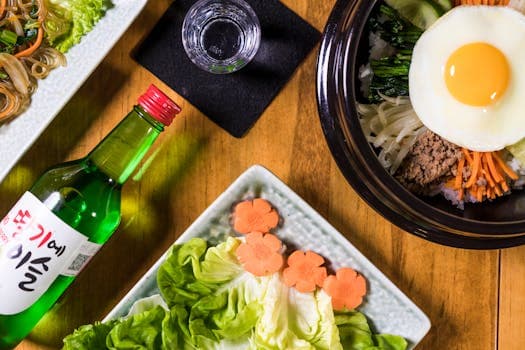
Vibrant bowl of rice, seasoned vegetables, gochujang and a sunny-side egg — Korean comfort food perfected.
Prep
30 min
Cook
20 min
Servings
2
Difficulty
Medium
★★★★★
4.8(2,876 ratings)#korean#rice#vegetarian-optional#healthy#colourful
About This Recipe
Bibimbap (비빔밥) translates as 'mixed rice' and is one of Korea's most beloved dishes. Each vegetable is individually seasoned to respect its own character, then arranged beautifully on rice for a dish that is as visually striking as it is delicious. The gochujang sauce ties everything together.
Ingredients
Serves 2
- 300 gcooked short-grain white rice
- 200 gspinach
- 1medium zucchini(julienned)
- 1large carrot(julienned)
- 100 gshiitake mushrooms(sliced)
- 100 gbean sprouts
- 200 gground beef (optional)
- 2eggs
- 3 tbspgochujang (Korean chilli paste)
- 1 tbspsesame oil
- 1 tbspsoy sauce
- 1 tbspsesame seeds
- 2 tspsugar
- 3 clovesgarlic(minced, divided)
Instructions
- 1
Make gochujang sauce
Mix gochujang, 1 tbsp sesame oil, soy sauce, sugar, 1 clove minced garlic, 1 tbsp water. Taste — adjust heat and sweetness.
- 2
Blanch spinach
Blanch spinach 30 seconds. Squeeze dry. Toss with ½ tsp sesame oil, ½ tsp soy sauce, pinch of garlic, sesame seeds.
- 3
Sauté each vegetable separately
Sauté zucchini, carrots and bean sprouts separately in a little sesame oil with a pinch of salt and garlic, just until wilted. Keep separate — each must stay distinct.
Cooking each vegetable separately is the Korean way — it respects each ingredient's texture and flavour.
- 4
Cook shiitake mushrooms
Sauté mushrooms in a little oil with soy sauce and a touch of sugar until glazed and tender.
- 5
Brown the beef (if using)
Brown ground beef over high heat. Season with soy sauce, sesame oil, garlic and a pinch of sugar.
- 6
Fry the eggs
Fry eggs sunny-side up — yolk should be runny. The yolk becomes part of the sauce when mixed.
- 7
Assemble and serve
Place rice in a warm bowl. Arrange each vegetable and beef in separate sections around the rice (like a colour wheel). Place egg in the center. Add a spoonful of gochujang sauce. Serve with extra sauce on the side. Mix everything together before eating.
Pro Tips
- →
Arranging the toppings neatly before serving is part of the experience — eat with your eyes first.
- →
The runny egg yolk is crucial — it mixes with gochujang to create a natural sauce.
- →
Dolsot bibimbap (stone bowl) creates a crispy rice crust at the bottom — use a heavy cast-iron skillet if you don't have a dolsot.
Variations
- •
Dolsot bibimbap: serve in a preheated stone bowl for crispy bottom rice.
- •
Seafood bibimbap: replace beef with raw salmon or marinated raw tuna.
Storage
Components keep separately in the refrigerator for 3 days. Assemble fresh.
History & Origin
Bibimbap has been documented in Korean literature since the Joseon Dynasty (1392–1897). It was traditionally eaten on New Year's Eve to use up all the side dishes (banchan) before the new year — a feast of beautiful efficiency.
Frequently Asked Questions
What is gochujang?
Gochujang is a Korean fermented red chilli paste — thick, spicy, slightly sweet and deeply savoury. Find it at Korean/Asian stores or online. It keeps in the refrigerator for 6 months.
Nutrition Facts
Per serving (400g) · 2 servings total
Calories620kcal
Protein28g
Carbohydrates82g
Fat18g
Fiber8g
Protein28g
Carbs82g
Fat18g
Time Summary
Prep time30 min
Cook time20 min
Total time50 min
Have Questions?
Ask our AI cooking assistant anything about this recipe — substitutions, techniques, scaling.
Chat with AI Chef →More Korean Recipes
Community
Join the conversation
Sign in to leave a comment and save your favourite recipes