
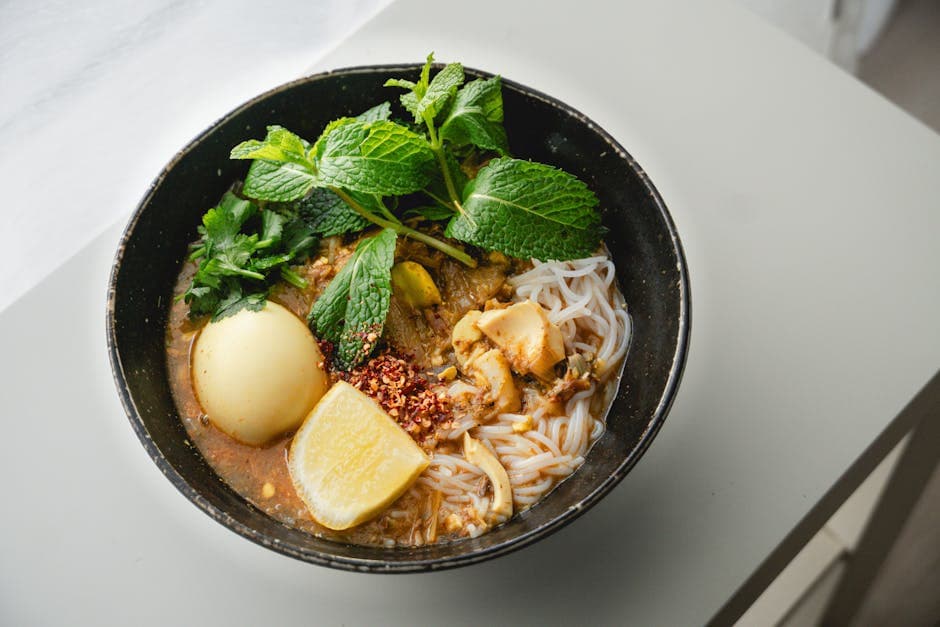
Mohinga (Burmese Fish Noodle Soup)
El desayuno nacional de Myanmar: fideos de arroz en un caldo de bagre y tallo de plátano muy condimentado, coronado con crujientes buñuelos y lima.
Acerca de esta receta
Mohinga es el plato nacional de Myanmar y el desayuno del que cada familia birmana debate cuál es la versión adecuada. Un caldo profundamente sabroso, casi espeso como una papilla, se prepara con bagre (u otro pescado de agua dulce) cocido a fuego lento con limoncillo, jengibre, cúrcuma, tallo de plátano, harina de garbanzos tostada y una generosa cantidad de cebollas y chalotes fritos. Servido sobre fideos de arroz, el tazón se completa con huevo duro, buñuelos crujientes de guisantes partidos (akyaw), salsa de pescado, chile en polvo, cilantro fresco y una rodaja de lima. La mohinga, que se come de pie en los puestos callejeros desde el amanecer hasta las 10 de la mañana, es el raro plato en el que cada cucharada cambia (crujiente, salmuera, perfumada, agria, salada), lo que hace que comer lentamente sea casi meditativo.
Ingredientes
Sirve 6
- 800 gbagre de agua dulce o tilapia entera, limpia
- 1.5 Lagua
- 4 talloshierba de limón, magullada
- 1 pulgarginger, sliced
- 1 cdtacúrcuma molida
- 2 cdtasal
- 4 cdaaceite neutro
- 2 grandeonions, sliced
- 6 dientesajo, picado
- 1 pulgarjengibre extra, picado
- 2 cdtapimentón
- 1 cdtashrimp paste
- 3 cdasalsa de pescado
- 60 gharina de garbanzo (besan), tostada y mezclada con 200 ml de agua hasta obtener una pasta
- 200 gtallo de plátano o palmito tierno, finamente rebanado (opcional pero tradicional)
- 400 gfideos de arroz, cocidos según el paquete
- 6huevos duros, partidos por la mitad
- 12buñuelos de guisantes partidos (akyaw) o pakoras de lentejas compradas en la tienda
- cilantro fresco, cebolletas en rodajas, rodajas de lima, aceite de ajo frito y hojuelas de chile para servir
Instrucciones
- 1
Escalfar el pescado
Cocine a fuego lento el pescado en agua con limoncillo, jengibre en rodajas, cúrcuma y sal durante 15 minutos hasta que esté tierno. Brincar; desmenuce la carne, deseche la piel y los huesos. Cuela el caldo y reserva.
- 2
Hacer una base fragante
Calentar aceite en una olla amplia. Freír las cebollas durante 12 minutos hasta que estén bien doradas y empezando a estar crujientes (esta caramelización lenta es el alma del sabor de mohinga).
- 3
Añadir los aromáticos
Agregue el ajo, el jengibre picado, el pimentón y la pasta de camarones. Cocine 2 minutos hasta que esté fragante y el aceite se enrojezca.
- 4
Devolver pescado y caldo
Agrega el pescado desmenuzado; agregue aceite para cubrir, 1 minuto. Vierta el caldo reservado y la salsa de pescado. Llevar a fuego lento.
- 5
Espesar con purín de garbanzos
Incorpora lentamente la mezcla de garbanzos. Cocine durante 10 minutos, revolviendo con frecuencia, hasta que el caldo se espese y adquiera una consistencia cremosa, casi parecida a una papilla.
Tuesta la harina de garbanzos en una sartén durante 4 minutos antes de mezclarla; el besan crudo tiene un sabor amargo.
- 6
Añadir el tallo de plátano
Agregue el tallo de plátano (o palmito). Cocine a fuego lento durante 15 a 20 minutos más; el caldo debe estar espeso, dorado e intensamente sabroso. Gusto; ajustar la sal y la salsa de pescado.
- 7
Arma los tazones
Divida los fideos en tazones. Sirva generosamente el caldo de mohinga caliente. Cubra con medio huevo, dos buñuelos, cilantro fresco, cebolletas, aceite de ajo frito y hojuelas de chile.
- 8
Servir con lima
Pase las rodajas de lima. Cada comensal exprime lima, desmenuza los buñuelos en el caldo y revuelve. Coma inmediatamente mientras los buñuelos aún estén crujientes.
¿Has preparado esta receta?
Valórala y ayuda a otros a encontrar las recetas que de verdad funcionan.
Inicia sesión con un toque y guardaremos la valoración que acabas de elegir.
Todo lo que necesitas para planificar tu semana — gratis
- Calendario de comidas
- Lista de compras
- Ideas de recetas con IA
Cocina con las manos libres
Consigue planes de comida con IA, modo de cocina paso a paso y tus recetas guardadas en la app gratuita Bento.
Consejos profesionales
- →
La harina de garbanzos tostada es el espesante mágico: le da al mohinga su característico cuerpo cremoso sin lácteos.
- →
Las cebollas fritas deben tener un color dorado intenso pero no quemarse; esa caramelización es la columna vertebral del sabor. Tome su tiempo.
- →
Los buñuelos Akyaw son esenciales para el contraste de texturas; si no puede prepararlos, utilice pakoras de lentejas de una tienda india como sustituto cercano.
Variaciones
- •
Mohinga vegetariana: utilice caldo de champiñones y garbanzos en lugar de pescado; todo lo demás sigue igual.
- •
Estilo Yangon: caldo más espeso con más tallo de plátano y un toque de azúcar de palma.
- •
Estilo Mandalay: menos harina de garbanzos, más pescado, caldo más ligero.
Almacenamiento
El caldo se refrigera 3 días y mejora. Cocine los fideos y fría los buñuelos frescos; los buñuelos recalentados quedan blandos. Vuelva a calentar el caldo suavemente con más agua a medida que se espese durante la noche.
Historia y origen
Mohinga está documentado en libros de cocina de la corte real birmana del siglo XVIII, pero sus orígenes se remontan a mucho antes: las sopas de pescado y fideos de arroz fueron un alimento básico en las aldeas del delta del Irrawaddy durante siglos. Quedó codificado como el desayuno nacional durante el período colonial británico en el siglo XIX.
Preguntas frecuentes
¿Qué es el tallo de plátano y puedo omitirlo?
El tallo del plátano es el tierno núcleo interno del tronco de la planta del banano y se utiliza en el sur y sudeste de Asia. Tiene una textura crujiente y un sabor suave. El palmito es el sustituto más cercano; si ninguno está disponible, omítalo.
¿Por qué mi mohinga es delgada en lugar de gruesa?
No tostaste ni usaste suficiente harina de garbanzos, o no cocinaste a fuego lento el tiempo suficiente después de agregar la mezcla. El caldo debe cubrir visiblemente una cuchara; si está aguado, agregue más suspensión de besan tostada y cocine a fuego lento durante 10 minutos más.
¿Puedo usar un pescado diferente?
Sí, cualquier pescado firme de agua dulce o de agua salada suave funciona (tilapia, bagre, bacalao e incluso caballa enlatada en caso de necesidad). El punto es que su sabor se disuelva en el caldo, no su textura como un trozo.
¿Se come mohinga sólo en el desayuno?
Tradicionalmente sí: los vendedores se instalan antes del amanecer y agotan sus existencias a las 10 a.m. Los cocineros caseros lo preparan en cualquier momento, pero es inusual que un birmano compre mohinga para cenar.
Datos nutricionales
Por porción (540g) · 6 porciones totales
Resumen de tiempo
¿Tiene preguntas?
Pregúntele a nuestro asistente de cocina con IA cualquier cosa sobre esta receta: sustituciones, técnicas, escalado.
Chatea con AI Chef →Destacado en Guías
Esta receta aparece en las siguientes guías seleccionadas:
Más recetas de Myanmar
También Te Puede Gustar
Platos similares de otras cocinas del mundo.
Herramientas de Cocina Gratuitas
Calculadoras y conversores que acompañan a esta página — sin registro.
Conviértelo en un Plan
Prográmalo, haz la compra y controla lo que ya tienes.
Sigue Leyendo
Lecturas más largas que profundizan en las ideas detrás de este plato.
El microbioma intestinal y la dieta: qué comer para desarrollar un microbioma más saludable
14 mín.
Dieta del microbioma intestinal: alimentos completos que realmente mejoran la salud intestinal
18 mín.
Dieta del microbioma intestinal: una forma completa de alimentar las bacterias intestinales para una mejor salud
16 mín.
Comunidad
Únete a la conversación
Inicia sesión para dejar un comentario y guardar tus recetas favoritas