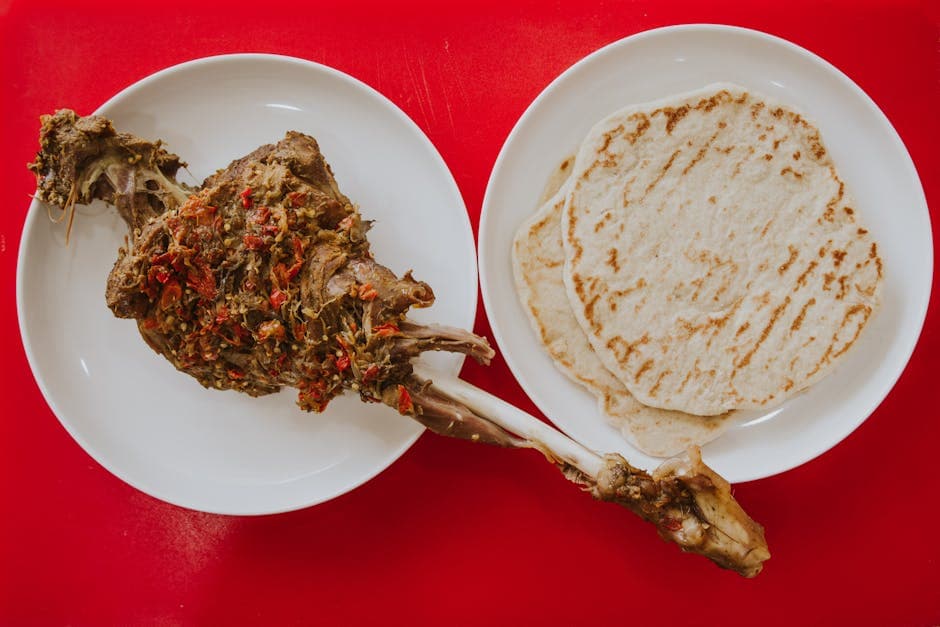
West Sumatran caramelized dry beef curry — slow-cooked in coconut and spice paste until dark and concentrated.
Rendang is the most famous dish of West Sumatra's Minangkabau people and was voted the world's most delicious food by CNN viewers in both 2011 and 2017. True rendang is not a curry but a slow caramelization — beef chunks cooked in coconut milk and a complex chili-galangal-lemongrass-turmeric paste for 3 to 4 hours, until the liquid evaporates, the coconut milk breaks into a rich oil, and the meat becomes deeply dark, almost black, with a glossy, sticky exterior. Each spoonful tastes of slow time, gentle heat, and pure beef essence. It keeps for weeks at room temperature — a feature, not a bug, since Minangkabau traders historically carried rendang on long journeys.
Serves 6
Dry-toast the desiccated coconut in a wide pan over medium-low, stirring constantly, for 6–8 minutes until deep golden brown. Cool, then grind to a slightly oily, fragrant paste — this is kerisik, the secret of Padang rendang.
Blend chilies, shallots, garlic, ginger, galangal, turmeric, lemongrass white parts, and candlenuts with a splash of water into a smooth, brick-red paste.
In a wide heavy pot or wok, heat 3 tbsp oil. Add the spice paste and stir-fry over medium for 15 minutes, until the paste is deep red, glossy, and the oil clearly separates.
Add cinnamon, star anise, cardamom, lime leaves, salam leaves, and the bruised lemongrass stalk. Stir for 2 minutes.
Add the beef and stir to coat in the paste. Pour in the coconut milk, coconut cream, tamarind, palm sugar, and a generous pinch of salt. Bring to a gentle simmer.
Cook uncovered over medium-low, stirring occasionally, for about 90 minutes. The mixture should be a thick golden-brown curry — at this point it is called kalio, a wet rendang.
Continue simmering and stirring more often, scraping the bottom, for another 90–120 minutes. The oil will rise dramatically; the mixture will turn from gold to brown to dark mahogany. Stir constantly toward the end so the bottom doesn't catch and burn.
Stir in the toasted ground coconut and cook 10 more minutes, until the rendang is dark and dry, the oil clings to the meat, and the bottom of the pan glistens with concentrated curry. Taste; adjust salt and palm sugar.
Rest 30 minutes. Serve warm with steamed jasmine rice and gulai sayur or fresh sambal.
True rendang is dry, not saucy — keep cooking until oil clearly separates and the meat is almost black.
Kerisik (toasted coconut paste) is the West Sumatran step often skipped in shortcuts. Don't skip it.
Cook in a wide pan, not a deep pot — surface area is everything for evaporation.
Rendang ayam: chicken rendang, faster (90 minutes total) and slightly less rich.
Rendang jengkol: with stinkbean — a regional Sumatran specialty.
Vegetarian rendang: jackfruit or tempeh, same paste, 90-minute total cook.
Famously keeps without refrigeration up to a week thanks to the spices and dry texture. Refrigerated keeps 10 days; freezes 3 months. Rendang on day 3 is better than day 1.
Rendang originated among the matrilineal Minangkabau people of West Sumatra at least 400 years ago, designed as a traveler's food that could survive long journeys without refrigeration. It is central to Hari Raya feasts and has spread across Malaysia, Singapore, and the Indonesian diaspora.
Same recipe — kalio is the wetter, golden middle stage; rendang is the final dry, dark stage. Both are delicious.
Yes — but you must finish in a wide pan to evaporate the moisture and caramelise. Slow cookers retain too much liquid for proper rendang.
Per serving (320g) · 6 servings total
Ask our AI cooking assistant anything about this recipe — substitutions, techniques, scaling.
Chat with AI Chef →Join the conversation
Sign in to leave a comment and save your favourite recipes