
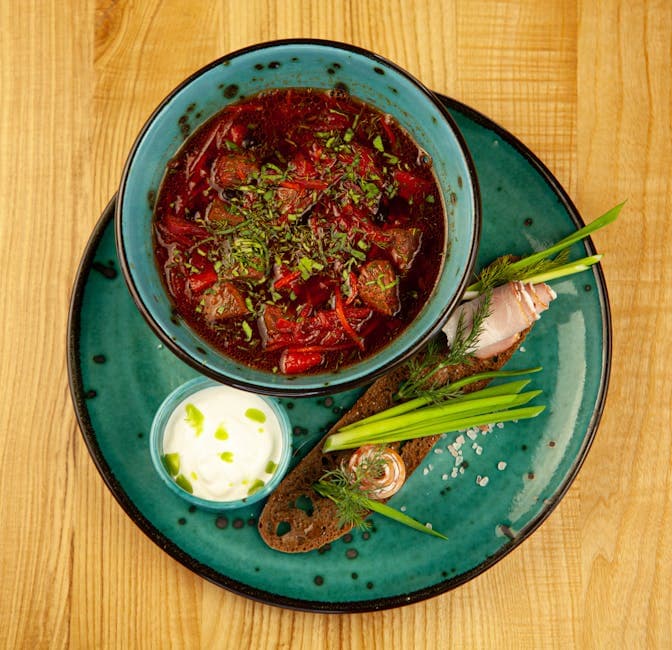
Borscht Ucraniano (Tradicional Apropiado)
La sopa nacional reconocida por la UNESCO de Ucrania — remolacha, carne de res, alubias, col y verduras asadas construidas en una obra maestra de color carmesí profundo servida con smetana y pampushky.
Acerca de esta receta
El borscht es el corazón de la cocina ucraniana y fue inscrito en la lista del Patrimonio Cultural Inmaterial de la UNESCO en 2022 específicamente como plato ucraniano. El borscht ucraniano adecuado no es la sopa fina de remolacha rosada que muchos occidentales imaginan: es una sopa de capas profundas, casi parecida a un guiso, preparada sobre un caldo de huesos de res que se cuece a fuego lento durante horas, luego se espesa con remolacha salteada, zanahoria, cebolla y tomate (la 'zazharka'), y se termina con repollo blanco, frijoles blancos, papa y un toque final crucial de 'kvas' de vinagre de remolacha o vinagre para mantener el color carmesí vivo. Cada región ucraniana (y cada babusia ucraniana) tiene su propia receta: el estilo Poltava incluye bolas de masa; Al estilo gallego se le añaden ciruelas pasas; El estilo Chernihiv utiliza calabacines en verano. Lo que los une es la técnica de capas, el uso de remolacha fresca en lugar de enlatada y el requisito de que la sopa repose al menos un día completo antes de comerla: el borscht es uno de los pocos platos donde la versión del segundo día es realmente mejor que la primera. Se sirve con gruesas rebanadas de pan de centeno oscuro, una generosa cucharada de smetana revuelta en la mesa, una cabeza de ajo crudo a un lado para morder entre cucharadas y pampushky (rollitos de levadura suaves untados con ajo) para absorber el caldo.
Ingredientes
Sirve 8
- 1.2 kgcostilla de res o pierna de res con hueso, más 1 hueso de tuétano si está disponible
- 3 Lagua fría
- 500 gremolacha roja fresca (unas 3 medianas), pelada y rallada en trozos grandes
- 2 grandezanahorias ralladas; 2 cebollas, finamente picadas; 3 dientes de ajo, picados
- 400 grepollo blanco, finamente rallado
- 3 medianopatatas cerosas, peladas y cortadas en cubitos 1,5 cm
- 1 400 g tinfrijoles blancos (cannellini), escurridos - o 150 g secos, remojados durante la noche y precocidos
- 3 cdapasta de tomate; 2 tomates maduros (o 200 g en lata), picados
- 3 cdavinagre de vino blanco o de sidra de manzana; 1 cucharada de azúcar; 2 hojas de laurel; 1 cucharadita de granos de pimienta; sal al gusto
- 200 mlsmetana o crema agria entera, un puñado de eneldo fresco y una cabeza de ajo crudo, para servir
Instrucciones
- 1
Prepare un caldo de carne profundo
Coloque la costilla de res, el hueso de tuétano, las hojas de laurel y los granos de pimienta en una olla grande con 3 litros de agua fría. Deje hervir lentamente a fuego lento (esto demora unos 30 minutos) y retire toda la espuma gris que sube. Cocine a fuego lento durante 2 horas hasta que la carne esté tierna. Saque la carne, desmenúcela cuando esté lo suficientemente fría como para manipularla y reserve. Cuela el caldo y regresa a una olla limpia.
- 2
Prepara la zazharka (el corazón del borscht)
Mientras el caldo hierve a fuego lento, calienta 3 cucharadas de aceite en una sartén amplia a fuego medio. Sudar la cebolla durante 6 minutos hasta que esté blanda. Agrega la zanahoria rallada y cocina 5 minutos más. Agrega la remolacha rallada, la pasta de tomate, los tomates picados, el azúcar y 1 cucharada de vinagre. Cubra y cocine a fuego lento durante 20 minutos; la remolacha debe ablandarse y adquirir un color rubí intenso, y las verduras deben estar brillantes y confitadas.
El vinagre de la zazharka "fija" el color de la remolacha; sin él, el borscht se dorará al cocinarlo.
- 3
Cocer las patatas en el caldo.
Lleve el caldo de carne colado a fuego lento. Agrega las papas cortadas en cubitos y cocina 10 minutos hasta que estén tiernas; terminarán de cocinarse en la siguiente etapa.
- 4
Agrega el repollo y los frijoles
Agrega el repollo rallado y los frijoles blancos al caldo con las patatas. Cocine 8 minutos hasta que el repollo esté suave pero aún tenga un ligero mordisco. Sazone con 1,5 cucharaditas de sal para comenzar.
- 5
Júntelo
Vierta toda la zazharka (la mezcla de remolacha, cebolla, zanahoria y tomate) en el caldo y revuelva suavemente. Vuelva a agregar la carne desmenuzada. Agregue la segunda cucharada de vinagre y el ajo picado. Cocine a fuego lento durante 10 minutos, el tiempo suficiente para que los sabores se combinen, pero no tanto como para que el repollo se convierta en papilla.
- 6
Sabor y equilibrio
Este es el paso crítico. El borscht debe tener un sabor agridulce y salado al mismo tiempo. Agregue sal (probablemente otra cucharadita), un chorrito más de vinagre si es demasiado dulce, una pizca más de azúcar si es demasiado ácido. El color debe ser carmesí intenso, no marrón; si se vuelve marrón, puedes reavivarlo con otra cucharadita de vinagre.
- 7
Descanse al menos 4 horas, preferiblemente durante la noche.
Retire la olla del fuego y déjela enfriar a temperatura ambiente, luego refrigere por al menos 4 horas, idealmente durante la noche. Este descanso es esencial: el borscht que se come inmediatamente después de cocinarlo es una sombra de la versión del día siguiente. Los sabores deben asentarse y el color intensificarse.
- 8
Recalentar y servir al estilo ucraniano.
Vuelva a calentar suavemente hasta que esté humeante (no hierva, conserva el color). Sirva en tazones hondos. Cada comensal agrega una generosa cucharada de smetana para hacer girar, esparce eneldo fresco picado encima y tradicionalmente muerde entre cucharadas de sopa y un diente de ajo crudo entero triturado sobre un trozo de pan de centeno oscuro o una pampushka.
¿Has preparado esta receta?
Valórala y ayuda a otros a encontrar las recetas que de verdad funcionan.
Inicia sesión con un toque y guardaremos la valoración que acabas de elegir.
Todo lo que necesitas para planificar tu semana — gratis
- Calendario de comidas
- Lista de compras
- Ideas de recetas con IA
Cocina con las manos libres
Consigue planes de comida con IA, modo de cocina paso a paso y tus recetas guardadas en la app gratuita Bento.
Consejos profesionales
- →
Utilice siempre remolacha FRESCA cruda, nunca enlatada; las remolachas enlatadas son demasiado dulces y carecen de la profundidad terrosa. Rallar, no cortar en cubitos, para una integración más suave en el caldo.
- →
El vinagre de la zazharka no es negociable: "fija" el pigmento de la remolacha y mantiene el borscht rojo. Sin él, la sopa se vuelve marrón turbia.
- →
Prepare borscht con un día de anticipación. El borscht del mismo día está bien; El borscht del segundo día es trascendente. El borscht del tercer día es aún mejor. Los sabores se derriten y se profundizan en el frigorífico.
- →
Agregue el ajo al final (solo los últimos 10 minutos): el ajo cocido durante mucho tiempo pierde su sabor. El clásico toque ucraniano también consiste en triturar un diente de ajo crudo en cada plato justo antes de comer.
Variaciones
- •
Borscht de Cuaresma: omita la carne, prepare caldo con champiñones silvestres secos (porcini) y tubérculos; común durante los períodos de ayuno ortodoxos.
- •
Con pampushky: hornee panecillos de levadura untados con ajo en el mismo horno en el que se recalienta el borscht; el canónico acompañamiento de pan ucraniano.
- •
Borscht frío de verano (kholodnyk): los mismos componentes básicos, pero servido frío con pepino cortado en cubitos, huevo duro y mucho eneldo; la respuesta ucraniana del verano al gazpacho.
- •
Con ciruelas pasas: agregue 8 ciruelas pasas sin hueso en los últimos 15 minutos para obtener la profundidad dulce y salada al estilo gallego, común en el oeste de Ucrania.
Almacenamiento
El borscht se conserva refrigerado durante 5 días y cada día está mejor. Se congela bien durante 3 meses; congélelo en recipientes de una sola porción. Vuelva a calentar suavemente en la estufa (el microondas destruye parcialmente el color y rompe la textura del repollo). Nunca hierva después de la cocción inicial.
Historia y origen
El borscht se originó entre los eslavos de la Rus de Kiev hace más de mil años, originalmente como una sopa hecha con tallos de hogweed fermentados (la palabra "borscht" desciende de la palabra eslava para hogweed). La remolacha reemplazó al hogweed en el siglo XVI y el plato fue inscrito en la lista del Patrimonio Cultural Inmaterial de la UNESCO en julio de 2022 como plato nacional ucraniano que requiere salvaguardia.
Preguntas frecuentes
¿Puedo usar remolacha enlatada?
Se desaconseja encarecidamente: las remolachas enlatadas están precocidas y son demasiado dulces, y la sopa pierde su profundidad terrosa. Si es absolutamente necesario, utilice remolacha cruda en frasco en vinagre (que se vende en tiendas de comestibles de Europa del Este) como un sustituto más cercano.
¿Por qué mi borscht es marrón y no rojo?
El pigmento de la remolacha se descompuso porque no agregaste suficiente vinagre con la remolacha (o porque la herviste demasiado). Agrega otra cucharadita de vinagre al final y una pizca de azúcar para equilibrar; el color revivirá parcialmente.
¿El borscht es ruso o ucraniano?
Es ucraniano: la UNESCO lo reconoció en 2022 específicamente como un plato ucraniano que requiere salvaguardia. Existen versiones en todo el mundo eslavo (Polonia, Bielorrusia, Rusia), pero el origen y las raíces culturales más fuertes son ucranianas.
¿Realmente necesito dejarlo reposar durante la noche?
Sí, el borscht es uno de los pocos platos en los que "mejor al día siguiente" no es un cliché. Los sabores se integran, el color de la remolacha se intensifica y la sopa tiene un sabor significativamente diferente. Siempre haz un día con anticipación si puedes.
Datos nutricionales
Por porción (480g) · 8 porciones totales
Resumen de tiempo
¿Tiene preguntas?
Pregúntele a nuestro asistente de cocina con IA cualquier cosa sobre esta receta: sustituciones, técnicas, escalado.
Chatea con AI Chef →Destacado en Guías
Esta receta aparece en las siguientes guías seleccionadas:
Más recetas de Ukrainian
También Te Puede Gustar
Platos similares de otras cocinas del mundo.
Herramientas de Cocina Gratuitas
Calculadoras y conversores que acompañan a esta página — sin registro.
Conviértelo en un Plan
Prográmalo, haz la compra y controla lo que ya tienes.
Sigue Leyendo
Lecturas más largas que profundizan en las ideas detrás de este plato.
Comunidad
Únete a la conversación
Inicia sesión para dejar un comentario y guardar tus recetas favoritas