
Pastel de Nata
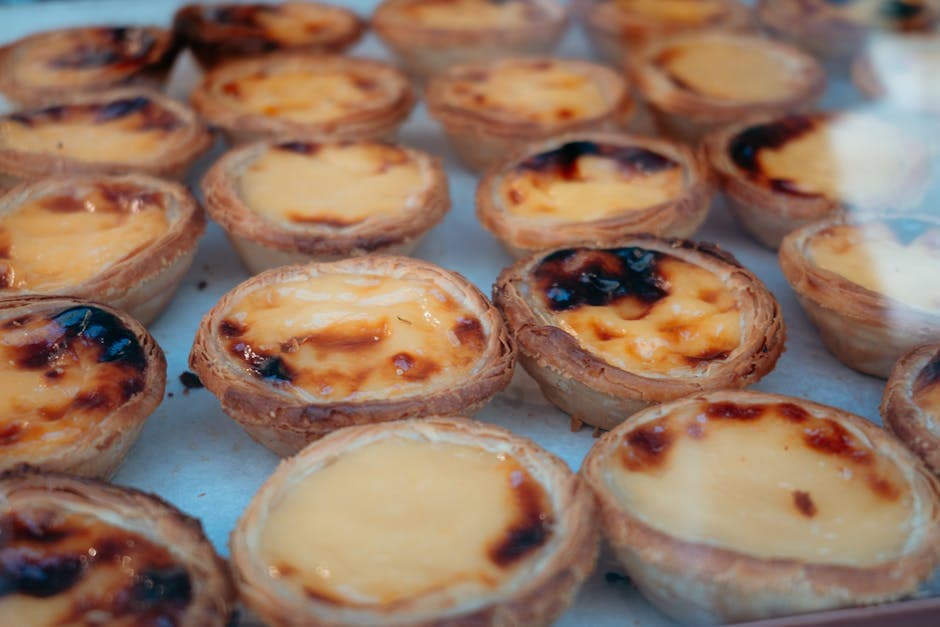
Tartelettes portugaises au custard d'œuf avec pâte feuilletée croustillante et sommets caramélisés cloques.
À propos de cette recette
Les Pastéis de Nata sont la pâtisserie la plus adorée du Portugal — des tasses assise-sized de pâte feuilletée bronzée et cassante croustillante tenant un bassin wavering de custard vanille-cannelle, la surface quasi noire de charred en taches d'un four furieux. La recette s'est perfectionnée au 18e siècle par les moines du Monastère des Jerónimos à Belém, qui utilisaient les jaunes d'œuf restants de l'amidon de leurs habits pour faire le custard (les blancs allaient clarifier le vin). La recette originale de Belém est toujours un secret jalousement gardé, mais les cuisiniers maison peuvent s'en rapprocher remarquablement avec des fours très chauds, une pâte très froide, et la patience de lever chaque tartelette de son moule au moment exactement correct.
Ingrédients
Sert 12
- 1 sheetpâte feuilletée tout-beurre, décongelée (environ 320 g)
- 250 mllait entier
- 1 strippelure de citron
- 1 stickbâton de cannelle
- 1gousse de vanille, fendue (ou 1 c. à thé d'extrait de vanille)
- 200 gsucre caster
- 80 mleau
- 25 gfécule de maïs
- 6 grandejaunes d'œuf
- sucre glace et cannelle moulu, à saupoudrer
Étapes
- 1
Infuser le lait
Chauffer le lait dans une casserole avec pelure de citron, bâton de cannelle et vanille jusqu'à juste fumer. Enlever du feu, couvrir et infuser 15 minutes. Filtrer.
- 2
Sirop de sucre
Dans une autre casserole, dissoudre le sucre dans l'eau. Porter à 105°C sur un thermomètre (ou bouillir 3 minutes jusqu'à juste sirupeux). Mettre de côté.
- 3
Slurry
Fouetter la fécule de maïs dans quelques cuillères à soupe d'eau froide jusqu'à lisse. Fouetter dans le lait infusé dans une casserole à feu moyen. Cuire, en remuant constamment, 2 minutes jusqu'à épaississement en un custard lâche. Refroidir 5 minutes.
- 4
Combiner le custard
Fouetter lentement le sirop sucre chaud dans le mélange de lait, puis battre dans les jaunes d'œuf un par un. Filtrer dans une cruche. Presser du film alimentaire sur la surface ; refroidir à tiède.
- 5
Façonner la pâte
Dérouler la pâte. Rouler fermement le long du long côté en une bûche. Trancher en 12 disques (environ 2 cm d'épaisseur).
- 6
Mouler
Placer chaque disque, côté coupé vers le haut, dans une tasse de moule à muffin. Tremper les pouces dans l'eau froide et presser du centre vers l'extérieur, en poussant la pâte jusqu'aux côtés pour former une tasse fine avec une base légèrement plus épaisse. Réfrigérer 20 minutes.
- 7
Remplir
Préchauffer le four à son maximum (250–260°C), étagère près du sommet. Verser le custard dans chaque tasse, remplissant trois-quarts plein.
- 8
Cuire à la bombe
Cuire 10–14 minutes, en surveillant étroitement, jusqu'à ce que le custard soit doré foncé avec blisters noirs et les bords de la pâte soient profondément caramélisés. Le custard gonflera dramatiquement et se tasseront as refroidit.
- 9
Démouler et saupoudrer
Refroidir 5 minutes dans le moule, puis lever (une petite spatule coudée aide). Saupoudrer de sucre glace et un whisper de cannelle. Manger pendant encore chaud.
Vous l'avez cuisinée ?
Notez-la et aidez les autres à trouver les recettes qui fonctionnent vraiment.
Connectez-vous en un geste : nous enregistrons la note que vous venez de choisir.
Tout ce qu'il faut pour planifier votre semaine — gratuit
- Calendrier des repas
- Liste de courses
- Idées de recettes IA
Suivez ce que vous mangez
Photographiez votre repas pour enregistrer calories et macros, lancez des minuteurs de jeûne et suivez votre hydratation avec l’app gratuite SnapCal.
Conseils de pro
- →
La température du four est tout — si le vôtre n'atteint pas 250°C, utiliser le gril à la fin pour obtenir ces signature blisters foncés.
- →
Ne pas trop remplir — le custard gonfle agressivement et déborde.
- →
Manger le même jour. Les Pastéis de Nata sont à leur meilleur 10 minutes du four, quand la pâte crackle encore.
Variantes
- •
Ajouter une cuillère à thé d'eau de fleur d'oranger au custard pour une nuance Lisbon-pastelaria.
- •
Utiliser la crème pâtissière chocolat pour un Pastel de Chocolate moderne.
- •
Servir avec un tiny espresso, style portugais — bica.
Stockage
Meilleur mangé le même jour. Jusqu'à 24 heures à température ambiante dans une boîte hermétique ; raviver dans un four 200°C pendant 4 minutes — jamais micro-ondes.
Histoire et origine
La pâtisserie a été inventée avant le 18e siècle au Monastère des Jerónimos à Belém, Lisbonne. Après la Révolution Libérale de 1820 qui a fermé les monastères, les moines ont vendu la recette à une raffinerie de sucre voisine, devenue la légendaire Fábrica de Pastéis de Belém en 1837 — toujours en produisant la recette originale aujourd'hui.
Foire aux questions
Puis-je utiliser de la pâte feuilletée du commerce ?
Absolument — la plupart des cuisiniers maison le font. Juste s'assurer que c'est tout-beurre ; la pâte margarine ne cloquera pas et ne croustillera pas de la même façon.
Pourquoi mes sommets ne se sont-ils pas noircis ?
Le four n'était pas assez chaud ou la tartelette n'était pas assez près de l'élément chauffant supérieur. Finir sous le gril pendant 30–60 secondes avec la porte fissurée.
Faits nutritionnels
Par portion (70g) · 12 portions totales
Résumé du temps
Vous avez des questions ?
Demandez quoi que ce soit à notre assistant culinaire IA sur cette recette : substitutions, techniques, mise à l'échelle.
Discutez avec AI Chef →Présenté dans les guides
Cette recette est présentée dans les guides sélectionnés suivants :
collections
45 recettes de desserts : des friandises sucrées du monde entier
collections
9 recettes pour utiliser les jaunes d'œufs qui vous restent
substitutions
Substituts à l'extrait de vanille et comment ajuster les proportions
conversions
Farine : tasses en grammes (pourquoi votre tasse mentionnée ment)
Plus de recettes portugaises
Vous Aimerez Aussi
Des plats similaires venus d'autres cuisines du monde.
Outils de Cuisine Gratuits
Calculateurs et convertisseurs qui accompagnent cette page — sans inscription.
Calculateur de proportions
Divisez par deux ou doublez chaque quantité de cette recette sans calcul mental.
Convertisseur de mesures
Convertissez tasses, grammes, onces et millilitres dans les deux sens.
Convertisseur pour friteuse à air
Convertissez le temps et la température du four en réglages pour friteuse à air.
Transformer en Plan
Programmez-le, faites les courses et suivez ce que vous avez déjà.
Calendrier de planification des repas
Placez cette recette sur un jour et organisez la semaine autour.
Appli de liste de courses
Transformez cette liste d’ingrédients en liste de courses regroupée par rayon.
Analyse des calories par photo
Photographiez l’assiette terminée et obtenez une estimation des calories et des macros.
À Lire Ensuite
Des articles de fond sur les idées derrière ce plat.
Communauté
Rejoignez la conversation
Connectez-vous pour laisser un commentaire et enregistrer vos recettes préférées