
Pupusas Revueltas (Gâteaux de Masa Salvadoriens Farcis)
Le plat national du Salvador — des gâteaux épais de masa farcis de porc assaisonné, de fromage et de haricots rouges réfrigérés, grillés et servis avec une salade de chou marinée.
À propos de cette recette
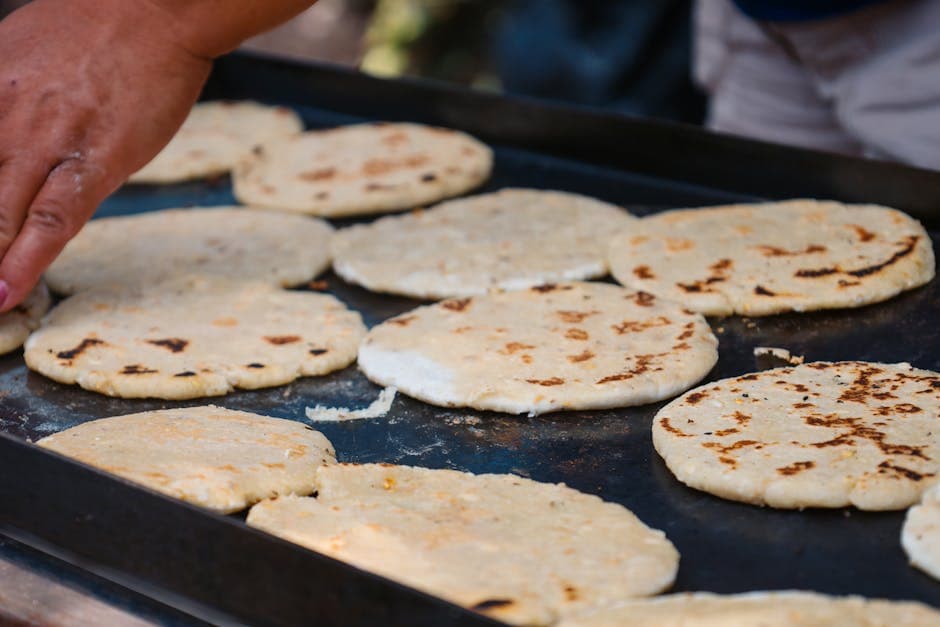
Les pupusas sont le plat national du Salvador et probablement l'aliment de rue le plus aimé d'Amérique centrale. Ce sont des gâteaux épais de masa de maïs — quelque part entre une tortilla épaisse et un pain plat farci — remplis de combinaisons de porc assaisonné, de fromage quesillo qui fond, de haricots rouges réfrigérés, et parfois de fleurs de courge. Les revueltas sont la variété la plus populaire, avec un triple remplissage de porc, fromage et haricots. Le masa est pétri et façonné à la main autour d'une généreuse cuillerée de remplissage, puis cuit sur un comal chaud jusqu'à ce que la surface soit dorée avec des taches brunes.
Ingrédients
Sert 6
- 500 gmasa harina (Maseca ou P.A.N. – farine de maïs fine pour le masa, pas semoule de maïs)
- 550 mleau tiède (et plus si nécessaire)
- 1.5 c. à c.gros sel
- 1 c. à s.saindoux ou huile végétale (pour la pâte)
- 300 gporc assaisonné cuit (chicharrón molido — voir notes), finement râpé
- 300 gQuesillo salvadorien ou mozzarella à faible teneur en humidité, râpée
- 250 gharicots rouges frits (frijoles refritos)
- huile végétale, pour le comal
- 0.5 petitechou vert, finement râpé (pour le curtido)
- 1 moyencarotte, râpée (pour le curtido)
- 0.5 petiteoignon blanc, tranché très finement (pour le curtido)
- 120 mlvinaigre blanc (pour le curtido)
- 1 c. à c.Origan mexicain (pour le curtido)
- 0.5 c. à c.flocons de piment rouge (pour le curtido)
- 1 c. à c.sel (pour le curtido)
- 240 mlsalsa roja tiède aux tomates, pour servir
Étapes
- 1
Faites d'abord le curtido
Mélanger le chou râpé, la carotte râpée et l'oignon émincé dans un grand bol. Versez de l'eau bouillante dessus pour qu'elle flétrisse brièvement (30 secondes), puis égouttez-la immédiatement. Mélanger avec du vinaigre, de l'origan, des flocons de piment rouge et du sel, mettre dans un bocal et réfrigérer au moins 2 heures, idéalement toute la nuit. Le curtido s'aiguise lorsqu'il est assis.
Il est préférable de le préparer la veille : les saveurs s'intensifient et la texture s'améliore.
- 2
Mélanger la masa
Dans un grand bol, mélanger la masa harina, le sel et le saindoux. Versez progressivement de l'eau tiède en mélangeant avec les mains jusqu'à obtenir une pâte lisse et molle qui se tient facilement mais ne colle pas. La texture doit ressembler à du Play-Doh doux. Couvrir d'un linge humide et laisser reposer 10 minutes.
- 3
Combinez les garnitures
Dans un autre bol, mélangez le porc cuit râpé, le fromage râpé et les haricots frits jusqu'à obtenir une garniture uniforme : c'est la garniture « revuelta » (mixte). Divisez en 12 portions d'environ 60 g chacune et roulez en boules. Restez couvert.
- 4
Façonner les pupusas
Mouillez-vous légèrement les mains avec de l'huile. Pincez une boule de masa de 90 g, aplatissez-la en disque dans votre paume et placez une boule de garniture au centre. Pliez les bords du masa vers le haut et autour pour enfermer complètement la garniture, en pinçant les coutures. Tapotez doucement entre vos paumes pour l'aplatir en un disque de 12 cm d'environ 1 cm d'épaisseur — ne laissez pas la garniture éclater.
- 5
Inspecter les fuites
Si le remplissage transparaît, appliquez un petit morceau de masa et lissez. Une pupusa qui fuit se soudera à la plaque chauffante. Empilez les pupusas finis entre des feuilles de pellicule plastique pour éviter qu'elles ne sèchent. Travaillez efficacement : les pupusas en forme devraient atteindre le comal dans les 10 minutes.
- 6
Chauffer le comal
Faites chauffer un comal en fonte ou une grande poêle à feu moyen. Huilez légèrement la surface (juste un film). Testez avec une goutte d'eau : elle doit grésiller mais pas violemment. Les pupusas cuisent mieux à feu modéré, ce qui prend du temps.
- 7
Cuire les pupusas
Disposez les pupusas sur le comal en une seule couche (ne vous encombrez pas). Cuire 4 à 5 minutes de chaque côté jusqu'à ce que la surface soit marbrée d'or et que des taches brunes apparaissent. Le fromage à l’intérieur doit être fondu et la garniture fumante. Presser très doucement avec une spatule, jamais trop fort, ce qui forcerait le fromage à sortir.
- 8
Servir immédiatement
Empilez les pupusas chauds dans une assiette. Servir avec un généreux tas de curtido en accompagnement et un petit bol de salsa roja chaude pour tremper. Mangez avec les mains : déchirez la pupusa, versez une fourchette de curtido dessus et mordez. Le contraste entre le fromage fondu chaud et la salade de chou froide et piquante est tout l'intérêt.
Vous l'avez cuisinée ?
Notez-la et aidez les autres à trouver les recettes qui fonctionnent vraiment.
Connectez-vous en un geste : nous enregistrons la note que vous venez de choisir.
Tout ce qu'il faut pour planifier votre semaine — gratuit
- Calendrier des repas
- Liste de courses
- Idées de recettes IA
Cuisinez les mains libres
Profitez de plans de repas IA, d'un mode cuisine pas à pas et de vos recettes enregistrées dans l'appli gratuite Bento.
Conseils de pro
- →
Pour la garniture au porc, utilisez du chicharrón molido — couenne de porc frite salvadorienne moulue avec de la tomate, de l'oignon, de l'ail et du poivron rouge. Vendu dans les épiceries salvadoriennes ; remplacez les carnitas pulsées dans un robot culinaire par un sofrito d'oignons et de tomates sautés.
- →
Le quesillo est le fromage traditionnel – un fromage salvadorien extensible et fondant. La mozzarella à faible teneur en humidité, le fromage Oaxaca ou un mélange 50:50 de mozzarella et de queso fresco fonctionnent tous.
- →
Ne lésinez pas sur le curtido, ce n'est pas une garniture, c'est obligatoire. Une pupusa sans curtido est incomplète.
- →
Gardez la pâte masa humide. S'il se fissure lors du façonnage, ajoutez une cuillère à café d'eau à la fois. La pâte craquelée signifie des fuites, et les fuites signifient des pupusas ratés.
Variantes
- •
Pupusas de queso : du fromage uniquement – la version la plus simple et la plus appréciée, servie à n'importe quel petit-déjeuner au Salvador.
- •
Pupusas de frijol con queso : haricots frits et fromage uniquement.
- •
Pupusas de loroco : farcies de boutons floraux loroco comestibles (vendus surgelés dans les épiceries latines) et de fromage – spécialité salvadorienne.
- •
Pupusas de ayote (courge) au fromage — populaire dans l'est du Salvador, à base de courge sautée cuite.
Stockage
Mieux mangé frais du comal. Réfrigérez les restes de pupusas cuits enveloppés dans du papier d’aluminium jusqu’à 3 jours. Réchauffer dans une poêle sèche à feu moyen-doux 3 minutes de chaque côté pour redonner du croustillant à l'extérieur. Congelez les pupusas en forme non cuites sur un plateau, puis transférez-les dans un sac de congélation – faites cuire congelées sur le comal, en ajoutant 2 minutes de chaque côté.
Histoire et origine
Les pupusas ont des origines préhispaniques parmi le peuple pipil de l'ouest du Salvador, avec des preuves archéologiques de galettes de maïs farcies similaires remontant à plus de 2 000 ans. La forme moderne a été codifiée après que la colonisation espagnole a introduit le fromage et le saindoux, et le plat est devenu le symbole national du Salvador au XXe siècle – officiellement déclaré plat national par décret législatif en 2005.
Foire aux questions
Quelle est la différence entre le masa harina et la semoule de maïs ?
Masa harina (Maseca, P.A.N.) est de la farine de maïs nixtamalisée traitée à la chaux - elle s'hydrate en une pâte souple et a le goût des tortillas. La semoule de maïs n'est pas nixtamalisée et produit une pâte granuleuse et friable qui ne retient pas la garniture. Ils ne sont pas interchangeables.
Pourquoi mes pupusas se fissurent-elles pendant la cuisson ?
Soit la pâte est trop sèche, soit la garniture est trop farcie, soit le joint n'est pas bien scellé. Visez 90 g de pâte pour 60 g de garniture, pincez bien les joints et vérifiez l'hydratation de la pâte avant de la façonner (elle doit être molle mais non collante).
Puis-je préparer la pâte à pupusa à l’avance ?
Oui – réfrigérer à couvert jusqu’à une journée. Ramener à température ambiante et pétrir brièvement avec un peu d'eau pour raviver avant de façonner. La pâte peut foncer légèrement ; il aura toujours un goût parfait.
La salsa roja est-elle nécessaire ?
C'est traditionnel mais facultatif. Le curtido apporte acide et fraîcheur ; la salsa roja ajoute une dimension tomate-chili. De nombreux Salvadoriens utilisent les deux, certains simplement curtido. Préparez une salsa rapide en faisant mijoter 4 tomates mûres avec de l'ail, de l'oignon et un chili de árbol pendant 15 minutes, puis en mélangeant.
Faits nutritionnels
Par portion (360g) · 6 portions totales
Résumé du temps
Vous avez des questions ?
Demandez quoi que ce soit à notre assistant culinaire IA sur cette recette : substitutions, techniques, mise à l'échelle.
Discutez avec AI Chef →Présenté dans les guides
Cette recette est présentée dans les guides sélectionnés suivants :
Plus de recettes Salvadoran
Vous Aimerez Aussi
Des plats similaires venus d'autres cuisines du monde.
Outils de Cuisine Gratuits
Calculateurs et convertisseurs qui accompagnent cette page — sans inscription.
Transformer en Plan
Programmez-le, faites les courses et suivez ce que vous avez déjà.
À Lire Ensuite
Des articles de fond sur les idées derrière ce plat.
Communauté
Rejoignez la conversation
Connectez-vous pour laisser un commentaire et enregistrer vos recettes préférées