
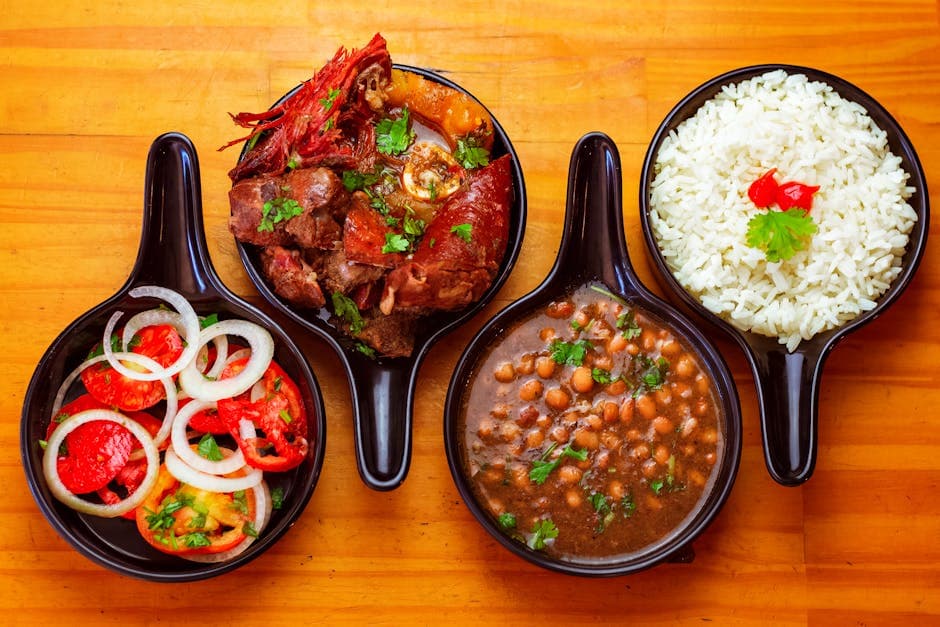
Tigadégué Na (Ragoût Malien de Boeuf Arachide)
Le ragoût national du Mali — boeuf braisé en tomate et une épaisse sauce d'arachide, servi sur du riz style jollof vapeur.
À propos de cette recette
Tigadégué Na — parfois épelé tiguadège na ou tigadeguena — est le plat national du Mali, et un aliment de base Bambara et Manding à travers le Sahel occidental. Le nom en Bambara signifie 'sauce d'arachide' — et le plat est une célébration des deux cultures les plus importantes de l'Afrique de l'Ouest, cacahuètes et riz. Les coupes d'agneau rude sont saisies et braisées avec oignon, pâte de tomate, ail, et une généreuse cuillère de pâte de chili fraîche, puis enrichies avec beurre d'arachide naturel brut (ou cacahuètes fraîchement broyées rôties) jusqu'à ce que la sauce s'épaississe dans un gravy velouteux, profondément savoureux la couleur de l'argile rouge. Le plat est servi sur le riz blanc long grains cuits style sénégalais-malien avec oignon et une touche de tomate. De nombreuses familles maliennes ajoutent quelques morceaux d'okra ou pomme de terre douce pour absorber la sauce. La saveur est riche, presque carnée même quand végétalien, avec la cacahuète fournissant une fin sustenue longue qui distingue les ragoûts sahéliens de leurs cousins ouest-africains comme la soupe à l'arachide nigériane.
Ingrédients
Sert 6
- 900 gboeuf chuck ou jarret, coupé en morceaux de 4 cm
- 3 c. à s.huile neutre (huile d'arachide si vous l'avez)
- 2 grandeoignons jaunes, finement hachés
- 6 goussesail, haché
- 1 poucegingembre, râpé
- 5 c. à s.pâte de tomate
- 1 boîte(400g) tomates écrasées
- 2piments Scotch bonnet, épépinés et hachés (ou 1 si chaleur-timide)
- 1 c. à s.sel fin, plus au goût
- 1 c. à c.poivre blanc moulu
- 2feuilles de laurier
- 1.2 Leau ou stock de boeuf
- 300 gbeurre d'arachide nature lisse (pas sucre ou huile de palme)(ou 350 g cacahuètes fraîchement broyées rôties)
- 1 moyenpomme de terre douce, pelée et en dés (facultatif)
- 200 gokra frais, émondé et moitié (facultatif)
- 400 griz long grains, pour servir
- oignon supplémentaire haché, pour garnir
Étapes
- 1
Saisir le boeuf
Chauffer l'huile dans une cocotte lourde à feu moyen-élevé. Sécher le boeuf et brunir en 2 lots, environ 4 minutes par lot, jusqu'à ce que chaque morceau ait une croûte sombre. Enlever et mettre de côté.
- 2
Construire la base
Déposer la chaleur à moyen. Ajouter les oignons hachés au même pot et cuire 8 minutes jusqu'à profondément dorés — le fond foncé sombre est essentiel à la couleur du ragoût. Ajouter l'ail et le gingembre ; cuire 1 minute.
- 3
Fleurir la pâte de tomate
Repousser les oignons au bord du pot. Ajouter la pâte de tomate au centre et cuire 3 minutes, en remuant, jusqu'à ce qu'elle s'assombrisse rouge brique et sent caramélisée — cela tue le goût d'étain et concentre l'umami.
La pâte de tomate correctement fleurie est un des secrets des ragoûts ouest-africains — ne jamais sauter cette étape.
- 4
Ajouter les tomates et le chili
Mélanger les tomates écrasées, Scotch bonnet, sel, poivre blanc, et feuilles de laurier. Cuire 5 minutes jusqu'à ce que la sauce s'épaississe légèrement.
- 5
Braise le boeuf
Retourner le boeuf et tous les jus à la cocotte. Ajouter de l'eau/stock pour couvrir de 3 cm. Porter à un frémissement, couvrir, et cuire 50 minutes jusqu'à ce que le boeuf commence à peine devenir tendre.
- 6
Fouetter le beurre d'arachide
Cuillère out une louche de liquide de cuisson chaud dans un petit bol. Fouetter le beurre d'arachide en elle jusqu'à lisse — ne pas ajouter le beurre d'arachide directement au pot ou il grumèle. Mélanger le beurre d'arachide desserré dans le ragoût.
- 7
Ajouter des légumes et terminer
Ajouter la pomme de terre douce et l'okra si utiliser. Mijoter à découvert 25 plus minutes, en remuant toutes les paires de minutes — la sauce devrait épaissir pour enrober le dos d'une cuillère et se tourner une terra-cotta profonde. Goûter et ajuster le sel.
- 8
Cuire le riz
Pendant ce temps, cuire le riz avec une cuillerée à soupe d'huile et une pincée de sel dans un ratio 1:1,5 (riz à eau), 18 minutes couverts à feu bas. Reposer 10 minutes.
- 9
Servir
Monticule de riz sur les assiettes ; verser des portions généreuses de ragoût sur le haut. Garnir avec oignon cru supplémentaire haché pour croustiller.
Vous l'avez cuisinée ?
Notez-la et aidez les autres à trouver les recettes qui fonctionnent vraiment.
Connectez-vous en un geste : nous enregistrons la note que vous venez de choisir.
Tout ce qu'il faut pour planifier votre semaine — gratuit
- Calendrier des repas
- Liste de courses
- Idées de recettes IA
Suivez ce que vous mangez
Photographiez votre repas pour enregistrer calories et macros, lancez des minuteurs de jeûne et suivez votre hydratation avec l’app gratuite SnapCal.
Conseils de pro
- →
Utiliser beurre d'arachide non sucré naturel — sucre dans les marques commerciales rend le ragoût cloyant sucré. Lire l'étiquette : cacahuètes et sel seulement.
- →
Ne pas ajouter le beurre d'arachide directement à un ragoût chaud. Lâcher d'abord avec une louche de liquide dans un bol de côté, puis mélanger — cela prévient le grumeling.
- →
Le ragoût goûte mieux le jour suivant. Si vous avez le temps, cuire à l'avance et réchauffer — la graisse d'arachide et les jus de viande se marient du jour au lendemain.
Variantes
- •
Végétalien : ommettre le boeuf, doubler la pomme de terre douce, et ajouter un 400g peut pois chiches cuits.
- •
Version poulet (tigadégué na ni kɔnɔ) : utiliser cuisses sans la peau d'os à la place de boeuf, réduire le temps de cuisson à 35 minutes total.
- •
Certains cuisiners du Mali du nord ajoutent une cuillerée à thé de poivre de selim moulu sec (kani diarba) pour une note fumée.
Stockage
Réfrigérer jusqu'à 4 jours ; saveurs s'améliorent. Réchauffer doucement avec un trait d'eau — la sauce d'arachide épaissit davantage quand froid. Congèle bien 3 mois.
Histoire et origine
Tigadégué Na est un plat fondationnel du peuple Mande à travers le Mali, est Sénégal, Guinée, et nord Côte d'Ivoire — sa forme actuelle cristallisée après l'introduction des cacahuètes du Nouveau Monde à l'Afrique de l'Ouest via les commerçants portugais au 16e siècle. Le plat est devenu le ragoût national reconnu du Mali indépendant dans les années 1960 et est servi sur les vendredis dans de nombreux ménages maliens.
Foire aux questions
Que faire si je ne peux pas trouver beurre d'arachide naturel ?
Rôtir 350g cacahuètes pelées brutes à 170°C pendant 12 minutes, puis moudre dans un robot culinaire avec une pincée de sel jusqu'à lisse et huileux — environ 5 minutes. La saveur est réellement plus proche authentique que stockée-acheté.
C'est la même comme mafé sénégalaise ?
Ils sont très étroitement liés — tous deux sont ragoûts d'arachide ouest-africains construits sur tomate et chili. Le mafé sénégalaise tend à utiliser plus de légumes (chou, carottes) et l'agneau est commun. Le tigadégué malien est plus maigre, plus carnivore, et la saveur d'arachide est plus prominente.
Pourquoi ma sauce est-elle gritty ?
Vous l'avez soit utilisé beurre d'arachide grumeleux ou n'avez pas fouetté le beurre d'arachide dans le liquide chaud avant d'ajouter au ragoût. Toujours desserrer beurre d'arachide lisse dans une louche de bouillon d'abord.
Puis-je le faire moins épicé ?
Absolument — utiliser un Scotch bonnet et enlever tous les graines, ou remplacer par un chili plus doux comme jalapeño. La cuisine maliennes à la maison varie énormément en chaleur ; les versions de restaurant sont généralement plus douces que les versions de marché.
Faits nutritionnels
Par portion (480g) · 6 portions totales
Résumé du temps
Vous avez des questions ?
Demandez quoi que ce soit à notre assistant culinaire IA sur cette recette : substitutions, techniques, mise à l'échelle.
Discutez avec AI Chef →Présenté dans les guides
Cette recette est présentée dans les guides sélectionnés suivants :
Plus de recettes Malian
Vous Aimerez Aussi
Des plats similaires venus d'autres cuisines du monde.
Outils de Cuisine Gratuits
Calculateurs et convertisseurs qui accompagnent cette page — sans inscription.
Calculateur de proportions
Divisez par deux ou doublez chaque quantité de cette recette sans calcul mental.
Convertisseur de mesures
Convertissez tasses, grammes, onces et millilitres dans les deux sens.
Calculateur de calories et de portions
Calculez les calories et les macros de la portion que vous mangez vraiment.
Transformer en Plan
Programmez-le, faites les courses et suivez ce que vous avez déjà.
Calendrier de planification des repas
Placez cette recette sur un jour et organisez la semaine autour.
Appli de liste de courses
Transformez cette liste d’ingrédients en liste de courses regroupée par rayon.
Importateur de recettes
Enregistrez cette recette — et n’importe quelle URL de recette — dans une bibliothèque organisée.
À Lire Ensuite
Des articles de fond sur les idées derrière ce plat.
Le régime pauvre en FODMAP pour le SCI : un protocole complet fondé sur des preuves
15 min.
Nutrition après 50 ans : une brochure complète sur ce qui change et comment adapter son alimentation
14 min.
Nutrition périménopause : une méthode complète pour manger pour gérer les bouffées de chaleur, le sommeil et le poids
16 min.
Communauté
Rejoignez la conversation
Connectez-vous pour laisser un commentaire et enregistrer vos recettes préférées