
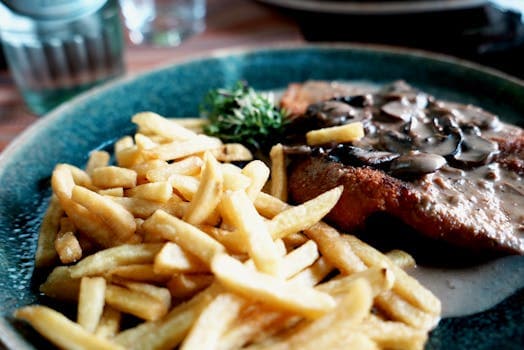
Wiener Schnitzel – Escalope de Veau Panée Viennoise Classique
Escalope de veau d'une finesse de papier écrasée plate, panée de chapelure fine et frite au beurre clarifié jusqu'à gonflée et dorée.
À propos de cette recette
Wiener Schnitzel est le plat le plus emblématique d'Autriche et d'Allemagne — une escalope de veau fine écrasée à environ 4mm, farcie dans la farine, trempée dans l'oeuf et enrobée de chapelure fine, puis frite dans une abondance de beurre clarifié ou saindoux jusqu'à gonflée et dorée. La caractéristique définissante est la séparation de type soufflé de la croûte de la viande — réalisée en secouant la poêle tout en fisant, permettant au gras chaud d'inonder sous la croûte et créer des bulles. Le nom 'Wiener' (Viennoise) est protégé en Autriche : seul le veau peut légalement être appelé Wiener Schnitzel ; les versions faites avec le porc s'appellent Schnitzel Wiener Art. La technique demande des escalopes fines et uniformes — un attendrisseur de viande est essentiel — et fine chapelure sèche (pas panko). Le gras doit être assez profond pour partiellement submerger le schnitzel, et assez chaud (170°C) pour frire rapidement sans absorber la graisse. Servie avec un coin de citron, pommes de terre au persil et salade de concombre, Wiener Schnitzel est une maître-classe en simplicité : quand chaque composant est exécuté parfaitement, c'est l'un des grands plats du monde. Le jus de citron pressé à table coupe la richesse du beurre et illumine le veau délicat.
Ingrédients
Sert 4
- 4escalopes de veau (150g chacune)(ou longe de porc pour Schnitzel Wiener Art)
- 80 gfarine simple
- 3gros oeufs(battus)
- 150 gchapelure fine sèche
- 200 gbeurre clarifié (ghee) ou saindoux
- 1 c. à c.sel
- 1citron(coupé en coins, pour servir)
Étapes
- 1
Écraser les escalopes
Placer chaque escalope entre deux feuilles de film alimentaire. En utilisant le côté plat d'un attendrisseur de viande, écraser à une épaisseur uniforme de 4mm. Assaisonner légèrement avec du sel.
Écraser avec des coups latéraux, travaillant vers l'extérieur du centre — cela étire la viande plutôt que de la déchirer.
- 2
Préparer la station de panage
Disposez trois bols peu profonds : la farine dans le premier, l'œuf battu dans le deuxième, la chapelure dans le troisième.
- 3
Paner le schnitzel
Enrober chaque escalope dans la farine (secouer l'excès), tremper dans l'oeuf (laisser l'excès goutter), puis enrober de chapelure. Appuyer légèrement pour adhérer — ne pas appuyer fort. Réfrigérer pendant 10 minutes.
- 4
Frire
Faire chauffer le beurre clarifié dans une grande poêle large à 170°C — le beurre devrait être 1–1.5cm profond. Frire les schnitzels un ou deux à la fois pendant 2–3 minutes par côté, en secouant constamment la poêle pour que le gras chaud inonde sous la croûte.
La croûte bullante et de type soufflé est la marque d'un Wiener Schnitzel parfait.
- 5
Égoutter et servir
Égoutter sur du papier de cuisine pendant 30 secondes. Servir immédiatement avec les coins de citron, pommes de terre au persil et salade de concombre.
Vous l'avez cuisinée ?
Notez-la et aidez les autres à trouver les recettes qui fonctionnent vraiment.
Connectez-vous en un geste : nous enregistrons la note que vous venez de choisir.
Tout ce qu'il faut pour planifier votre semaine — gratuit
- Calendrier des repas
- Liste de courses
- Idées de recettes IA
Suivez ce que vous mangez
Photographiez votre repas pour enregistrer calories et macros, lancez des minuteurs de jeûne et suivez votre hydratation avec l’app gratuite SnapCal.
Conseils de pro
- →
N'appuyer jamais la panure fortement vers le bas — les miettes lâches créent plus de poches d'air pour la croûte de soufflé.
- →
Le beurre clarifié donne une meilleure couleur et un point de fumée plus élevé que le beurre entier.
- →
Si le veau n'est pas disponible, la longe de porc fonctionne magnifiquement — juste écraser à la même épaisseur.
Variantes
- •
Jägerschnitzel : servie avec une sauce crémeuse champignon et bacon
- •
Zigeunerschnitzel : garnie avec une sauce paprika et poivre
- •
Rahmschnitzel : servie dans une sauce crème riche avec spätzle
Stockage
Mieux mangé immédiatement. Réchauffer dans un four à 200°C pendant 5 minutes pour re-croustiller. Ne pas réchauffer au micro-ondes.
Histoire et origine
Wiener Schnitzel retrace ses racines à 19e-siècle Vienne. La légende tient que le Field Marshal Radetzky a apporté la recette de Milan (cotoletta alla Milanese) à Vienne en 1848, bien que les historiens de la gastronomie le contredisent. Indépendamment de ses origines, c'est devenu synonyme de la cuisine viennoise et est maintenant le plat national d'Autriche, protégé par la loi depuis 1917.
Foire aux questions
Pourquoi ma croûte de schnitzel tombe-t-elle?
Soit la viande était mouille (éponger sec avant de paner), la panure a été appuyée trop fermement (elle a besoin d'être lâche), ou le gras n'était pas assez chaud. Aussi, réfrigérer le schnitzel pané pendant 10 minutes aide la panure à adhérer.
Faits nutritionnels
Par portion (400g) · 4 portions totales
Résumé du temps
Vous avez des questions ?
Demandez quoi que ce soit à notre assistant culinaire IA sur cette recette : substitutions, techniques, mise à l'échelle.
Discutez avec AI Chef →Présenté dans les guides
Cette recette est présentée dans les guides sélectionnés suivants :
Plus de recettes allemandes
Vous Aimerez Aussi
Des plats similaires venus d'autres cuisines du monde.
Parcourir par Ingrédient
D'autres recettes construites autour des mêmes ingrédients principaux.
Outils de Cuisine Gratuits
Calculateurs et convertisseurs qui accompagnent cette page — sans inscription.
Calculateur de proportions
Divisez par deux ou doublez chaque quantité de cette recette sans calcul mental.
Convertisseur de mesures
Convertissez tasses, grammes, onces et millilitres dans les deux sens.
Calculateur de calories et de portions
Calculez les calories et les macros de la portion que vous mangez vraiment.
Transformer en Plan
Programmez-le, faites les courses et suivez ce que vous avez déjà.
Calendrier de planification des repas
Placez cette recette sur un jour et organisez la semaine autour.
Appli de liste de courses
Transformez cette liste d’ingrédients en liste de courses regroupée par rayon.
Importateur de recettes
Enregistrez cette recette — et n’importe quelle URL de recette — dans une bibliothèque organisée.
À Lire Ensuite
Des articles de fond sur les idées derrière ce plat.
Communauté
Rejoignez la conversation
Connectez-vous pour laisser un commentaire et enregistrer vos recettes préférées