
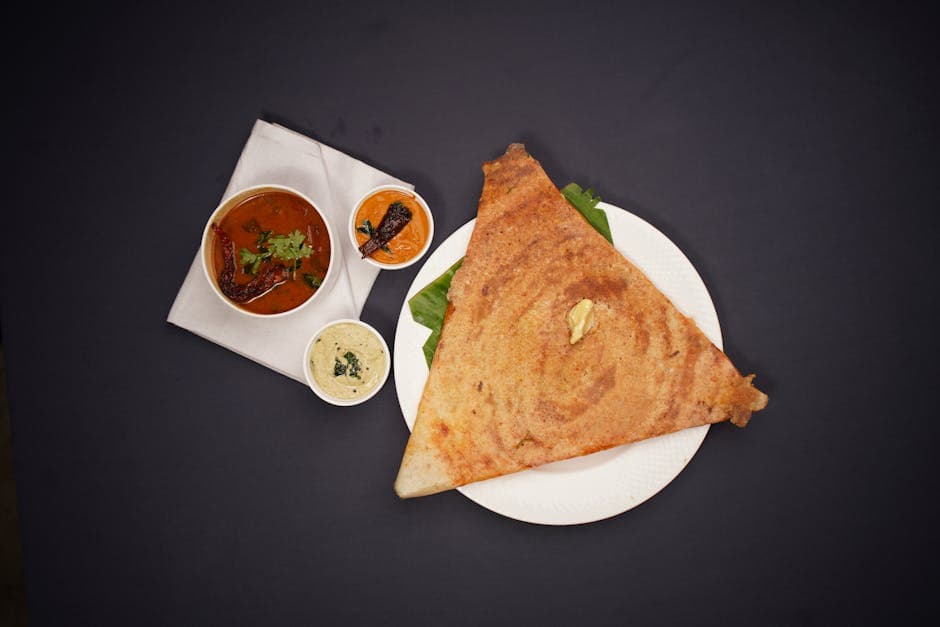
Masala Dosa (crepe di riso croccante con patate dell'India meridionale)
L'iconica colazione dell'India meridionale: una sottilissima crêpe di riso fermentato e lenticchie dorata e croccante avvolta attorno a un ripieno di patate speziato, servita con chutney di cocco e sambar.
A proposito di questa ricetta
Masala dosa è uno dei maggiori contributi dell'India meridionale alla cucina mondiale: una crêpe fermentata sottilissima e croccante di riso e urad dal, avvolta attorno a un ripieno burroso di patate temperato con semi di senape e servita con un chutney di cocco e un sambar dal focoso e aspro. La tecnica è vecchia di secoli: il riso e il cece nero spezzato vengono messi a bagno separatamente per ore, macinati fino a ottenere una pastella liscia, fatti fermentare durante la notte fino a quando diventano piccanti e pieni di piccole bollicine, quindi versati in un disco sottile su una piastra rovente e spinti verso l'esterno con il fondo di una tazza d'acciaio fino a coprire l'intera padella con una pelle traslucida. Una noce di burro chiarificato, una spolverata di polvere di spezie dosa podi, il ripieno di patate al centro e una piega sicura: questo è l'intero piatto. Il ripieno del masala stesso è ciò che distingue la dosa: patate bollite spezzettate grossolanamente con semi di senape e urad dal temperato nell'olio, cipolle marroni dolci cotte con peperoncino verde e foglie di curry, curcuma per colore e un finale ravvivante di lime e coriandolo fresco. Mangiato nei grandi diner Udupi e Karnataka di Bangalore, Madras e Bombay, il masala dosa è colazione, pranzo e cibo da strada allo stesso tempo - e nella sua forma migliore, quando arriva piegato lungo quanto l'avambraccio con il chutney già impiattato, è davvero uno dei pasti più piacevoli sulla Terra.
Ingredienti
Serve 4
- 300 griso crudo (parboiled o sona masuri), ammollato separatamente
- 100 gUrad dal (grammo nero diviso) intero con la pelle, messo a bagno separatamente
- 1 cucchiaiosemi di fieno greco, imbevuti di dal
- 0.5 cucchiainosale per la pastella
- 500 gpatate a pasta cerosa, bollite e sbucciate
- 2 mediocipolle gialle, affettate finemente
- 2peperoncini verdi, tagliati longitudinalmente
- 15foglie di curry fresche
- 1 cucchiainosemi di senape nera
- 1 cucchiainointero urad dal (per il temperaggio)
- 0.5 cucchiainopolvere di curcuma
- 1 small piecezenzero, grattugiato finemente
- 1 piccolo mazzocoriandolo, tritato
- 1lime, succo
- 4 cucchiaioburro chiarificato o olio di cocco per cucinare
- sale qb, chutney di cocco e sambar per servire
Istruzioni
- 1
Immergere durante la notte
Sciacquare separatamente il riso e l'urad dal+fieno greco. Immergerli ciascuno in abbondante acqua fredda per almeno 6 ore. Il fieno greco con il dal conferisce al dosa il suo colore dorato e favorisce la fermentazione.
- 2
Macinare la pastella
Scolare il dal+fieno greco e macinarlo fino a ottenere una pasta bianca liscia e soffice con acqua fredda quanto basta per mantenerlo in movimento (circa 200 ml) - dovrebbe avere la consistenza della panna montata e circa raddoppiare il volume grazie all'aerazione. Versare in una grande ciotola. Macinare il riso separatamente fino ad ottenere una consistenza leggermente granulosa simile alla semola con circa 150 ml di acqua; unire alla pastella dal, aggiungere ½ cucchiaino di sale e mescolare con la mano per 2 minuti per incorporare aria (i lieviti naturali sulla pelle aiutano la fermentazione).
- 3
Fermentare 8–14 ore
Coprire senza stringere e lasciare in un luogo caldo (24–28°C ideale) per 8 ore in estate o fino a 14 in inverno. La pastella sarà pronta quando avrà raddoppiato il suo volume, avrà un odore piacevolmente acidulo e se mescolata presenterà delle piccole bollicine. Refrigerare se non si cucina immediatamente.
- 4
Prepara il ripieno del masala
Schiacciare grossolanamente le patate bollite, lasciando alcuni grumi per la consistenza. Scaldare 2 cucchiai di burro chiarificato in una padella ampia a fuoco medio. Far scoppiare i semi di senape per 30 secondi, aggiungere l'urad dal intero e friggerlo finché non diventa dorato, quindi le foglie di curry, il peperoncino verde, lo zenzero e infine la cipolla affettata. Cuocere 8 minuti fino a quando la cipolla sarà dolce e traslucida.
- 5
Unire e completare il ripieno
Aggiungere la curcuma e un cucchiaino di sale, mescolare per 30 secondi, quindi aggiungere le patate schiacciate con 100 ml di acqua. Schiacciare delicatamente e cuocere per 4 minuti finché il tutto non si sarà riunito in un composto morbido e leggermente umido. Completare con succo di lime e coriandolo. Stai al caldo.
- 6
Riscaldare adeguatamente la piastra
Scaldare una tava (o una padella piatta) in ghisa antiaderente o stagionata a fuoco medio-alto fino a quando un filo d'acqua sulla superficie evapora istantaneamente. Strofina la superficie con mezza cipolla immersa nell'olio: questo condisce e abbassa la temperatura per raggiungere il calore dosa perfetto. Pulisci con un tovagliolo di carta tra una dose e l'altra.
- 7
Distribuisci la dosa
Versare al centro 80 ml di pastella. Lavorando velocemente e con sicurezza, stendilo verso l'esterno con un movimento a spirale con il retro di una tazza o di un mestolo d'acciaio a fondo piatto fino ad ottenere un disco sottile e uniforme di circa 25 cm di diametro. Più sottile è la dosa, più croccante; l'obiettivo è sottilissimo con un centro traslucido.
- 8
Croccante e ripieno
Irrorare 1 cucchiaino di burro chiarificato attorno ai bordi e sulla superficie. Cuocere per 60-90 secondi: il fondo dovrebbe diventare ben dorato e i bordi dovrebbero sollevarsi facilmente dalla padella. Disporre al centro un cucchiaio abbondante di masala, piegare la dosa a metà o in terzi e farla scivolare su un piatto. Servire immediatamente con chutney di cocco e sambar.
L'hai preparata?
Dai un voto e aiuta gli altri a trovare le ricette che funzionano davvero.
Accedi con un tocco e salveremo il voto che hai appena scelto.
Tutto ciò che serve per pianificare la settimana — gratis
- Calendario pasti
- Lista della spesa
- Idee ricette con IA
Tieni traccia di ciò che mangi
Fotografa il tuo pasto per registrare calorie e macro, usa i timer del digiuno e monitora l’acqua con l’app gratuita SnapCal.
Suggerimenti professionali
- →
La fermentazione è decisiva: troppo fredda (sotto i 20°C) e non lievita mai; troppo caldo (oltre 32°C) e diventa acido. Il forno spento e la luce accesa sono l'ambiente domestico ideale.
- →
Mescola la pastella con le mani, non con un cucchiaio: le nonne indiane giureranno che i lieviti selvatici sulla tua pelle fanno parte di ciò che fa funzionare il fermento. In realtà c'è la scienza dietro questo.
- →
La prima dosa è sempre un disastro: chiamala porzione del cuoco e non preoccuparti. Entro il terzo o il quarto, la temperatura della padella e la tua tecnica si sincronizzano.
- →
Il riso parboiled (riso idli) fermenta più velocemente e dà una dosa più croccante rispetto al normale riso crudo. Vale la pena cercare in una drogheria indiana; sona masuri è il migliore.
Variazioni
- •
Mysore masala dosa: spalmare uno strato sottile di chutney di aglio e peperoncino rosso sulla dosa prima di aggiungere le patate, la variazione caratteristica di Mysore.
- •
Rava dosa (istantaneo): nessuna fermentazione necessaria: semola, farina di riso, farina multiuso e pastella di yogurt. Di pizzo e croccante ma una bestia completamente diversa.
- •
Set dosa: dosa più spessa e morbida cotta ricoperta come una frittella: specialità mattutina del Karnataka servita impilata in set da 3.
- •
Paneer masala dosa: sostituisci parte della patata nel ripieno con paneer sbriciolato e piselli: una fusione punjabi-tamil.
Stoccaggio
La pastella si conserva in frigorifero per 4 giorni: portare a temperatura ambiente prima dell'uso e aggiungere un goccio d'acqua se troppo densa. I dosa cotti non si riscaldano bene; perdono la loro croccantezza. Il ripieno di masala refrigera per 3 giorni e congela per 2 mesi.
Storia e origine
Dosa ha avuto origine nelle cucine dei templi del Tamil Nadu e del Karnataka medievali, con i primi riferimenti scritti che compaiono nei testi sanscriti del VI secolo. La versione piegata del masala con ripieno di patate è un'innovazione della fine del XIX secolo associata alla cucina Udupi della costa del Karnataka, dove le cucine del tempio di Krishna servivano i pellegrini e standardizzavano il piatto che ora si trova dalle case tiffin di Madras alle aree ristorazione dei centri commerciali di Bangkok.
Domande frequenti
Cosa succede se la mia pastella non fermenta?
O la tua cucina è troppo fredda (è necessario un posto caldo) o il tuo dal era vecchio (l'urad dal perde potere fermentativo con l'età: compralo fresco). Puoi salvare la pastella poco fermentata aggiungendo ½ cucchiaino di sale eno o un pizzico di bicarbonato di sodio appena prima della cottura: non avrà un sapore acido ma aumenterà.
Posso usare un frullatore invece di un tritatutto a umido?
Sì, un frullatore potente funziona, ma macina in piccoli lotti con poca acqua e aggiungi cubetti di ghiaccio per evitare il surriscaldamento (che uccide la fermentazione). Un macinacaffè a pietra produce una pastella più leggera e soffice e vale l'investimento se prepari spesso la dosa.
Perché la mia dosa non è croccante?
O la padella non è abbastanza calda (prova con acqua: deve evaporare all'istante), oppure la pastella è troppo densa (allenta con acqua fino a ottenere la consistenza di un pancake sottile), oppure la stendi troppo densa (deve essere sottilissima).
Ho bisogno di un tava?
Va bene qualsiasi padella piatta e pesante: una ghisa ben stagionata, una padella antiaderente per crêpe o una piastra piatta. Una tava indiana specializzata è l'ideale ma non essenziale.
Fatti nutrizionali
Per porzione (360g) · 4 porzioni totali
Riepilogo del tempo
Hai domande?
Chiedi al nostro assistente di cucina AI qualsiasi cosa su questa ricetta: sostituzioni, tecniche, ridimensionamento.
Chatta con AI Chef →In evidenza nelle Guide
Questa ricetta è presente nelle seguenti guide curate:
Altre ricette indiane
Potrebbe Piacerti Anche
Piatti simili da altre cucine del mondo.
Sfoglia per Ingrediente
Altre ricette costruite attorno agli stessi ingredienti principali.
Strumenti da Cucina Gratuiti
Calcolatori e convertitori pensati per questa pagina — senza registrazione.
Calcolatore di dosi
Dimezza o raddoppia ogni quantità di questa ricetta senza fare calcoli a mente.
Convertitore di misure
Converti tazze, grammi, once e millilitri in entrambe le direzioni.
Convertitore per friggitrice ad aria
Converti tempo e temperatura del forno nelle impostazioni della friggitrice ad aria.
Trasformalo in un Piano
Mettilo in calendario, fai la spesa e tieni traccia di ciò che hai già.
Calendario dei pasti
Metti questa ricetta in un giorno e organizza la settimana intorno a essa.
App lista della spesa
Trasforma questa lista di ingredienti in una lista della spesa raggruppata per reparto.
Importatore di ricette
Salva questa ricetta — e qualsiasi URL di ricetta — in un’unica raccolta ordinata.
Da Leggere Dopo
Approfondimenti sulle idee dietro questo piatto.
Comunità
Partecipa alla conversazione
Accedi per lasciare un commento e salvare le tue ricette preferite