
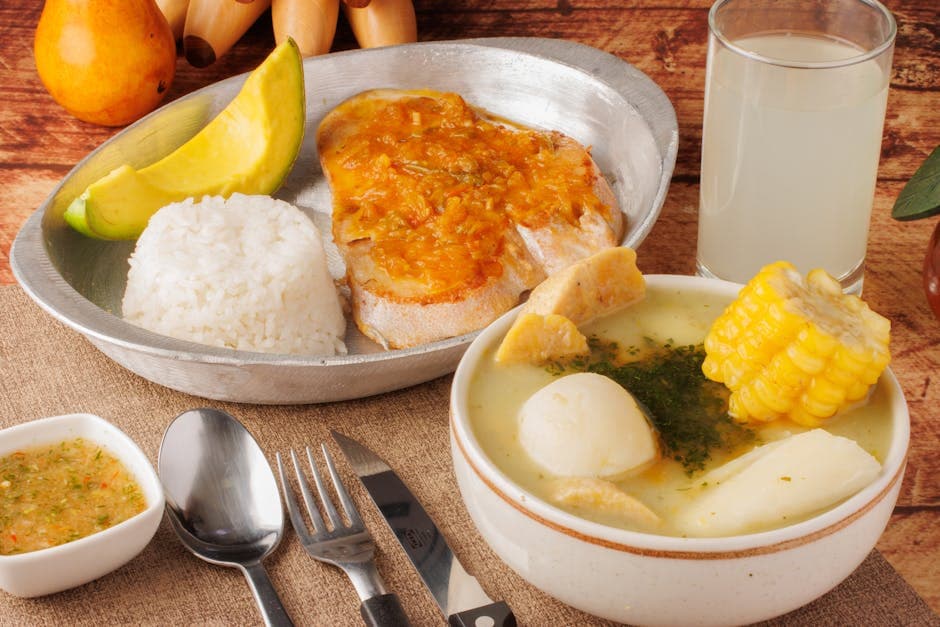
Ajiaco Santafereño
Bogotá's three-potato chicken soup with corn, capers, cream, and guascas — Colombia's most comforting bowl.
About This Recipe
Ajiaco Santafereño is the soul-food soup of Colombia's high Andean capital, Bogotá. Three kinds of potatoes — papa criolla (small, yellow, waxy), papa sabanera (firm and starchy), and pastusa (very starchy) — are simmered with chicken and corn cobs until the criolla dissolves entirely and thickens the broth into something almost stew-like. The signature herb, guascas (Galinsoga parviflora), gives ajiaco its unmistakable grassy-earthy flavor — there is no exact substitute. At the table each diner adds capers, heavy cream, slices of avocado, and a spoon of fresh cilantro. The contrast is everything: hot starchy broth, cool sharp cream, briny capers, fatty avocado.
Ingredients
Serves 6
- 1 kgbone-in chicken breasts and thighs
- 2 Lwater
- 1onion, halved
- 4 clovesgarlic
- 1 bunchfresh cilantro stems (save leaves for garnish)
- 2scallions, whole
- 1 tspground cumin
- 2 tspsalt
- 400 gpapa criolla (or baby Yukon gold), peeled
- 400 gstarchy potatoes (russet), peeled and sliced
- 400 gwaxy potatoes (red or Yukon), peeled and cubed
- 3corn cobs, cut into 5 cm pieces
- 20 gdried guascas (or 50g fresh)
- 200 mlheavy cream
- 4 tbspcapers, drained
- 2avocados, sliced
- fresh cilantro leaves to serve
- white rice, to serve on the side
Instructions
- 1
Simmer chicken
Place chicken in a large pot with water, onion, garlic, cilantro stems, scallions, cumin, and salt. Bring to a gentle simmer and cook 35 minutes. Skim foam.
- 2
Strain
Lift out chicken; shred meat off the bone and discard skin. Strain broth into a clean pot; discard aromatics.
- 3
Cook starchy potatoes
Add russet and waxy potatoes plus corn to the broth. Simmer 20 minutes.
- 4
Add criolla and guascas
Stir in papa criolla and guascas. Cook 20 more minutes. The criolla should melt into the broth and the soup should thicken noticeably.
Mash a few criolla pieces against the side of the pot to encourage thickening.
- 5
Return chicken
Stir shredded chicken back in. Taste broth; adjust salt. The soup should be thick, starchy, herbal, and warming.
- 6
Set the table
Put cream, capers, avocado slices, cilantro, and rice in separate bowls on the table.
- 7
Serve
Ladle soup into deep bowls, making sure each gets corn, chicken, and all three potato textures. Each diner adds their own toppings to taste.
Did you make this?
Rate it and help other cooks find the recipes that actually work.
One tap to sign in, and we'll save the rating you just picked.
Everything you need to plan your week — free
- Meal calendar
- Grocery list
- AI recipe ideas
Track what you eat
Snap your meal to log calories and macros, run fasting timers and track water in the free SnapCal app.
Pro Tips
- →
Guascas is the single non-negotiable ingredient — it's what makes ajiaco taste like ajiaco. Find it dried at Latin markets or order online; without it, you've made potato soup.
- →
Papa criolla is essential for the thickening — frozen criolla is sold at Colombian markets; baby Yukon gold is the closest substitute but won't disintegrate as completely.
- →
Add the cream at the table, not in the pot — boiling cream dulls its sharpness against the broth.
Variations
- •
Vegetarian: skip chicken, use vegetable stock, and double the corn.
- •
Ajiaco con pollo desmechado: shred chicken extra-fine for a smoother texture.
- •
Add a splash of milk to the broth in the last 5 minutes for an even richer body.
Storage
Refrigerate up to 3 days; the soup thickens further as it sits. Loosen with a splash of stock when reheating. Do not freeze — the potatoes turn grainy.
History & Origin
Ajiaco originated among the Muisca indigenous peoples of the Bogotá savanna, who cultivated dozens of potato varieties at high altitude. The Spanish added chicken and capers in the colonial period; cream came later, in the 19th century, when European dairy practices took hold in the highlands.
Frequently Asked Questions
What can I substitute for guascas?
There is no true substitute — guascas has a unique grassy, slightly bitter flavor. The closest approximations are a mix of fresh oregano and parsley, but the result is no longer authentic ajiaco.
Why three different potatoes?
Each has a job: papa criolla dissolves and thickens the broth; russet adds creaminess; waxy potato holds its shape so each spoonful has texture. Using only one variety gives a one-note soup.
Can I make ajiaco in advance?
Yes — it's actually better the next day as the flavors meld. Add cream, capers, and avocado fresh at serving, never in advance.
Is ajiaco the same as sancocho?
No. Sancocho is a broader Latin American stew with multiple meats and root vegetables. Ajiaco is specifically a chicken-and-potato soup with guascas, native to Colombia's central highlands.
Nutrition Facts
Per serving (560g / 19.8 oz) · 6 servings total
Time Summary
Have Questions?
Ask our AI cooking assistant anything about this recipe — substitutions, techniques, scaling.
Chat with AI Chef →Featured in Guides
This recipe is featured in the following curated guides:
More Colombian Recipes
You Might Also Like
Similar dishes from other cuisines around the world.
Browse by Ingredient
More recipes built around the same core ingredients.
Free Kitchen Tools
Calculators and converters that pair with this page — no signup needed.
Put This Into a Plan
Schedule it, shop for it, and track what you already have.
Read Next
Longer reads that go deeper on the ideas behind this dish.
Community
Join the conversation
Sign in to leave a comment and save your favourite recipes