
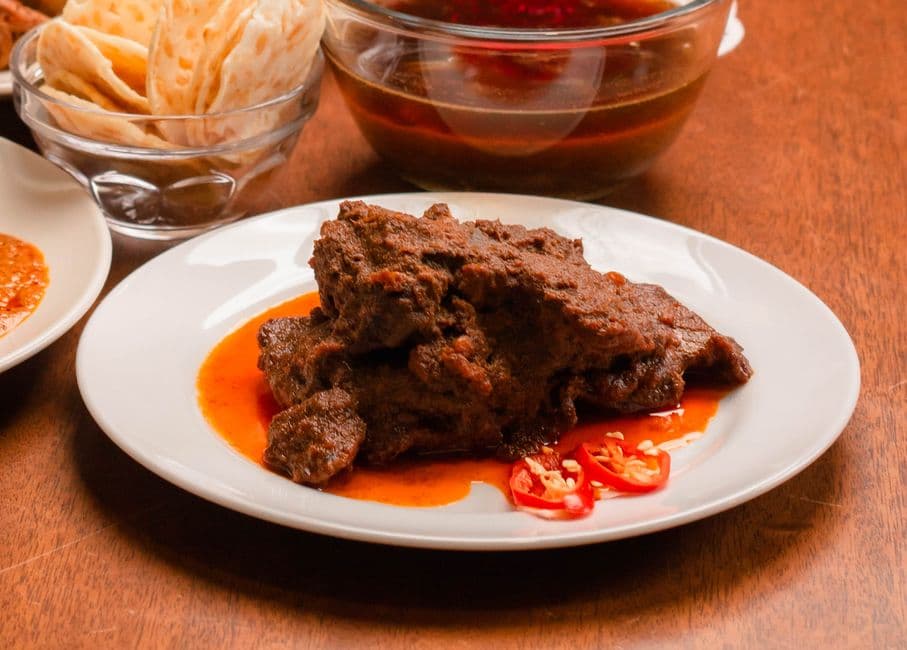
Beef Rendang
Slow-braised beef in a deeply spiced coconut and chilli paste, cooked until the sauce completely evaporates and the meat is dark, caramelised and intensely flavourful.
About This Recipe
Rendang is one of the most complex and celebrated dishes in the Indonesian and Malay culinary canon, and it has been voted by CNN readers as the most delicious food in the world on more than one occasion. Originating with the Minangkabau people of West Sumatra, rendang begins as a braise but is cooked so long — two to four hours — that all the liquid evaporates and the coconut milk, chilli paste and spices caramelise around each piece of meat in a dark, intensely aromatic crust. The result is beef that is simultaneously tender and firm, moist but not saucy, and flavoured with layer upon layer of lemongrass, galangal, turmeric, kaffir lime leaf and toasted coconut. Rendang is traditionally prepared for festivals and celebrations and actually improves in flavour over several days.
Ingredients
Serves 6
- 1 kgbeef chuck or brisket(cut into large chunks)
- 400 mlcoconut milk
- 50 gdesiccated coconut(toasted until golden (kerisik))
- 3 stalkslemongrass(bruised)
- 5kaffir lime leaves
- 2turmeric leaves(or 1 teaspoon ground turmeric)
- 2 tablespoonstamarind paste
- 1 tablespoonpalm sugar or brown sugar
- 8dried red chillies(soaked in hot water)
- 6shallots(roughly chopped)
- 4 clovesgarlic
- 3 cmfresh galangal(sliced)
- 2 cmfresh ginger(sliced)
- 1 teaspoonground coriander
Instructions
- 1
Make the spice paste
Blend or pound the soaked chillies, shallots, garlic, galangal, ginger and ground coriander into a smooth paste using a blender or mortar and pestle.
- 2
Make the kerisik
Toast the desiccated coconut in a dry pan over medium heat, stirring constantly, for 5–8 minutes until deep golden brown. Transfer to a mortar and pound until it forms a rough oily paste. This kerisik is the secret to authentic rendang flavour.
Don't rush the toasting — the coconut should be a deep mahogany colour for full flavour development.
- 3
Fry the paste
In a large heavy pot or wok, cook the spice paste over medium heat, stirring, for 5 minutes until fragrant and the oil separates. Add the lemongrass stalks, kaffir lime leaves and turmeric leaves.
- 4
Add beef and coconut milk
Add the beef chunks and toss to coat in the spice paste. Pour in the coconut milk, tamarind paste, sugar and enough water to barely cover the beef (about 200ml). Stir to combine and bring to a boil.
- 5
Long slow simmer
Reduce heat to a gentle simmer and cook uncovered, stirring every 20–30 minutes, for 2–3 hours. The liquid will slowly reduce and the colour will deepen from pale yellow to gold to dark brown.
- 6
Add kerisik and caramelise
When the sauce has reduced to a thick gravy barely coating the beef, add the kerisik. Continue cooking, now stirring more frequently, as the remaining moisture evaporates and the spices and coconut caramelise around the beef. This final stage takes 20–40 minutes and requires attention to prevent burning. The rendang is ready when the beef is very dark, almost dry, and coated in a deeply aromatic spiced crust.
- 7
Rest and serve
Remove the lemongrass and lime leaves. Serve with steamed white rice or ketupat (compressed rice cakes), with sambal on the side.
Did you make this?
Rate it and help other cooks find the recipes that actually work.
One tap to sign in, and we'll save the rating you just picked.
Everything you need to plan your week — free
- Meal calendar
- Grocery list
- AI recipe ideas
Track what you eat
Snap your meal to log calories and macros, run fasting timers and track water in the free SnapCal app.
Pro Tips
- →
Rendang tastes significantly better after 24 hours as the flavours meld and deepen.
- →
Use a heavy-bottomed pot to prevent scorching during the final caramelisation stage.
- →
Freeze any leftover rendang — it keeps beautifully for up to 3 months.
- →
Taste and adjust salt at the very end — flavors concentrate as liquids reduce, and a final pinch of flaky salt sharpens the whole dish.
Variations
- •
Chicken rendang uses the same method but cooks in half the time.
- •
Rendang Tok from Perak, Malaysia, is cooked even drier and darker than the Indonesian original.
- •
Vegetarian: swap the protein for roasted king oyster mushrooms, smoked tofu or cooked chickpeas — adjust seasoning slightly upward to compensate.
- •
Spicier: add a finely chopped fresh chile or a teaspoon of crushed Aleppo/Urfa pepper to the aromatics for warm, layered heat instead of a single sharp hit.
Storage
Rendang keeps at room temperature for 2–3 days (the spices and caramelised coconut act as a preservative), in the fridge for 1 week, or in the freezer for 3 months. It improves with time.
History & Origin
Rendang was created by the Minangkabau people of West Sumatra as a preservation method — the long cooking and absence of moisture allowed meat to be kept without refrigeration for days or weeks. It spread through Sumatra and the Malay peninsula via Minangkabau merchant networks and today is considered a heritage dish of both Indonesia and Malaysia.
Frequently Asked Questions
Why is my rendang still saucy after 2 hours?
The final evaporation stage is critical and the timing varies with pan size, heat level and the fat content of your coconut milk. Increase the heat slightly and stir more frequently until the sauce fully evaporates and the spices begin to caramelise.
Can I make this ahead of time?
Yes — most of the components can be prepared up to a day in advance and refrigerated separately. Reheat gently and assemble just before serving so textures stay distinct.
What can I substitute if I don't have all the ingredients?
Stay close to the role each ingredient plays: swap aromatics for similar ones (shallot for onion, lime for lemon), and keep the fat-acid-salt balance intact. Spice blends can usually be approximated with what's in the cupboard.
How do I know it's authentic?
Authenticity sits on a spectrum — what matters more is honoring the technique and balance of flavors. If the dish tastes harmonious and respects how cooks in its home region would build it, you're on solid ground.
Nutrition Facts
Per serving (300g / 10.6 oz) · 6 servings total
Time Summary
Have Questions?
Ask our AI cooking assistant anything about this recipe — substitutions, techniques, scaling.
Chat with AI Chef →Featured in Guides
This recipe is featured in the following curated guides:
More Indonesian Recipes
You Might Also Like
Similar dishes from other cuisines around the world.
Browse by Ingredient
More recipes built around the same core ingredients.
Free Kitchen Tools
Calculators and converters that pair with this page — no signup needed.
Put This Into a Plan
Schedule it, shop for it, and track what you already have.
Read Next
Longer reads that go deeper on the ideas behind this dish.
Community
Join the conversation
Sign in to leave a comment and save your favourite recipes