mexicandinner🔥 Trending
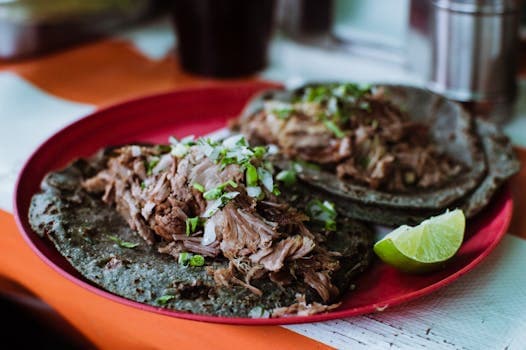
Mexican Carnitas – Slow-Braised Pork with Crispy Edges
Pork shoulder braised in lard and orange juice until fall-apart tender, then crisped in its own fat.
Prep
15 min
Cook
150 min
Servings
8
Difficulty
Easy
★★★★★
4.9(34,100 ratings)#mexican#pork#tacos#slow-cooked#crispy#crowd-pleaser
About This Recipe
Carnitas — 'little meats' — are the king of Mexican taco fillings: pork shoulder braised slowly in lard (or a lard-water mixture) with orange, garlic, and spices until completely tender, then the fat is cooked down and the pork is crisped in it until golden and irresistibly crunchy on the outside while still moist and pull-apart inside. The combination of textures — the crispy bits and the tender shreds — is what makes carnitas extraordinary and unlike any other braised pork preparation. The method is essentially a confit: the pork cooks submerged in fat at low temperature, which keeps it moist and transfers enormous flavour. The orange juice adds both sweetness and acidity that helps break down the meat, while Mexican oregano and cumin provide the characteristic flavour. The final crisping step — where the lard cooks away and the pork begins to fry in its own rendered fat — requires watching carefully to achieve maximum crispiness without burning. Carnitas are made for tacos: spooned into warm corn tortillas with diced onion, fresh coriander, salsa verde and a squeeze of lime. They make exceptional quesadillas, burritos, and nachos. Make a large batch — they reheat beautifully and freeze well.
Ingredients
Serves 8
- 1.5 kgpork shoulder(bone-in, cut into large chunks)
- 1orange(halved)
- 1whole head garlic(halved horizontally)
- 2 tspground cumin
- 1 tspdried oregano(preferably Mexican)
- 2 tspsalt
- 1 tspblack pepper
- 1 cancola or beer(330ml)
- 200 mlwater
- 16small corn tortillas(to serve)
- diced onion, fresh coriander, lime(to serve)
Instructions
- 1
Season and brown the pork
Rub pork generously with cumin, oregano, salt and pepper. Sear in batches in a heavy pot until deeply golden all over.
- 2
Braise
Add orange (squeezed in), garlic, cola and water. Bring to a boil, then simmer uncovered over medium-low heat for 2 hours, turning occasionally, until pork is completely tender and most liquid has evaporated.
The liquid should mostly evaporate, leaving just fat and pork juices.
- 3
Crisp the carnitas
Once liquid has evaporated and only fat remains, increase heat to medium-high. The pork will begin frying in its own fat. Cook, stirring occasionally, for 15–20 minutes until golden and crispy on the edges.
Watch carefully at this stage — the difference between perfectly crispy and burnt is minutes.
- 4
Shred and serve
Remove pork and shred roughly with two forks. Serve in warm corn tortillas with diced onion, coriander and lime juice.
Pro Tips
- →
Bone-in shoulder makes more flavourful carnitas than boneless.
- →
Don't rush the crisping step — patience produces the characteristic crunchy-tender texture.
- →
Cola or Mexican beer adds sugars that help caramelisation — it's a real, effective technique.
Variations
- •
Oven carnitas: braise in a 160°C oven uncovered for 2.5 hours, then increase to 220°C for the final crisping.
- •
Slow-cooker carnitas: cook on LOW 8–10 hours, then crisp under the grill.
Storage
Keeps 4 days in the fridge. Freeze for 3 months. Reheat in a pan with a little oil to re-crisp.
History & Origin
Carnitas originate in the state of Michoacán in western Mexico, where they are considered the region's signature dish. The traditional preparation involves whole pigs cooked in massive copper cauldrons (cazos de cobre) filled with lard — a method still used for large-scale production at Mexican markets. Carnitas are the most popular taco filling at Mexican taquerias and are deeply embedded in Mexican street food culture.
Frequently Asked Questions
What cut of pork is best for carnitas?
Pork shoulder (also called pork butt or Boston butt) is the ideal cut — it has enough fat to stay moist during the long braise and develop rich flavour. Pork leg works but can be slightly drier. Avoid pork loin — it is too lean and will dry out completely during the 2-hour braise.
Nutrition Facts
Per serving (350g / 12.3 oz) · 8 servings total
Calories380kcal
Protein36g
Carbohydrates4g
Fat24g
Fiber0g
Protein36g
Carbs4g
Fat24g
Time Summary
Prep time15 min
Cook time150 min
Total time165 min
Have Questions?
Ask our AI cooking assistant anything about this recipe — substitutions, techniques, scaling.
Chat with AI Chef →More Mexican Recipes
Community
Join the conversation
Sign in to leave a comment and save your favourite recipes