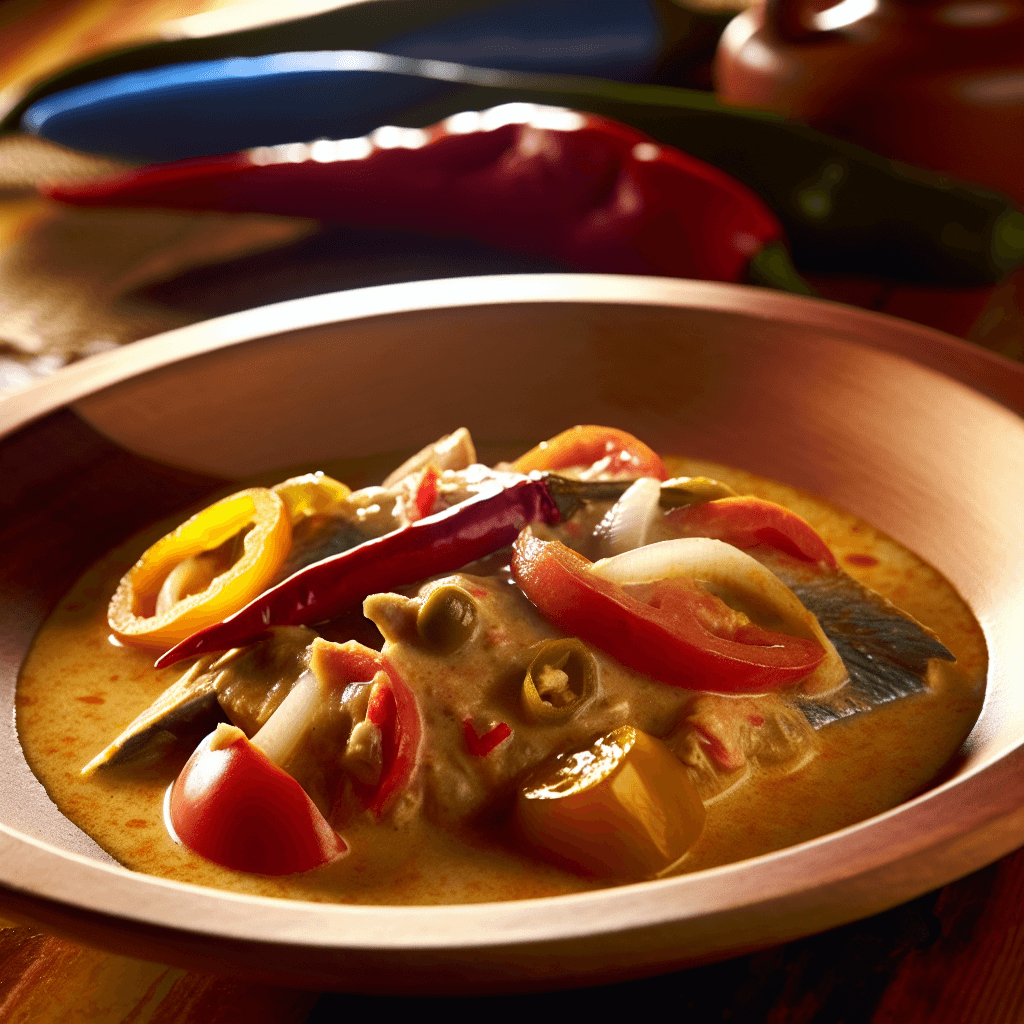
Rundown — spelled 'run dung' in Caymanian dialect and pronounced that way too — is one of the Caribbean's most descriptive and most honest dish names. The 'running down' refers to the cooking method itself: coconut milk is simmered over moderate heat, uncovered, until it reduces and concentrates, eventually splitting into its component oil and cream, which then coat and permeate the fish and vegetables added to the pot. It is both a technique and a finished dish, and the result is unlike any other coconut-based preparation in Caribbean cooking — richer, more complex, and more deeply flavoured than a simple coconut milk stew. The dish is closely related to Jamaican rundown (or 'run dung') and reflects the shared Afro-Caribbean culinary heritage of the two neighbouring island cultures. In the Cayman Islands, fresh local fish — typically snapper or grouper — is the primary protein, though salt mackerel prepared in the same style is an older and more traditional version favoured by older generations. The scotch bonnet is left whole and unpierced in the sauce to add fragrance without overpowering heat; whole thyme sprigs perfume the reducing coconut milk; and diced fresh tomatoes and sliced onion add body and sweetness. The finished dish arrives at the table as a thick, glossy, ivory-golden sauce coating each piece of fish — deeply aromatic with thyme and scotch bonnet, rich with coconut fat, and vibrant with tomato. It is served over plain rice or with boiled provisions, which soak up the sauce in the most satisfying possible way.
Serves 4
Pour the coconut milk into a wide, heavy skillet or sauté pan. Add the diced tomatoes, sliced onion, whole scotch bonnet, and thyme sprigs. Bring to a moderate simmer over medium heat. The goal from the outset is reduction — use a wide pan to maximise surface area for evaporation, and do not cover the pan at any point.
Use full-fat canned coconut milk only — reduced-fat or coconut cream products behave differently and won't reduce to the same glossy consistency.
Simmer the coconut milk and aromatics steadily, stirring occasionally, for 15–18 minutes until the volume has reduced by approximately one-third and the sauce has thickened noticeably. It should coat the back of a spoon and have deepened slightly in colour from pale white to a golden cream. The tomatoes will have softened and the onions become translucent.
While the sauce reduces, season the fish chunks generously on all sides with salt and freshly ground black pepper. Pat dry with a paper towel — surface moisture inhibits the sauce from adhering to the fish during the final stage of cooking.
Keep the scotch bonnet completely whole throughout — inspect it periodically to ensure it remains intact and unpierced.
Gently lay the seasoned fish chunks into the partially reduced coconut sauce, nestling each piece so it is partially submerged. Spoon sauce over the exposed surfaces of each piece. Reduce heat to medium-low — the sauce should maintain an active but gentle simmer, not a boil that would break the fish apart.
Cover loosely with a lid tilted to allow steam to escape and cook for 10–12 minutes, basting the fish with sauce every few minutes. Remove the lid for the final 5 minutes to allow the sauce to reduce to a thick, creamy, almost glossy consistency that coats the fish richly. The fish is done when it flakes easily at the thickest point with the gentlest fork pressure.
Do not stir or move the fish vigorously — rundown fish should arrive at the table in intact, handsome pieces. Use a wide spatula and gentle, tilting movements when basting.
Carefully remove and discard the scotch bonnet (do not squeeze or press it) and the thyme sprigs. Taste the sauce and adjust salt. The sauce should be thick, richly flavoured, and fragrant. Serve immediately over steamed white rice, with the thick coconut sauce poured generously over everything.
Use full-fat canned coconut milk without exception. 'Lite' coconut milk lacks the fat content needed to reduce to a glossy glaze and will produce a thin, watery sauce regardless of how long you cook it.
Keep the scotch bonnet whole and intact. Inspect it when adding and during cooking — a cracked or punctured pepper will flood the sauce with fierce heat. Remove carefully without squeezing.
A wide, shallow pan gives you the best sauce reduction. If all you have is a deep pot, transfer the fish once you've added it and continue uncovered — surface area is the key to reduction.
Do not stir or move the fish after adding it to the sauce. Turn it once only, using a wide spatula, to keep the pieces intact for a more attractive presentation.
For the most authentic result, the sauce should reach the point where it separates slightly — you'll see small pools of coconut oil forming around the edges of the pan. This separation indicates the coconut milk has reduced fully and is the traditional signal that the rundown is done.
Salt mackerel version: soak salt mackerel overnight, boil briefly to desalt, and use in place of fresh fish. This is the older, more traditional version of the dish and produces a more intensely flavoured, funkier result loved by older Caymanians.
Green banana and breadfruit version: add peeled green banana cut into 5 cm rounds and cubed breadfruit to the sauce before adding the fish, cooking for 10 minutes before the fish goes in, for a one-pot meal requiring no separate starch.
Jamaican-style rundown: add a few allspice berries and a cinnamon stick to the reducing coconut milk for the classic Jamaican spice profile that is the close relative of the Caymanian version.
Shrimp rundown: substitute large shell-on shrimp for the fish. The shrimp cook much faster — add them in the final 4–5 minutes only and do not overcook. The shell infuses the sauce with additional seafood flavour.
Refrigerate in a sealed container for up to 2 days. The coconut sauce firms and thickens considerably when cold. Reheat very gently over low heat, adding a small splash of water to loosen the sauce, stirring carefully to avoid breaking the fish. The flavour deepens on the second day. Do not freeze as the coconut sauce breaks and the fish becomes tough upon thawing.
Rundown is documented in Jamaica from the early 19th century and in the Cayman Islands from roughly the same period, reflecting the close historical and cultural connection between the two territories — the Cayman Islands were administered as a dependency of Jamaica until 1962. The technique of reducing coconut milk to concentrate its flavour and achieve a coating consistency appears to derive from West African coconut-based cooking traditions adapted to use the Caribbean's abundant fresh coconuts. The earliest recorded versions used salt fish rather than fresh fish, reflecting the era when preservation was essential and fresh fish was not always available despite the islands' coastal location.
Rundown refers to the technique of reducing coconut milk over heat until it concentrates, thickens, and eventually separates into its component coconut oil and cream — 'running down' from a liquid to a glaze-like consistency. The fish is then cooked in this concentrated sauce, which coats and permeates every piece. The term is used across the Caribbean for this same technique.
The coconut milk wasn't reduced sufficiently before the fish was added, or you used reduced-fat coconut milk which lacks the fat content to thicken properly. Allow an extra 5–10 minutes of uncovered reduction before adding the fish, and ensure you're using full-fat canned coconut milk. A wide pan with more surface area will speed up evaporation considerably.
Coconut cream produces a very thick, rich rundown with an intense coconut flavour. Use half the quantity (200 ml) and thin with 200 ml of water to approximate the same starting volume. The flavour will be more pronounced and the sauce will reduce to a very thick, almost caramel-like consistency.
Snapper and grouper are the classic Caymanian choices — both firm-fleshed reef fish that hold their shape during the cooking process without breaking apart into flakes. Avoid delicate white fish like tilapia or sole which will disintegrate. For the traditional salt mackerel version, use desalted salt mackerel in the same quantities.
Per serving · 4 servings total
Ask our AI cooking assistant anything about this recipe — substitutions, techniques, scaling.
Chat with AI Chef →Join the conversation
Sign in to leave a comment and save your favourite recipes
Have feedback or need help?
We read every email and reply within 1–2 business days.
© 2026 MyCookingCalendar. All rights reserved.