
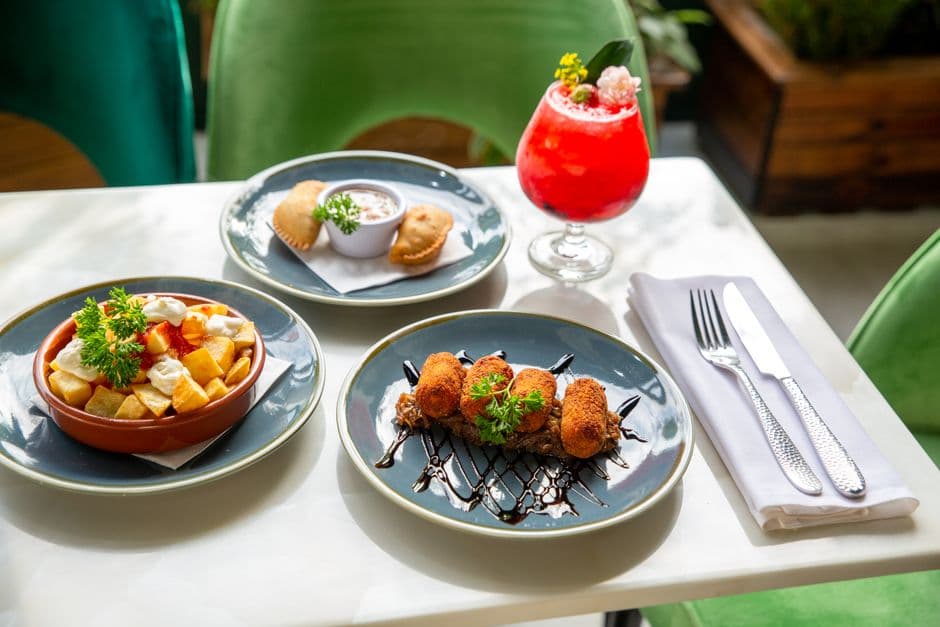
Croquetas de Jamón (Spanish Ham Croquettes)
Creamy béchamel loaded with diced jamón ibérico, breaded, and fried until golden — Spain's beloved handheld tapa.
About This Recipe
Croquetas de jamón are a cornerstone of Spanish bar culture and home entertaining, a dish where technical mastery and ingredient quality merge. The croqueta must be delicate and creamy inside, with a shatter-crisp, golden exterior, and a filling that speaks solely of jamón — no filler, no blandness. The filling is a simple béchamel (butter, flour, milk) enriched with a generous amount of jamón ibérico, traditionally diced into small cubes so that each bite contains pieces of meat. The mixture is chilled until firm, shaped into cylinders about 2 inches long, breaded with the classic three-step method (flour, beaten egg, panko or fine breadcrumbs), and fried in olive oil at precisely 170°C (340°F) until the exterior turns deep mahogany gold. The challenge lies in balancing creaminess (too thick and they're dense; too loose and they burst in the oil) and in the patience required to chill, bread, and fry properly. Croquetas are often served at Spanish celebrations, tapas bars, and in the afternoon merienda (snack time), always with a squeeze of lemon and perhaps a small cup of alioli for dipping.
Ingredients
Serves 4
- 100 gbutter
- 80 gall-purpose flour
- 300 mlwhole milk, warmed
- 180 gjamón ibérico (or jamón serrano), finely diced
- 1 pinchfreshly grated nutmeg
- 1 pinchsea salt
- 1 pinchwhite pepper
- 100 gall-purpose flour (for dredging)
- 2 largeeggs, beaten
- 150 gpanko breadcrumbs (or fine Spanish pan rallado)
- for fryingSpanish olive oil or vegetable oil
- 1lemon, cut into wedges
Instructions
- 1
Make the béchamel
Melt butter in a heavy-bottomed saucepan over medium heat. Add flour and stir constantly for 2 minutes to form a roux, cooking out the raw flour taste. The mixture should smell toasty, not raw.
- 2
Add the milk
Slowly pour in the warm milk, whisking constantly to prevent lumps. Continue whisking until the sauce thickens and coats the back of a spoon (about 5 minutes). It should be thick enough to hold a shape but still creamy.
- 3
Season and add ham
Remove from heat and stir in the diced jamón, nutmeg, salt, and white pepper. Taste and adjust seasoning — the jamón is salty, so be careful not to oversalt. The mixture should taste rich and savory, with clear ham flavor.
- 4
Chill the mixture
Spread the béchamel on a parchment-lined baking sheet in a thin layer (about 1 cm thick). Refrigerate for at least 3–4 hours, or until very firm. Alternatively, transfer to a piping bag and pipe onto parchment; chill overnight.
- 5
Shape the croquetas
Once chilled, scoop the mixture onto a floured work surface and shape into cylinders about 5 cm long and 2 cm wide (roughly the size of a large cork). If the mixture is too soft, return to the fridge for 15 minutes.
- 6
Bread the croquetas
Set up three shallow bowls: one with flour, one with beaten egg, and one with breadcrumbs. Coat each croqueta in flour, tapping off excess, then dip in egg, then roll in breadcrumbs, pressing gently so the coating adheres. Place on a clean plate and chill for 15 minutes before frying.
- 7
Heat the oil
Heat olive oil in a heavy-bottomed pot or deep skillet to 170°C (340°F). Use a thermometer — temperature is critical. If too hot, the croqueta browns before the inside heats through; if too cool, the exterior will be greasy instead of crisp.
- 8
Fry the croquetas
Carefully lower croquetas into the hot oil a few at a time — do not overcrowd. Fry for 2–3 minutes, turning once, until deep mahogany gold on all sides. The croqueta should sound crispy when tapped. Transfer to a plate lined with paper towels.
- 9
Serve hot
Serve croquetas immediately while still hot and crispy. Squeeze fresh lemon over each one and serve with a small cup of Spanish alioli (garlic aioli) if desired. They are best eaten within 2 minutes of frying.
Did you make this?
Rate it and help other cooks find the recipes that actually work.
One tap to sign in, and we'll save the rating you just picked.
Everything you need to plan your week — free
- Meal calendar
- Grocery list
- AI recipe ideas
Track what you eat
Snap your meal to log calories and macros, run fasting timers and track water in the free SnapCal app.
Pro Tips
- →
The béchamel must be thick enough to hold a shape when cooled. If it's too thin, the croqueta will split open during frying and all the filling will leak out.
- →
Do not skip the chilling step. A warm or room-temperature filling will not shape properly and will leak in the oil.
- →
Use jamón ibérico (made from Iberian black pigs) if possible — it has a sweet, complex flavor that justifies the dish. Jamón serrano is a good substitute and more affordable.
- →
The oil temperature is critical. A thermometer is not optional — guessing leads to burnt exteriors and raw insides.
- →
Some Spanish cooks coat croquetas twice (flour-egg-breadcrumb, then repeat) for an extra-thick, shatterier crust. This is not traditional but is delicious.
Variations
- •
Croquetas de pollo (chicken) — substitute the jamón with 200g of diced cooked chicken, seasoned with a pinch of paprika.
- •
Croquetas de queso (cheese) — omit the ham and stir in 150g of finely grated Manchego or Gruyère just before chilling.
- •
Croquetas de champiñones (mushroom) — use 250g of finely diced sautéed mushrooms instead of ham for a vegetarian version.
- •
Baked croquetas — brush the breaded croquetas with olive oil and bake at 190°C (375°F) for 12–15 minutes instead of frying. Not traditional, but lighter.
Storage
Uncooked croquetas can be frozen for up to 2 months — no need to thaw before frying, just add 1–2 minutes to cooking time. Cooked croquetas are best eaten immediately but can be reheated in a 160°C (320°F) oven for 5–8 minutes to restore crispness. Do not refrigerate cooked croquetas; they become soggy.
History & Origin
Croquetas became popular in Spain during the 19th century, when French cooking techniques (like béchamel) began to influence Spanish cuisine. The use of jamón as the primary filling reflects Spain's obsession with pork — particularly jamón ibérico, which became a luxury ingredient by the 20th century. Today, croquetas de jamón are served at celebrations, aperitivos, and are a staple in tapas bars across Spain.
Frequently Asked Questions
Why did my croquetas burst open in the oil?
The filling was too soft or the oil wasn't hot enough. Ensure the béchamel is very thick, chilled for at least 3–4 hours, and the oil reaches 170°C (340°F) before frying.
Can I make croquetas ahead of time?
Yes, make them through step 6 (breading) and refrigerate for up to 24 hours. You can also freeze them for 2 months. Fry from chilled or frozen without thawing.
What's the difference between panko and pan rallado?
Panko is Japanese-style breadcrumbs (coarser) and gives a crunchier texture. Pan rallado is traditional Spanish breadcrumbs (finer). Either works; panko gives more crispness.
How hot should the oil be?
Exactly 170°C (340°F). This temperature cooks the inside without burning the outside. Too hot = burnt outside and cold inside. Too cool = greasy and soft.
Nutrition Facts
Per serving (130g / 4.6 oz) · 4 servings total
Time Summary
Have Questions?
Ask our AI cooking assistant anything about this recipe — substitutions, techniques, scaling.
Chat with AI Chef →Featured in Guides
This recipe is featured in the following curated guides:
More Spanish Recipes
You Might Also Like
Similar dishes from other cuisines around the world.
Browse by Ingredient
More recipes built around the same core ingredients.
Free Kitchen Tools
Calculators and converters that pair with this page — no signup needed.
Put This Into a Plan
Schedule it, shop for it, and track what you already have.
Read Next
Longer reads that go deeper on the ideas behind this dish.
Community
Join the conversation
Sign in to leave a comment and save your favourite recipes