
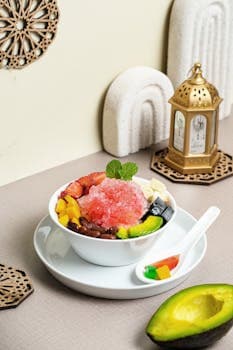
Es Campur
Indonesian shaved ice dessert with tropical fruits and syrup — cooling, colorful, sweet.
About This Recipe
Es Campur — 'mixed ice' — is Indonesia's anything-goes answer to the tropical heat: a tall bowl of shaved ice buried under jewel-colored syrups, sweetened condensed milk, and a glorious jumble of toppings that varies by vendor and region — diced mango, ribbons of young coconut, golden canned jackfruit, cubes of grass-green agar-agar, sweet red beans, chewy palm fruit (kolang-kaling), and crushed peanuts. It belongs to Southeast Asia's broad shaved-ice family alongside es teler and Malaysia's ais kacang, traditions shaped partly by Chinese-Indonesian dessert culture. Every warung and night market sells a version, and no two are identical; the fun is the archaeology of eating downward, syrupy layer by layer, with a long spoon and a straw.
Ingredients
Serves 4
- 4 cupsshaved ice
- 2 tbspred syrup
- 2 tbspgreen syrup
- 2 tbspyellow syrup
- 1/4 cupsweetened condensed milk
- 1 cupfresh mango, diced
- 1/2 cupcanned jackfruit, drained
- 1/4 cupcoconut strips
- 1/4 cupagar-agar (green jelly), diced
- 2 tbsproasted peanuts, chopped
- 1/4 cupred beans
Instructions
- 1
Prepare ice
Shave the ice as finely as you can — a dedicated ice shaver gives the ideal snow texture, but a blender pulsed with ice cubes or cubes crushed in a towel with a rolling pin both work. Aim for fluffy, not chunky; fine ice absorbs the syrups instead of letting them pool.
Chill the serving bowls in the freezer for 15 minutes so the ice doesn't melt on contact.
- 2
Layer
Start each bowl with half the fruits, beans, and jelly at the bottom, mound the shaved ice high over them, then drizzle the red, green, and yellow syrups down the slopes so the colors stay distinct. Spoon condensed milk generously over the peak.
- 3
Top
Crown the mound with the remaining mango, jackfruit, coconut strips, and agar-agar cubes, and finish with a scatter of chopped roasted peanuts for crunch. Arrange the toppings so every color is visible — es campur is meant to look exuberant.
Keep all toppings refrigerator-cold before assembling; warm fruit melts channels through the ice within seconds.
- 4
Serve
Serve immediately with a long-handled spoon and a wide straw — the spoon for excavating the buried treasures, the straw for the sweet, milky meltwater that collects at the bottom of the bowl. Eat fast; the dessert is a race against the tropics by design.
Did you make this?
Rate it and help other cooks find the recipes that actually work.
One tap to sign in, and we'll save the rating you just picked.
Everything you need to plan your week — free
- Meal calendar
- Grocery list
- AI recipe ideas
Track what you eat
Snap your meal to log calories and macros, run fasting timers and track water in the free SnapCal app.
Pro Tips
- →
Chill every component — bowls included — before assembling; temperature discipline is the whole game.
- →
Shave the ice as fine as snow so it drinks up the syrup rather than letting it sink.
- →
Use rose syrup (sirup cocopandan) for the red layer if you can find it — it's the authentic Indonesian flavor.
- →
Balance at least one chewy element (agar-agar, palm fruit), one creamy (condensed milk), and one crunchy (peanuts) against the fruit.
- →
Don't overdo the syrup; two tablespoons per color keeps it refreshing instead of cloying.
Variations
- •
Es teler: the famous cousin with avocado, young coconut, and jackfruit in coconut milk and condensed milk.
- •
Add a scoop of vanilla or coconut ice cream on the peak for an over-the-top version.
- •
Swap in chocolate or coffee syrup with grass jelly for a darker, less fruity bowl.
- •
Es campur Medan-style: include red beans, cendol, and a drizzle of palm sugar syrup.
Storage
Es campur cannot be made ahead — assemble and eat immediately. The toppings, however, all keep: prep the agar-agar, fruits, and beans up to 2 days in advance in separate refrigerated containers.
History & Origin
Mixed shaved-ice desserts spread through Southeast Asia in the early 20th century once ice factories reached the colonies, and Indonesia's Chinese-influenced dessert stalls turned crushed ice, syrup, and preserved fruits into es campur. It belongs to a regional family that includes Malaysia's ais kacang and the Philippines' halo-halo ('mix-mix' — the exact same naming logic). During Ramadan, es campur stands multiply across Indonesian cities as the classic sweet for breaking the fast.
Frequently Asked Questions
Where do I find agar-agar and how do I prepare it?
Asian and health-food stores sell agar-agar as powder, flakes, or bars — in Indonesia the Swallow brand powder is standard. Dissolve it in boiling water with sugar and a drop of pandan or food coloring, pour into a shallow dish, and it sets firm at room temperature in under an hour. Dice into small cubes.
What can I substitute for the colored syrups?
Rose syrup covers the red, pandan syrup the green, and simple syrup with a little vanilla or mango purée works for yellow. Grenadine and melon syrup (the Korean or Torani kind) are easy Western stand-ins. The colors matter as much as the flavors — es campur is meant to look like a carnival.
What's the difference between es campur and es teler?
Es teler is a specific, codified combination — avocado, young coconut, and jackfruit in sweetened coconut milk — invented in Jakarta in the early 1980s and famous enough to have national contests. Es campur is the freeform genre: any mix of fruits, jellies, beans, and syrups over shaved ice. Every es teler is arguably an es campur, but not vice versa.
Nutrition Facts
Per serving (350g / 12.3 oz) · 4 servings total
Time Summary
Have Questions?
Ask our AI cooking assistant anything about this recipe — substitutions, techniques, scaling.
Chat with AI Chef →More Indonesian Recipes
You Might Also Like
Similar dishes from other cuisines around the world.
Free Kitchen Tools
Calculators and converters that pair with this page — no signup needed.
Put This Into a Plan
Schedule it, shop for it, and track what you already have.
Read Next
Longer reads that go deeper on the ideas behind this dish.
Community
Join the conversation
Sign in to leave a comment and save your favourite recipes