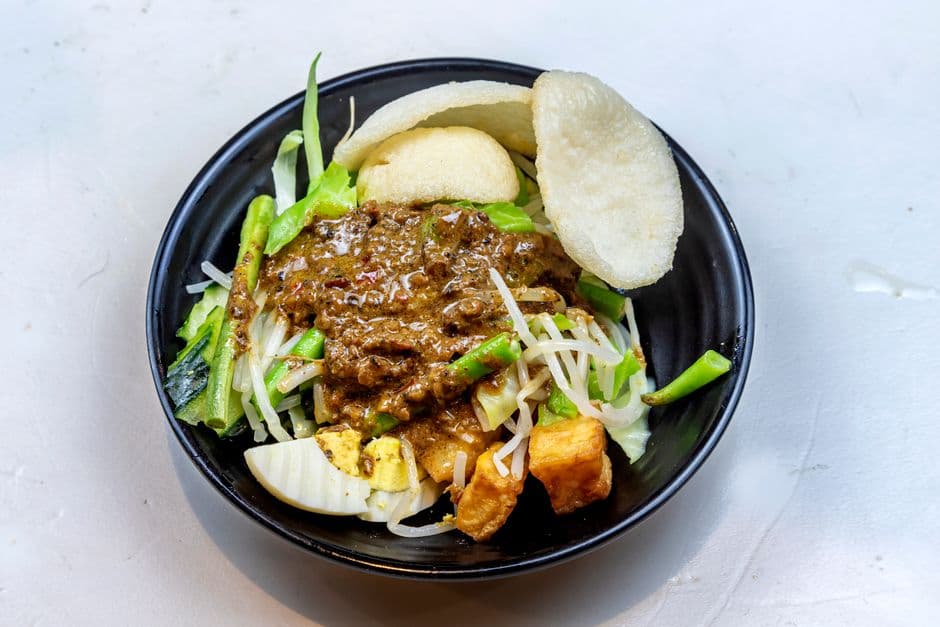
Indonesia's celebrated peanut sauce salad: a colourful platter of blanched vegetables, boiled eggs and tofu dressed in a rich, spiced peanut sauce.
Gado-Gado is one of Indonesia's most beloved dishes and a masterpiece of balanced flavour — its name derived from the Javanese slang for 'mix-mix'. It is essentially a composed salad of par-cooked and raw vegetables, sliced boiled egg, fried tofu and tempeh, all generously dressed in a thick, golden peanut sauce fragrant with galangal, lemongrass, kaffir lime and a hint of palm sugar. The peanut sauce — bumbu kacang — is the heart of the dish and varies from vendor to vendor; some prefer it creamy and mild, others add chilli heat or tamarind tartness. Gado-gado is found across Indonesia in different regional variations and is traditionally served on a banana leaf with krupuk (prawn crackers) for crunch. It is naturally gluten-free, high in plant protein and wholly satisfying.
Serves 4
Blend or pound the garlic and chillies into a paste. Combine with the peanut butter, coconut milk, kecap manis, tamarind paste and palm sugar in a saucepan. Cook over medium heat, stirring, for 5–7 minutes until the sauce thickens and the oil separates slightly at the edges. Thin with water if needed to a pourable but thick consistency. Taste and adjust balance of sweet, sour and salty.
The sauce should be thick enough to coat the back of a spoon — if too thick, add a splash of warm water.
Bring a large pot of salted water to a boil. Blanch the green beans for 3 minutes, then remove and refresh in ice water. Blanch the cabbage for 2 minutes, then refresh. Blanch the bean sprouts for just 30 seconds, then refresh. All vegetables should retain a vibrant colour and slight crunch.
Pat the tofu dry and cut into cubes. Fry in 2cm of hot oil, turning, until golden and crisp on all sides, about 5 minutes. Drain on paper towels.
Arrange the blanched vegetables, sliced potato, fried tofu, cucumber and halved eggs on a large platter. Drizzle the warm peanut sauce generously over everything. Top with crispy fried shallots and prawn crackers.
Serve the remaining peanut sauce in a bowl alongside for dipping. Encourage diners to mix everything together or eat composed, dipping each component.
Use freshly ground roasted peanuts if possible — the flavour far surpasses jarred peanut butter.
The peanut sauce can be made up to 3 days ahead; thin with warm water when reheating.
Add tempeh alongside the tofu for extra plant protein and a nutty, fermented flavour.
Taste and adjust salt at the very end — flavors concentrate as liquids reduce, and a final pinch of flaky salt sharpens the whole dish.
Ketoprak is a similar Jakarta dish that uses rice noodles and rice cakes in place of potato.
For extra heat, add more sambal or raw sliced bird's eye chillies to the sauce.
Vegetarian: swap the protein for roasted king oyster mushrooms, smoked tofu or cooked chickpeas — adjust seasoning slightly upward to compensate.
Spicier: add a finely chopped fresh chile or a teaspoon of crushed Aleppo/Urfa pepper to the aromatics for warm, layered heat instead of a single sharp hit.
Store the peanut sauce separately in the fridge for up to 4 days. Assembled salad is best eaten immediately.
Gado-gado's origins are debated, but it has been a fixture of Javanese cuisine for centuries. Some food historians trace the peanut sauce tradition to the Javanese use of groundnuts — introduced by Portuguese traders in the sixteenth century — combined with existing traditions of dressed vegetable salads. Today gado-gado is enjoyed throughout Indonesia and is a staple in Indonesian restaurants worldwide.
It can be made vegan by omitting the eggs and using kecap manis without any fish-based additives. Check the label on your kecap manis, as most brands are plant-based.
Yes — most of the components can be prepared up to a day in advance and refrigerated separately. Reheat gently and assemble just before serving so textures stay distinct.
Stay close to the role each ingredient plays: swap aromatics for similar ones (shallot for onion, lime for lemon), and keep the fat-acid-salt balance intact. Spice blends can usually be approximated with what's in the cupboard.
Authenticity sits on a spectrum — what matters more is honoring the technique and balance of flavors. If the dish tastes harmonious and respects how cooks in its home region would build it, you're on solid ground.
Per serving (500g / 17.6 oz) · 4 servings total
Ask our AI cooking assistant anything about this recipe — substitutions, techniques, scaling.
Chat with AI Chef →Join the conversation
Sign in to leave a comment and save your favourite recipes