
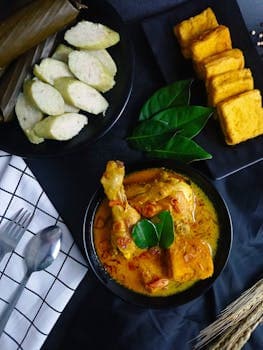
Gule Ayam
Indonesian yellow chicken curry — aromatic, creamy, deeply warming.
About This Recipe
Gulai (gule in Javanese dialect) is Indonesia's great family of coconut-milk curries, and gule ayam — the chicken version — is among the most cooked dishes in Javanese and Sumatran home kitchens. A bumbu of shallots, garlic, ginger, and turmeric is fried in oil until its raw edge disappears, then chicken pieces simmer slowly in coconut milk perfumed with lemongrass and bay leaves until the broth turns golden, gently thickened, and slicked with fragrant oil. It is milder and soupier than rendang, designed to be ladled generously over steamed rice so the sauce soaks in. Warung stalls across Java serve it daily; at home it's the curry mothers make when the family gathers.
Ingredients
Serves 6
- 1 wholechicken, cut into pieces
- 1 cancoconut milk (400ml)
- 1 cupwater
- 2 tbspoil
- 2 tbspturmeric
- 3 tbspfresh ginger, grated
- 4 clovesgarlic, minced
- 2shallots, sliced
- 2 stalkslemongrass, bruised
- 2bay leaves
- 1 tspsalt
- 1/2 tspblack pepper
- 2 tbsppotato, cubed
Instructions
- 1
Sauté aromatics
Heat the oil in a wide, heavy pot over medium heat and fry the shallots, garlic, and ginger, stirring, until soft, golden, and deeply fragrant, about 2 minutes. This fried paste — the bumbu — is the curry's flavor foundation, so don't rush it.
For a smoother, more authentic sauce, blend the shallots, garlic, and ginger into a paste before frying.
- 2
Add turmeric
Stir in the turmeric and fry for a full minute, letting it bloom in the hot oil until the kitchen smells earthy and the paste turns a uniform deep gold. Raw turmeric tastes dusty; bloomed turmeric tastes warm and rounded.
- 3
Brown chicken
Add the chicken pieces and turn them in the golden paste over medium-high heat for 5-6 minutes, until the surfaces are sealed and stained yellow on all sides. You're coating and lightly searing, not developing a deep crust.
- 4
Add liquid
Pour in the coconut milk and water, then tuck in the bruised lemongrass stalks and bay leaves. Stir gently to combine, scraping the pot bottom so the spice paste dissolves fully into the liquid.
- 5
Simmer
Bring just to a boil, then immediately reduce to a gentle, lazy simmer, uncovered. Cook 30 minutes, stirring every 10 minutes so the coconut milk doesn't split or catch, until the chicken is tender and the broth has thickened slightly.
Never hard-boil coconut milk — vigorous bubbling makes it curdle and turn grainy.
- 6
Add potato
Add the potato cubes and simmer another 10 minutes until they're tender at the tip of a knife. They drink in the golden broth and lightly thicken the sauce with their starch as they cook.
- 7
Serve
Season with salt and pepper, tasting as you go — the sauce should be savory, gently sweet from coconut, and aromatic. Ladle into bowls over steamed jasmine rice with sambal and fried shallots on the side.
Did you make this?
Rate it and help other cooks find the recipes that actually work.
One tap to sign in, and we'll save the rating you just picked.
Everything you need to plan your week — free
- Meal calendar
- Grocery list
- AI recipe ideas
Track what you eat
Snap your meal to log calories and macros, run fasting timers and track water in the free SnapCal app.
Pro Tips
- →
Bone-in chicken pieces give the broth far more body and flavor than boneless — use a whole cut-up bird as written.
- →
Keep the simmer gentle and stir periodically; coconut milk splits into greasy curds if boiled hard.
- →
Add a few candlenuts or macadamias to the blended paste for the authentic, subtly thickened gulai texture.
- →
A small piece of galangal alongside the ginger pushes the aroma distinctly toward warung-style gulai.
- →
The reddish oil rising to the surface near the end isn't a flaw — Indonesians consider that sheen the sign of a properly cooked gulai.
Variations
- •
Add 1-2 teaspoons of ground coriander and a little cumin for a fuller Sumatran-style gulai spice profile.
- •
Stir in halved hard-boiled eggs in the last 10 minutes — a classic warung addition.
- •
Substitute coconut cream for half the coconut milk for a richer, festival-worthy sauce.
- •
Make gule kambing with lamb or goat on the bone, extending the simmer to about 90 minutes — the version famous at Javanese satay houses.
Storage
Refrigerate up to 4 days; like most coconut curries, the flavor improves overnight. Reheat gently on the stove, stirring, and avoid boiling. Freezing works for 2 months, though the potato softens and the sauce may need a brief whisk after thawing.
History & Origin
Gulai descends from the Indian-influenced curry traditions that arrived in Sumatra through centuries of spice-route trade, then spread across the archipelago with Minangkabau and Javanese cooks. The word 'gule' is the Javanese pronunciation, attached to everything from goat (gule kambing, the classic partner to sate) to jackfruit. Unlike slow-dried rendang, gulai keeps its abundant golden sauce — it's the everyday curry of warungs and home kitchens alike.
Frequently Asked Questions
Can I use chicken thighs instead of a whole chicken?
Yes — bone-in, skin-on thighs are arguably the best single cut for gulai, staying juicy through the simmer and enriching the broth. Use 8 thighs for 6 servings. Boneless thighs also work with the simmer shortened to about 20 minutes before the potatoes go in; avoid breast meat, which dries out in long-simmered coconut curries.
What's the difference between gulai and rendang?
They start from similar coconut-and-spice foundations but end in opposite places. Gulai is simmered relatively briefly and served swimming in golden, soupy sauce. Rendang is cooked for hours until the coconut milk reduces completely, fries the meat in its own oil, and turns dark brown and nearly dry. Gulai is everyday food; rendang is the slow ceremonial showpiece.
My coconut milk curdled — can I save it?
Curdled coconut milk looks grainy but is harmless and still tastes fine; whisk the sauce briskly off the heat and much of it will re-emulsify. Prevent it next time by keeping the heat at a bare simmer, stirring regularly, and adding the coconut milk after the paste has cooled slightly rather than into a screaming-hot pan.
How spicy is gule ayam supposed to be?
This base recipe is mild and family-friendly — the warmth comes from ginger and pepper, not chilies. Traditional versions often include red chilies blended into the bumbu; add 2-4 fresh red chilies or a teaspoon of chili paste with the aromatics for authentic moderate heat. Indonesians also typically serve sambal on the side so each diner adjusts their own fire.
Nutrition Facts
Per serving (380g / 13.4 oz) · 6 servings total
Time Summary
Have Questions?
Ask our AI cooking assistant anything about this recipe — substitutions, techniques, scaling.
Chat with AI Chef →More Indonesian Recipes
You Might Also Like
Similar dishes from other cuisines around the world.
Browse by Ingredient
More recipes built around the same core ingredients.
Free Kitchen Tools
Calculators and converters that pair with this page — no signup needed.
Put This Into a Plan
Schedule it, shop for it, and track what you already have.
Read Next
Longer reads that go deeper on the ideas behind this dish.
Community
Join the conversation
Sign in to leave a comment and save your favourite recipes