
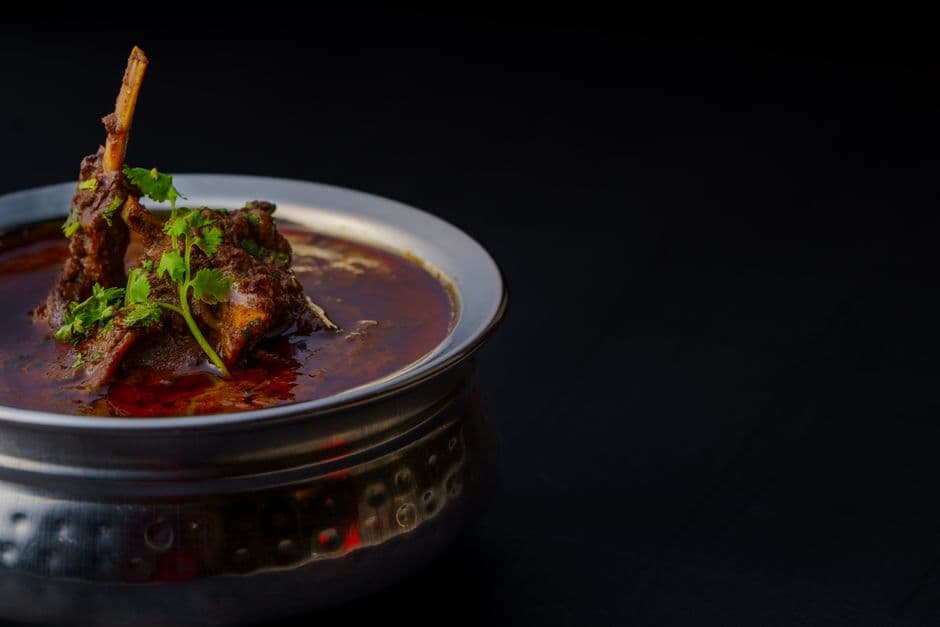
Hyderabadi Haleem (Slow-Cooked Lamb and Wheat Stew)
A legendary Ramadan stew from Hyderabad — lamb, lentils, and cracked wheat cooked for hours into a creamy, deeply spiced paste eaten with crispy fried onion and lime.
About This Recipe
Haleem is a slow-cooked stew of lamb, cracked wheat, and lentils that ranks among the great labor-intensive dishes of South Asian Muslim cuisine. In Hyderabad — where the dish earned GI (Geographical Indication) status in 2010 — haleem is intimately associated with Ramadan, when restaurants and home kitchens cook giant cauldrons for hours and serve it at iftar to break the fast. The technique is brutal and patient: lamb is simmered with a complex spice blend until completely tender, then pounded with cracked wheat (daliya) and three kinds of lentils into a thick, almost pâté-like paste where you can no longer distinguish meat from grain. Hours of pounding — traditionally with a giant wooden mallet — releases the wheat's gluten and creates the characteristic stretchy, glossy texture. The finish is a downpour of garnishes: crispy fried onions (birista), wedges of lime, fresh mint, julienned ginger, sliced green chili, and a final drizzle of ghee. The result is one of the most concentrated, satisfying bowls of food on earth — heady with garam masala and cardamom, rich with lamb fat, brightened by lime, and warming enough to break a 14-hour fast.
Ingredients
Serves 6
- 1 kglamb on the bone (shoulder or shank), cut into large pieces
- 200 gcracked wheat (daliya), soaked 2 hours
- 100 gyellow split peas (chana dal)
- 60 gred lentils (masoor dal)
- 60 gsplit urad dal
- 3 largeonions, finely sliced
- 150 mlghee, divided
- 200 gGreek yogurt
- 30 gginger-garlic paste
- 8green cardamom pods
- 4black cardamom pods
- 6cloves
- 2 stickscinnamon
- 2bay leaves
- 10 ggaram masala
- 5 gturmeric
- 10 gred chili powder
- 10 gsalt, plus more to taste
- 2 Lwater (approximately)
- 1 bunchfresh coriander, chopped
- 1 bunchfresh mint, chopped
- 3limes, cut in wedges
- 4green chilies, slit
Instructions
- 1
Crisp the onions (birista)
Heat 100 ml ghee in a heavy pan over medium-high. Fry sliced onions 15–18 minutes, stirring frequently, until deeply golden-brown and crisp. Remove half for garnish; leave the other half in the pan with the ghee.
- 2
Bloom the spices
To the pan with onions and ghee, add green and black cardamom, cloves, cinnamon, and bay. Fry 90 seconds until intensely fragrant — these whole spices form the aromatic backbone.
- 3
Sear the lamb
Add lamb pieces and ginger-garlic paste. Sear 6 minutes, turning, until lamb is browned and the paste smells cooked. Stir in turmeric, chili powder, garam masala, and salt. Add yogurt and stir constantly 3 minutes — it will look curdled then smooth out.
- 4
Simmer the lamb
Pour in 1.5 L water, bring to a strong boil, then reduce heat and simmer covered 2 hours over very low flame, or pressure cook 40 minutes. Lamb should be falling off the bone. Remove bones; shred meat back into the pot.
- 5
Add wheat and lentils
Drain the soaked cracked wheat and add to the pot along with all three dals and an additional 500 ml water. Simmer covered another 90 minutes, stirring every 15 minutes to prevent sticking and adding water if it gets too thick.
- 6
Pound to paste
This is the defining step. Using a heavy whisk, hand blender, or traditional wooden mallet, pound the mixture vigorously 20 minutes until it transforms from chunky stew into a smooth, glossy, stretchy paste. Meat fibers should be invisible — completely emulsified with grain.
A potato masher works for home cooks; the goal is a paste that pulls into strands when you lift the spoon.
- 7
Final tempering
In a small pan, heat remaining 50 ml ghee until smoking. Pour over the haleem and stir in. Taste and adjust salt — haleem can take more than you'd expect because of the wheat and lentils.
- 8
Garnish and serve
Ladle into bowls. Top each with reserved crispy fried onions, fresh coriander, mint, julienned ginger, slit green chilies, a wedge of lime, and a final drizzle of ghee. Serve with naan or roomali roti.
Did you make this?
Rate it and help other cooks find the recipes that actually work.
One tap to sign in, and we'll save the rating you just picked.
Everything you need to plan your week — free
- Meal calendar
- Grocery list
- AI recipe ideas
Track what you eat
Snap your meal to log calories and macros, run fasting timers and track water in the free SnapCal app.
Pro Tips
- →
Use lamb on the bone — bone marrow adds richness and the meat stays juicier during long cooking. Boneless lamb gives a flatter flavor.
- →
Soak cracked wheat at least 2 hours — unsoaked wheat takes hours longer and never quite reaches the right texture.
- →
Pounding is non-negotiable for authenticity — the stretchy, glossy texture comes from breaking down wheat gluten through physical force. Don't blend in a food processor; it goes too smooth too fast.
- →
Make a day ahead — haleem improves dramatically overnight as the spices meld. Reheat with a splash of water and the extra ghee tempering.
Variations
- •
Beef haleem — popular in Pakistan, swap lamb for beef shoulder or shank; needs 3 hours of pre-cooking instead of 2.
- •
Chicken haleem — quicker (1 hour pre-cook) but lighter; preferred in some Bangladeshi versions.
- •
Vegetarian haleem (without meat) using only the four lentils, jackfruit, and extra spices — a Gujarati adaptation.
- •
Karachi-style haleem — slightly spicier with extra chili powder and sometimes a hint of nutmeg in the final tempering.
Storage
Refrigerates 4 days, improving each day. Freezes 3 months in portion containers. Reheat with water — haleem thickens dramatically on cooling and needs loosening. Re-temper with fresh ghee on reheating for restored aroma.
History & Origin
Haleem traces to medieval Arabia (where a similar dish is called harees) and was brought to Hyderabad by the Nizam's Arab military mercenaries (the Chaush community) in the 18th century. Hyderabad refined it into the dish we know today; in 2010 it received GI (Geographical Indication) status, making Hyderabadi haleem legally distinct.
Frequently Asked Questions
How is haleem different from harees?
Harees (the Arabian original) uses only wheat, meat, salt, and minimal spice. Haleem is the South Asian elaboration — adding three lentils, complex garam masala, fried onions, and the heavy spice profile of Mughal cuisine.
Can I use a slow cooker?
Yes — cook lamb stage on high 4 hours, add wheat and lentils, cook another 3 hours. You'll still need to pound manually at the end for proper texture.
Why does my haleem look watery, not pasty?
Either insufficient pounding (the wheat gluten hasn't released), too much water (cook uncovered to reduce), or wheat not soaked long enough (the grains haven't broken down).
What's the difference between haleem and khichdi?
Khichdi is a quick, mild rice-lentil porridge eaten as comfort food. Haleem is a long-cooked, heavily spiced meat-and-grain stew specifically associated with Ramadan and ceremonial occasions.
Nutrition Facts
Per serving (480g / 16.9 oz) · 6 servings total
Time Summary
Have Questions?
Ask our AI cooking assistant anything about this recipe — substitutions, techniques, scaling.
Chat with AI Chef →More Indian Recipes
You Might Also Like
Similar dishes from other cuisines around the world.
Browse by Ingredient
More recipes built around the same core ingredients.
Free Kitchen Tools
Calculators and converters that pair with this page — no signup needed.
Put This Into a Plan
Schedule it, shop for it, and track what you already have.
Read Next
Longer reads that go deeper on the ideas behind this dish.
Community
Join the conversation
Sign in to leave a comment and save your favourite recipes