
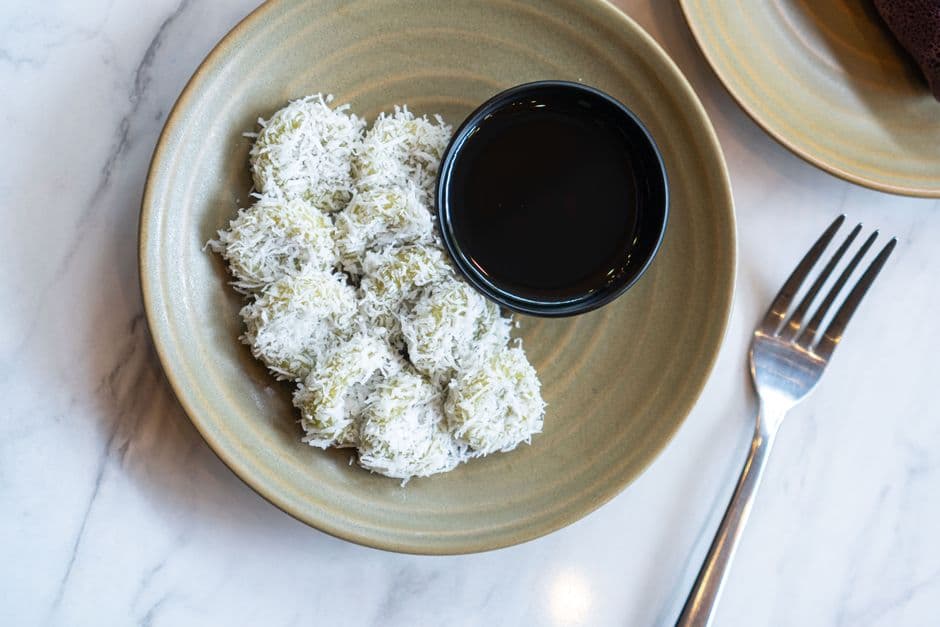
Indonesian Klepon (Pandan Glutinous Rice Balls)
Indonesia's beloved emerald-green sweet — chewy pandan-glutinous-rice balls hiding a molten palm-sugar core, rolled in fresh grated coconut.
About This Recipe
Klepon (sometimes called onde-onde in Malaysia and Singapore) are bite-sized emerald-green glutinous rice dumplings with a hidden treasure: a chunk of dark palm sugar (gula jawa or gula merah) that melts during boiling into a hot, syrupy, smoky core that bursts in your mouth on the first bite. Stained green with fresh pandan leaf juice (or pandan extract), boiled until they float, then rolled in freshly grated coconut, klepon is one of the great street snacks of Java, sold from rattan trays by morning vendors and at every kueh stall across Indonesia, Malaysia, and Singapore. The defining moment is the bite: the chewy outer shell yields, the molten palm sugar gushes out (genuinely — be careful, it's lava-hot), and you get a perfect three-way contrast: chewy glutinous-rice skin, hot dark syrup, cool fresh coconut. The flavor is impossibly complex for such a simple food — fragrant pandan, smoky-malty gula jawa, sweet milky coconut. Made fresh, klepon is one of the most addictive snacks in Southeast Asian cooking. Made stale, they're just OK chewy balls. Always eat them the day they're made.
Ingredients
Serves 4
- 200 gglutinous rice flour (sweet rice flour, not regular rice flour)
- 20 gtapioca starch (for extra chew)
- 5 leavesfresh pandan leaves (or 1 tsp pandan paste / extract)
- 180 mlwarm water (approximately)
- 1 pinchsalt
- 100 ggula jawa (Indonesian palm sugar, dark and smoky), chopped into 1 cm chunks
- 120 gfreshly grated coconut (or thawed frozen)
- 1 pinchsalt (for coconut)
- 2 Lwater (for boiling)
Instructions
- 1
Steam the coconut
Mix grated coconut with a pinch of salt. Steam 8 minutes in a heatproof bowl over boiling water — this prevents the coconut from spoiling and gives it the slight cooked sweetness. Cool completely before rolling klepon in it.
- 2
Extract pandan juice
If using fresh pandan leaves: snip into pieces, blend with 100 ml warm water, then squeeze through cheesecloth to extract bright green juice. If using pandan extract, skip — just add to the dough water.
- 3
Make the dough
Combine glutinous rice flour, tapioca starch, and salt in a bowl. Add pandan juice (or water + pandan extract) gradually, mixing with a spoon then your hand, until you have a soft, smooth, slightly sticky dough — like Play-Doh consistency. Add water 1 tablespoon at a time if dry. Rest 10 minutes covered.
Different glutinous rice flour brands absorb water differently — adjust as needed.
- 4
Chop the palm sugar
Cut gula jawa into small 5 mm pieces — small enough to fit inside the dumpling, large enough to give a meaningful molten core. If gula jawa is rock-hard, microwave 10 seconds to soften slightly.
- 5
Shape the dumplings
Divide dough into 24 equal pieces (about 12 g each). Flatten each piece into a 4 cm disc in your palm. Place a chunk of gula jawa in the center. Pinch the edges to seal completely and roll between your palms into a smooth ball — no cracks or palm sugar will leak.
Any cracks in the seal will let the molten sugar escape during boiling — pinch carefully.
- 6
Boil the dumplings
Bring 2 L water to a rolling boil in a large pot. Drop dumplings in batches of 12 — don't overcrowd. They sink at first, then float to the surface when cooked (about 5 minutes). Cook 1 more minute after floating to ensure the sugar core is fully molten.
- 7
Drain and roll in coconut
Lift cooked dumplings out with a slotted spoon, allowing excess water to drip off. While still wet (and very hot), roll each immediately in the steamed coconut so it sticks all over the surface. Place on a serving plate.
- 8
Serve warm
Klepon are best eaten within 30 minutes — when the palm sugar core is still molten and the chew is at its peak. Warn diners to bite carefully — the syrup inside is genuinely hot and bursts out on the first bite.
Did you make this?
Rate it and help other cooks find the recipes that actually work.
One tap to sign in, and we'll save the rating you just picked.
Everything you need to plan your week — free
- Meal calendar
- Grocery list
- AI recipe ideas
Track what you eat
Snap your meal to log calories and macros, run fasting timers and track water in the free SnapCal app.
Pro Tips
- →
Glutinous rice flour is non-negotiable — regular rice flour (or all-purpose flour) won't give the chewy texture. Sold at Asian grocers as 'sweet rice flour' or 'glutinous rice flour.' Mochiko is a Japanese brand that works.
- →
Gula jawa (dark palm sugar) is essential for the smoky-caramel flavor — sold as a hard block at SE Asian grocers. Light palm sugar or jaggery work at a pinch but flavor is less complex.
- →
Seal the dumplings carefully — even a tiny gap will leak palm sugar and you'll end up with empty shells in syrupy water.
- →
Eat the same day they're made — leftover klepon harden overnight and the sugar core solidifies. The molten core is half the point.
Variations
- •
Onde-onde Malaysia — virtually identical, slightly larger, sometimes lighter green; same recipe.
- •
Klepon ubi — replace some flour with mashed sweet potato or purple yam for a different colored dough.
- •
Stuffed with grated coconut + palm sugar mixture instead of pure sugar chunks — a softer, less explosive filling.
- •
Pandan-less version (rare) — undyed white klepon stuffed with palm sugar; honest but lacks the iconic green pop.
Storage
Best eaten within 4 hours of making — they harden as glutinous rice cools. Refrigeration makes them gummy; freezing destroys the texture. If you must store, keep loosely covered at room temperature and revive briefly by steaming 90 seconds to soften.
History & Origin
Klepon originated in Java, likely centuries old; it spread through the Indonesian and Malay archipelagos via 19th-century Javanese migration. Some claim Mojokerto in East Java as the origin; the dish is also closely identified with Bali and is sold at countless pasar (markets) across Indonesia daily.
Frequently Asked Questions
Why did my klepon explode in the water?
Either the seal wasn't tight enough (re-roll to ensure no cracks), or the dough was too dry (add a teaspoon of water). Also boil at a steady simmer, not a violent rolling boil.
Can I use pandan paste instead of fresh leaves?
Yes — 1 teaspoon of quality pandan paste replaces fresh pandan juice. Look for Indonesian brands like Koepoe Koepoe. Fresh pandan gives a more subtle, natural flavor but is hard to find outside SE Asia.
Why steam the coconut?
Steaming the coconut briefly kills off enzymes that would make it spoil quickly and gives it a softer, sweeter character. Raw coconut works but the dumplings need to be eaten within 2 hours.
Can I use frozen grated coconut?
Yes — thaw it completely and steam as described. Frozen coconut is almost as good as fresh; desiccated coconut is a poor substitute (too dry and chewy).
Nutrition Facts
Per serving (120g / 4.2 oz) · 4 servings total
Time Summary
Have Questions?
Ask our AI cooking assistant anything about this recipe — substitutions, techniques, scaling.
Chat with AI Chef →Featured in Guides
This recipe is featured in the following curated guides:
More Indonesian Recipes
You Might Also Like
Similar dishes from other cuisines around the world.
Browse by Ingredient
More recipes built around the same core ingredients.
Free Kitchen Tools
Calculators and converters that pair with this page — no signup needed.
Put This Into a Plan
Schedule it, shop for it, and track what you already have.
Read Next
Longer reads that go deeper on the ideas behind this dish.
Community
Join the conversation
Sign in to leave a comment and save your favourite recipes