
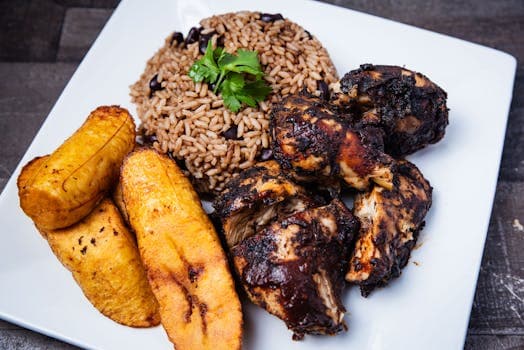
Jamaican Jerk Chicken — Authentic Scotch Bonnet Spiced BBQ
Chicken marinated overnight in a fiery, deeply aromatic jerk paste of scotch bonnet, allspice, thyme and spring onion, then grilled or smoked to juicy, charred perfection. The taste of Jamaica.
About This Recipe
Jerk is not just a seasoning — it is a cooking method, a tradition, and a cultural identity. Authentic Jamaican jerk involves marinating meat (usually chicken, but also pork, fish and even lobster) in a paste of scotch bonnet peppers, allspice (pimento, the true heart of jerk), fresh thyme, garlic, spring onion, ginger and soy sauce, then cooking it slowly over pimento wood — the wood of the allspice tree — in an enclosed pit or barrel drum. The result is smoky, fiery, deeply aromatic chicken with a flavour unlike anything else in the world. This recipe replicates that experience as faithfully as possible on a home grill or oven, using the correct jerk marinade proportions that distinguish it from the many pale imitations.
Ingredients
Serves 4
- 1.5 kgchicken pieces (drumsticks, thighs, legs)(bone-in, skin-on; slash flesh deeply for marinade penetration)
- For the jerk marinade:
- 3–4scotch bonnet peppers(use fewer for less heat; don't substitute with regular chilli)
- 6 stalksspring onion (scallion)(roughly chopped)
- 6 clovesgarlic
- 2 cmfresh ginger(peeled)
- 2 tbspwhole allspice berries (pimento)(freshly ground; or 2 tsp ground allspice — allspice is non-negotiable)
- 1 tbspfresh thyme leaves(or 1 tsp dried thyme)
- 3 tbspsoy sauce
- 2 tbspdark rum(optional but traditional)
- 2 tbspneutral oil
- 1 tbspbrown sugar or cane sugar
- 1 tbsplime juice
- 1 tspblack pepper(freshly ground)
- 1 tspground cinnamon
- 1/2 tspground nutmeg
- 1 tspsalt
Instructions
- 1
Make the jerk marinade
Combine all marinade ingredients in a blender or food processor. Blend to a rough paste — it should have some texture, not be completely smooth.
Wear gloves when handling scotch bonnet peppers. The capsaicin oils are extremely potent and will burn your skin and eyes.
- 2
Marinate the chicken
Using a sharp knife, slash the chicken pieces deeply to the bone (3–4 deep cuts per piece). This allows the marinade to penetrate to the centre. Place chicken in a zip-lock bag or large non-reactive dish. Pour over the jerk paste and massage it into every cut. Seal and refrigerate for a minimum of 4 hours, ideally overnight (up to 24 hours).
Overnight marination is not optional for authentic jerk flavour — the spices need time to penetrate deeply into the meat.
- 3
Prepare your grill or oven
For a BBQ: set up two-zone cooking (hot coals on one side, empty on the other). Aim for a cooking temperature of 175–200°C. For authenticity, add pimento (allspice) wood chips to the coals wrapped in foil with holes poked in. For oven: preheat to 200°C (fan 180°C).
- 4
Cook the chicken
Remove chicken from marinade (don't wipe off — leave it coated). For BBQ: place chicken over indirect heat, cover with lid and cook for 30–35 minutes, turning every 10 minutes. For the final 5–10 minutes, move to the hot side to char the skin. For oven: roast on a rack for 40–45 minutes, then grill/broil on high for 5 minutes to char.
Internal temperature should reach 74°C (165°F) at the thickest point. Use a thermometer.
- 5
Rest and serve
Rest for 5 minutes before serving. Serve with Jamaican rice and peas, festival (fried dumplings), grilled corn and coleslaw. Scotch bonnet hot sauce on the side for the brave.
Did you make this?
Rate it and help other cooks find the recipes that actually work.
One tap to sign in, and we'll save the rating you just picked.
Everything you need to plan your week — free
- Meal calendar
- Grocery list
- AI recipe ideas
Cook this hands-free
Get AI meal plans, step-by-step cooking mode, and your saved recipes in the free Bento app.
Pro Tips
- →
Allspice (pimento) is the non-negotiable soul of jerk seasoning — no substitution is acceptable. Find whole allspice berries and grind them fresh.
- →
Deep slashes in the chicken are essential — without them, even overnight marination stays on the surface.
- →
Pimento wood smoking is what makes authentic jerk truly unique. Dried pimento berries or branches can be ordered online and added to charcoal for a remarkable approximation.
Variations
- •
Jerk Pork: use pork shoulder cut into chunks or a butterflied leg — even more traditional than chicken in some regions of Jamaica.
- •
Jerk Fish: whole red snapper marinated for 30 minutes and grilled over hot coals — dramatically faster and equally spectacular.
- •
Jerk Cauliflower: a popular vegetarian version — marinate whole florets and grill or roast at high heat.
Storage
Marinated raw chicken keeps for up to 24 hours. Cooked jerk chicken keeps in the fridge for 3 days. Reheat in a hot oven or on the grill. Freezes well for up to 2 months.
History & Origin
Jerk's origins lie with the Maroon people of Jamaica — escaped enslaved Africans who fled into the Blue Mountains and developed the seasoning and cooking method using local allspice (pimento) and scotch bonnet peppers to preserve and cook wild boar. The cooking style was adapted by Jamaicans more broadly after emancipation, and Boston Bay in Portland Parish, Jamaica is considered the birthplace of commercial jerk cooking. Jerk spread globally through the Jamaican diaspora in the UK, USA and Canada, and is now one of the world's most recognised Caribbean flavour profiles.
Frequently Asked Questions
Can I make jerk chicken less spicy?
Yes — scotch bonnet brings both heat and distinctive fruity flavour. Use fewer scotch bonnets (or substitute with habanero for similar flavour and adjustable heat), and/or remove seeds and membranes for less fire. A mild jerk using only 1 deseeded scotch bonnet is pleasant without being overwhelming.
What is the difference between Jamaican allspice and other allspice?
Allspice (Pimenta dioica) is native to the Caribbean and Central America, but Jamaican allspice (pimento) is considered the highest quality in the world due to Jamaica's specific soil and climate. It is what gives authentic Jamaican jerk its irreplaceable aromatic warmth.
What is 'rice and peas'?
Jamaican 'rice and peas' is actually rice cooked with kidney beans (gungo peas or red kidney beans) in coconut milk — the 'peas' are the beans, a Caribbean naming convention. It is the classic accompaniment to jerk chicken and is non-negotiable at any Jamaican meal.
Nutrition Facts
Per serving (350g / 12.3 oz) · 4 servings total
Time Summary
Have Questions?
Ask our AI cooking assistant anything about this recipe — substitutions, techniques, scaling.
Chat with AI Chef →Featured in Guides
This recipe is featured in the following curated guides:
More Jamaican Recipes
You Might Also Like
Similar dishes from other cuisines around the world.
Browse by Ingredient
More recipes built around the same core ingredients.
Free Kitchen Tools
Calculators and converters that pair with this page — no signup needed.
Put This Into a Plan
Schedule it, shop for it, and track what you already have.
Read Next
Longer reads that go deeper on the ideas behind this dish.
Community
Join the conversation
Sign in to leave a comment and save your favourite recipes