
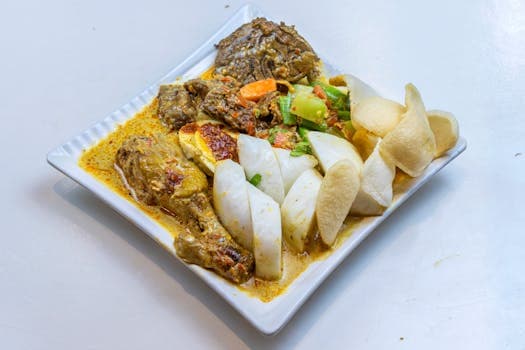
Kare
Indonesian curry with potatoes, eggs, and meat — aromatic, warming, easy.
About This Recipe
Kare is Indonesia's homestyle curry — gentler, sweeter, and more coconut-forward than its Indian or Thai cousins, reflecting the dish's journey along Indian Ocean trade routes into Javanese kitchens, where local cooks softened the spicing with palm sugar and coconut milk. Chunks of beef or chicken simmer with potatoes and whole hard-boiled eggs in a golden, turmeric-tinted gravy seasoned with garlic, ginger, cumin, and coriander until everything is spoon-tender and the sauce thickens just enough to cling to rice. East Java's kare ayam and the related gulai of Sumatra are cousins on the same family tree. This is weeknight food across Indonesia: forgiving, inexpensive, and even better reheated the next day.
Ingredients
Serves 6
- 800 gbeef or chicken, cubed
- 4 mediumpotatoes, cubed
- 1 cancoconut milk (400ml)
- 1.5 cupswater
- 1 tbspturmeric
- 4 clovesgarlic, minced
- 1 tbspginger, grated
- 1 mediumonion, diced
- 1 tspcumin
- 1 tspcoriander
- 2 tbspoil
- 1 tspsalt
- 1 tbspbrown sugar
- 4hard-boiled eggs
Instructions
- 1
Sauté aromatics
Heat the oil in a heavy pot over medium heat and cook the diced onion, garlic, and ginger for about 3 minutes, stirring, until the onion turns translucent and the raw edge of the garlic mellows into sweetness. Don't let anything brown hard — kare's base should be golden, not caramelized.
- 2
Add spices
Stir the turmeric, cumin, and coriander directly into the aromatics and cook for a full minute, stirring constantly, until the spices darken slightly and release their fragrance into the oil. This brief toasting blooms the ground spices and removes their dusty rawness.
If the spices start catching on the pot, add a tablespoon of water rather than more oil — it deglazes and keeps them from burning.
- 3
Brown meat
Raise the heat slightly, add the cubed meat, and turn it through the spiced aromatics until every face is sealed and stained yellow with turmeric, about 5 minutes. The goal is coating and light browning, not a hard sear.
- 4
Simmer
Pour in the coconut milk and water, add the potatoes, and bring just to a boil before dropping to a gentle simmer. Cook uncovered for about 45 minutes, stirring occasionally so the coconut milk doesn't catch, until the meat is very soft and the gravy has thickened to coat a spoon.
Keep the simmer gentle — hard boiling can split coconut milk into curds and oil.
- 5
Finish
Nestle the peeled hard-boiled eggs into the sauce, stir in the brown sugar, and simmer 5 more minutes so the eggs stain golden and warm through. Taste, adjust the salt, and serve over steamed rice with fried shallots on top.
Did you make this?
Rate it and help other cooks find the recipes that actually work.
One tap to sign in, and we'll save the rating you just picked.
Everything you need to plan your week — free
- Meal calendar
- Grocery list
- AI recipe ideas
Track what you eat
Snap your meal to log calories and macros, run fasting timers and track water in the free SnapCal app.
Pro Tips
- →
Add the potatoes 20 minutes into the simmer if you prefer them firmer — added at the start they soften deeply and thicken the gravy.
- →
The brown sugar isn't optional; that quiet sweetness against the turmeric is what makes it taste Indonesian rather than Indian.
- →
Simmer gently and stir occasionally so the coconut milk never splits.
- →
A bruised lemongrass stalk or two kaffir lime leaves added with the liquid lift the whole pot.
- →
Make it a day ahead when you can — kare, like most coconut curries, improves dramatically overnight.
Variations
- •
Kare ayam: use bone-in chicken thighs and reduce the simmer to about 30 minutes.
- •
Add carrots, green beans, or peas in the last 15 minutes for a more vegetable-forward pot.
- •
Seafood kare: swap in prawns and firm white fish, adding them only in the final 5 minutes.
- •
Vegetarian: use fried tofu puffs, tempeh, and extra potato — the gravy carries the dish regardless of protein.
Storage
Refrigerate up to 4 days; the flavor deepens by day two. Reheat gently on the stove with a splash of water, and avoid boiling hard so the coconut milk stays smooth. Freezes adequately, though potatoes turn slightly grainy.
History & Origin
Kare's name and spice logic arrived with Indian traders and later Indian Muslim communities along the spice routes, but Javanese cooks remade the idea around coconut milk, turmeric, and palm sugar. It sits in a family of Indonesian coconut curries alongside Sumatran gulai and opor ayam, the Eid classic. In East Java, kare rajungan (crab kare) is a celebrated coastal specialty.
Frequently Asked Questions
Can I use curry powder instead of individual spices?
You can — a tablespoon of mild curry powder roughly replaces the turmeric, cumin, and coriander here. But Indonesian kare is deliberately simpler and more turmeric-led than a complex masala, so if you use curry powder, choose a mild one and consider adding extra turmeric to keep the golden color and earthy profile.
What's the difference between kare, gulai, and opor?
All are Indonesian coconut-milk braises. Kare is the everyday turmeric-gold curry; gulai (Sumatran) is richer, spicier, and more heavily layered with chili and rhizomes; opor is the pale, gentle white curry made with coriander and no turmeric, traditionally served at Eid with rice cakes. The borders blur regionally.
Why did my coconut milk split into oily curds?
It boiled too hard for too long. Coconut milk separates when the proteins coagulate at a vigorous boil. Keep the pot at a lazy simmer, stir occasionally, and if it does split, a splash of cold water and brisk stirring will partially re-emulsify it — and honestly, many Indonesian cooks consider a little surface oil a sign of doneness.
Nutrition Facts
Per serving (450g / 15.9 oz) · 6 servings total
Time Summary
Have Questions?
Ask our AI cooking assistant anything about this recipe — substitutions, techniques, scaling.
Chat with AI Chef →Featured in Guides
This recipe is featured in the following curated guides:
More Indonesian Recipes
You Might Also Like
Similar dishes from other cuisines around the world.
Browse by Ingredient
More recipes built around the same core ingredients.
Free Kitchen Tools
Calculators and converters that pair with this page — no signup needed.
Put This Into a Plan
Schedule it, shop for it, and track what you already have.
Read Next
Longer reads that go deeper on the ideas behind this dish.
Community
Join the conversation
Sign in to leave a comment and save your favourite recipes