
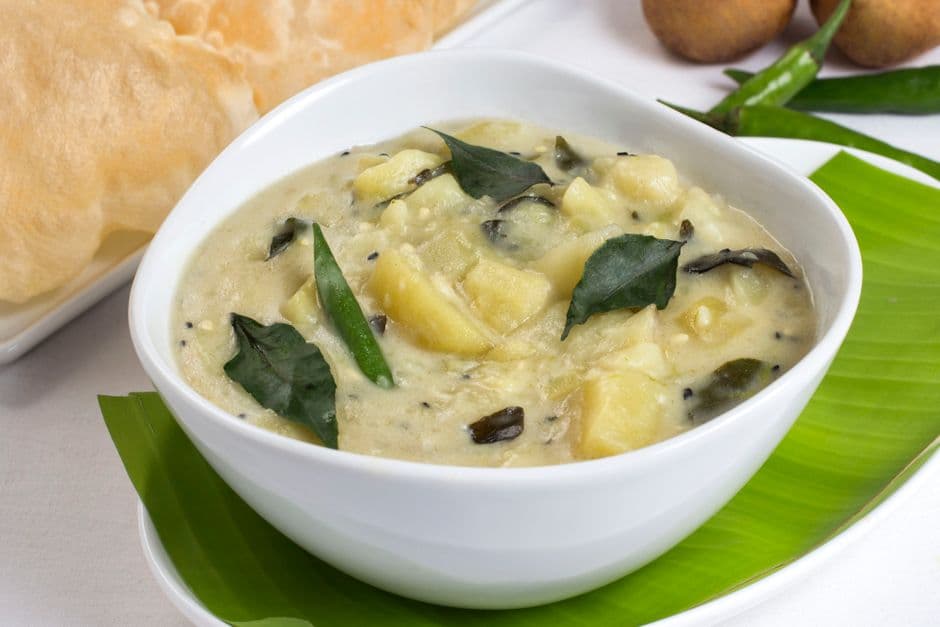
Keralan Appam with Vegetable Stew
Lacy fermented rice-and-coconut pancakes from Kerala — crisp at the edges, spongy in the middle — paired with a delicate coconut-milk vegetable stew flavored with curry leaves.
About This Recipe
Appam — also called palappam or vellappam — is the great breakfast bread of Kerala's Syrian Christian and Hindu communities, a lacy bowl-shaped pancake fermented from a batter of soaked rice, fresh coconut, and a touch of yeast or toddy. Cooked in a small wok-shaped pan called an appachatti, the batter spreads thin at the rim and pools thick in the centre, producing the characteristic 'soft middle, crispy lace edge' that gives appam its texture signature. Served alongside is ishtu — the Anglo-Indian inflection of 'stew,' a brilliantly mild and aromatic vegetable or chicken stew bound in coconut milk and seasoned with green chili, ginger, whole spices (cardamom, cloves, cinnamon, peppercorn), and a final flourish of curry leaves and coconut oil. The pairing is one of Kerala's iconic combinations — the soft sponge of the appam soaks up the silky coconut broth, with no chili-burn to mask the delicate sweet-savory balance. It's the breakfast of Sunday family lunches in Kottayam and Christmas mornings in Kochi, and one of the most quietly luxurious meals in South Indian cuisine.
Ingredients
Serves 4
- 300 graw white rice, soaked 6 hours
- 60 gcooked rice (leftover is fine)
- 150 gfresh grated coconut
- 5 ginstant yeast
- 20 gsugar
- 5 gsalt
- 300 mlwarm coconut water or warm water
- 500 gmixed vegetables (potato, carrot, beans, peas)
- 2onions, sliced
- 30 gginger, julienned
- 3green chilies, slit
- 8green cardamom pods
- 6cloves
- 1 stickcinnamon
- 10black peppercorns
- 400 mlthick coconut milk
- 20curry leaves
- 30 mlcoconut oil
- 8 gsalt
Instructions
- 1
Grind the appam batter
Drain soaked rice and combine in a blender with cooked rice and fresh coconut. Add 200 ml of the warm water and blend 4 minutes to a very smooth, pourable batter — texture of single cream. Pour into a large bowl, leaving room for fermentation.
- 2
Activate yeast and ferment
Whisk yeast and sugar into the remaining 100 ml warm water; rest 5 minutes until foamy. Stir into the rice batter along with salt. Cover loosely and ferment 8 hours at warm room temperature (overnight) until bubbly and doubled in volume — slightly sour-smelling.
- 3
Prepare the stew base
Heat coconut oil in a heavy pot over medium-low. Add cardamom pods (lightly crushed), cloves, cinnamon, and peppercorns. Fry 90 seconds until aromatic.
- 4
Cook onions and aromatics
Add sliced onions, ginger julienne, green chilies, and half the curry leaves. Cook 8 minutes — onions should turn soft and translucent but NOT brown. Keralan stew demands pale, untoasted onions for its delicate color and flavor.
- 5
Simmer vegetables
Add diced potato and carrot first, plus 300 ml water and the salt. Cover and simmer 12 minutes until potato is half-tender. Add beans and peas and cook another 8 minutes until everything is just tender.
- 6
Finish with coconut milk
Reduce heat to very low. Stir in thick coconut milk and remaining curry leaves. Warm through gently 3 minutes — do NOT boil, or coconut milk splits. Taste and adjust salt; the stew should be subtly fragrant, mildly sweet, not spicy.
- 7
Cook the appams
Stir the fermented batter once gently — it should look fluffy and bubbly. Heat an appachatti or small non-stick wok over medium-low. Pour a small ladle of batter (about 80 ml), immediately rotate the pan in a circular motion so batter spreads thin up the sides while pooling thick in the centre. Cover with a lid and cook 90 seconds — do not flip.
- 8
Serve immediately
Slide appam onto a plate — edges should be crisp and lacy, middle soft and spongy. Repeat for remaining appams. Serve hot alongside the coconut vegetable stew, allowing diners to tear pieces of appam and dip them into the gently fragrant broth.
Did you make this?
Rate it and help other cooks find the recipes that actually work.
One tap to sign in, and we'll save the rating you just picked.
Everything you need to plan your week — free
- Meal calendar
- Grocery list
- AI recipe ideas
Track what you eat
Snap your meal to log calories and macros, run fasting timers and track water in the free SnapCal app.
Pro Tips
- →
An appachatti (a small wok-shaped appam pan) makes proper bowl-shaped appams. A small non-stick wok (15–18 cm) is the next-best substitute. Flat pans give pancakes, not appams.
- →
The batter must ferment until visibly bubbly and slightly sour — under-fermented batter gives dense, gummy appams. In cold climates, ferment in the oven with only the light on.
- →
Don't brown the onions in the stew — Keralan stew is pale ivory. Brown onions overpower the delicate coconut broth.
- →
Add coconut milk only at the very end and never boil it — boiling splits coconut milk into oil and curds.
Variations
- •
Chicken stew (kozhi ishtu) — replace vegetables with bone-in chicken thigh pieces, simmer 25 minutes before adding coconut milk.
- •
Mutton stew — use diced mutton, pre-pressure-cook 25 minutes before combining with stew base.
- •
Egg appam (mutta appam) — crack a whole egg into the centre of the appam during cooking; cover and cook until set.
- •
Sweet appam (vellayappam) — add 50 g extra sugar and toddy or palm wine to the batter; eat with banana and jaggery syrup.
Storage
Appam batter keeps refrigerated 3 days (loses lift after that); fresh batter ferments at room temp 8 hours. Appams are best eaten immediately; cooked appams keep 4 hours at room temperature and revive briefly in a hot pan. Stew refrigerates 3 days, freezes 1 month (reheat gently below boil).
History & Origin
Appam likely originated in Kerala during the early centuries CE through trade with Sri Lanka (where a related dish, hoppers, is eaten). It became central to Kerala Syrian Christian cuisine, traditionally served at Christmas, weddings, and Sunday breakfasts; the pairing with ishtu reflects 17th-century Portuguese and Dutch culinary influence in the Malabar coast.
Frequently Asked Questions
Can I use yeast instead of toddy?
Yes — modern Keralan home cooks routinely substitute instant yeast for traditional palm toddy. Toddy gives a slightly tangier, more complex fermentation flavor but is hard to source outside Kerala.
Why is my appam dense?
Either the batter wasn't fermented enough (look for visible bubbles and a slightly sour smell), the batter was too thick (consistency of single cream), or the pan wasn't hot enough.
Can I use canned coconut milk for the stew?
Yes — use the thick part (the cream layer that solidifies at the top of the can). Avoid 'light' coconut milk, which lacks the body needed for stew.
Why don't I flip the appam?
Appam is cooked covered so the top steams while the bottom crisps. Flipping destroys the soft-spongy top that distinguishes appam from a flat pancake.
Nutrition Facts
Per serving (460g / 16.2 oz) · 4 servings total
Time Summary
Have Questions?
Ask our AI cooking assistant anything about this recipe — substitutions, techniques, scaling.
Chat with AI Chef →Featured in Guides
This recipe is featured in the following curated guides:
More Indian Recipes
You Might Also Like
Similar dishes from other cuisines around the world.
Browse by Ingredient
More recipes built around the same core ingredients.
Free Kitchen Tools
Calculators and converters that pair with this page — no signup needed.
Put This Into a Plan
Schedule it, shop for it, and track what you already have.
Read Next
Longer reads that go deeper on the ideas behind this dish.
Community
Join the conversation
Sign in to leave a comment and save your favourite recipes