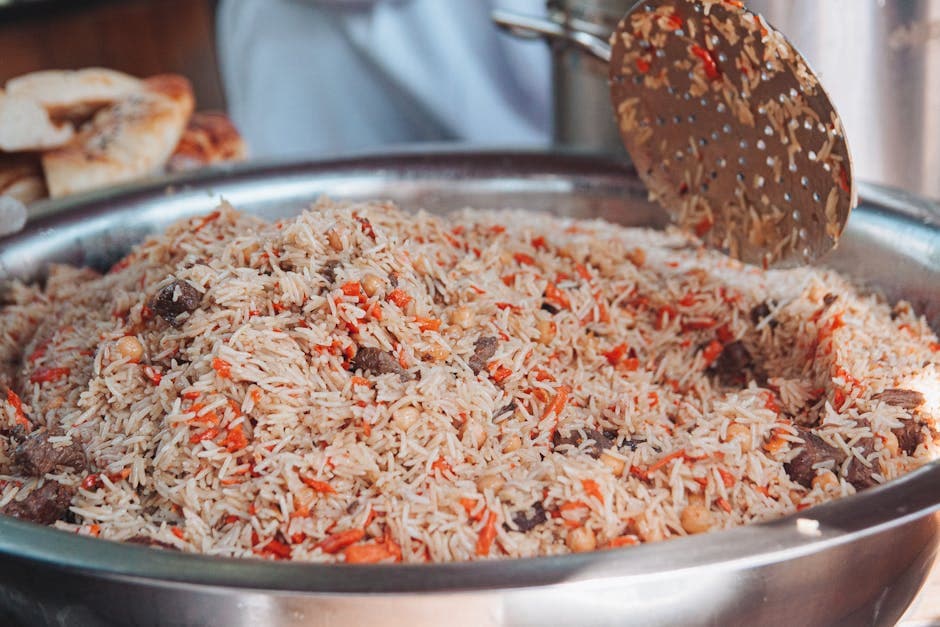
Central Asia's pulled noodle soup — hand-stretched wheat noodles in a rich lamb and vegetable broth, a Silk Road dish with Chinese, Uyghur, and Uzbek roots.
Lagman is one of the most fascinating culinary artifacts of the Silk Road, with clear connections to Chinese lamian (hand-pulled noodles) — the word 'lagman' is itself derived from the Chinese. It arrived in Central Asia via the Uyghur people of Xinjiang and became embedded in Uzbek, Kyrgyz, and Kazakh cuisines. The hand-stretching technique for the noodles requires practice but produces a texture that no dried pasta can replicate. The broth (värvä) is thick, sauce-like rather than soup-like, and gets its depth from the Dungan chili paste that Uyghur cooks introduced. Lagman is eaten as both a dry stir-fried dish and a soup.
Serves 4
Mix flour, water, and salt into a stiff dough. Knead 10 minutes until smooth. Rest 30 minutes covered.
Divide dough into ropes. Stretch each rope by pulling and slapping it against the table, progressively thinning it until noodle-thin. Coil on an oiled surface.
Fry lamb in oil until browned. Add onion, garlic, peppers, eggplant, and tomatoes. Add cumin, chili, and salt. Pour in stock and simmer 20 minutes.
Boil noodles in salted water for 3–4 minutes. Drain.
Place noodles in bowls. Ladle the lamb and vegetable sauce over the top.
Oiling the dough ropes before stretching prevents them from sticking
The noodles should be slightly thicker than spaghetti — they puff up when boiling
Taste and adjust salt at the very end — flavors concentrate as liquids reduce, and a final pinch of flaky salt sharpens the whole dish.
Mise en place pays for itself: chop, measure and pre-mix everything before the heat goes on, especially for any step that moves fast.
Serve 'kosorma' style — dry-fried without broth
Use beef instead of lamb
Vegetarian: swap the protein for roasted king oyster mushrooms, smoked tofu or cooked chickpeas — adjust seasoning slightly upward to compensate.
Spicier: add a finely chopped fresh chile or a teaspoon of crushed Aleppo/Urfa pepper to the aromatics for warm, layered heat instead of a single sharp hit.
Store sauce and noodles separately. Sauce keeps 3 days. Cook noodles fresh.
Lagman derives from Chinese lamian via the Uyghur people of Xinjiang and has been eaten along the Silk Road for over 1,000 years. It represents one of the clearest examples of Chinese culinary influence in Central Asia.
They share ancestry — both derive from the Chinese hand-pulled noodle tradition — but lagman has evolved distinctly in Central Asia with its own spicing and sauce.
Yes — most of the components can be prepared up to a day in advance and refrigerated separately. Reheat gently and assemble just before serving so textures stay distinct.
Stay close to the role each ingredient plays: swap aromatics for similar ones (shallot for onion, lime for lemon), and keep the fat-acid-salt balance intact. Spice blends can usually be approximated with what's in the cupboard.
Authenticity sits on a spectrum — what matters more is honoring the technique and balance of flavors. If the dish tastes harmonious and respects how cooks in its home region would build it, you're on solid ground.
Per serving · 4 servings total
Ask our AI cooking assistant anything about this recipe — substitutions, techniques, scaling.
Chat with AI Chef →Join the conversation
Sign in to leave a comment and save your favourite recipes