
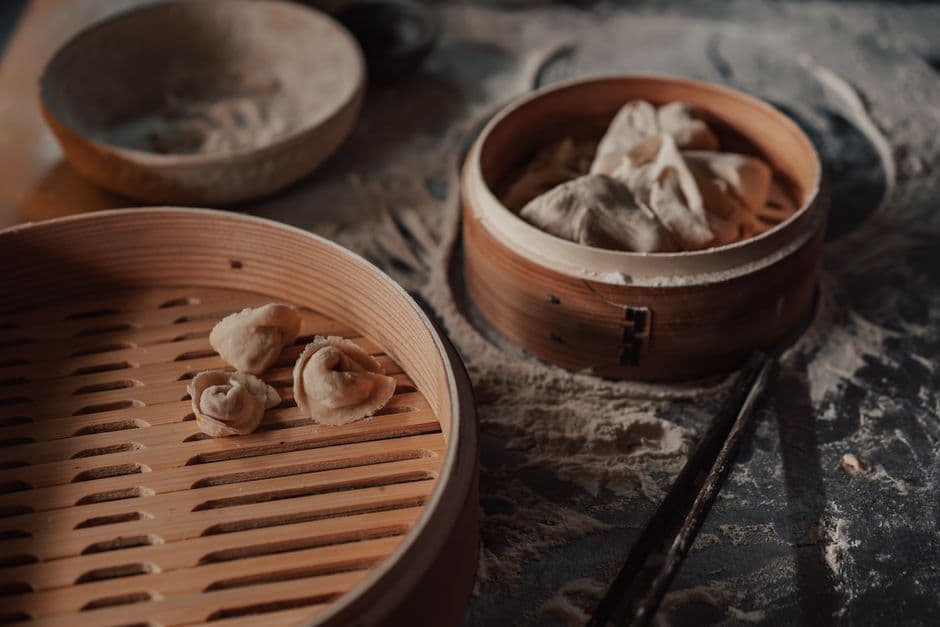
Uzbek Manti — Steamed Lamb Dumplings
Generously sized steamed dumplings filled with spiced lamb, onion and pumpkin, served with sour cream and herb sauce — the royal dish of Central Asian cuisine.
About This Recipe
Manti are the grand dumplings of Central Asia: large, pleated steamed parcels of thin dough filled with a mixture of coarsely chopped lamb, onion and often pumpkin or squash, seasoned with cumin, black pepper and sometimes chilli. Unlike Chinese dumplings, manti are not boiled — they are steamed in a special tiered pot called a mantovarka, and the generous size (one manti is easily a full mouthful) means the filling stays juicy within its pasta shell. They are eaten throughout Uzbekistan, Kazakhstan, Turkey and beyond, each country with its own variation, but the Uzbek version — with its particular combination of lamb fat and pumpkin for sweetness and juice — is widely considered the finest. Served with sour cream and fresh herbs, manti is a dish of occasion.
Ingredients
Serves 4
- 400 gplain flour
- 180 mlwarm water
- 1egg
- 1 teaspoonsalt
- 400 glamb mince(or finely hand-chopped lamb shoulder)
- 300 gpumpkin or butternut squash(peeled and finely diced)
- 2 largeonions(very finely diced)
- 1 teaspoonground cumin
- 1 teaspoonblack pepper
- 0.5 teaspoonchilli flakes
- 1 teaspoonsalt(for filling)
- 200 mlsour cream(to serve)
- 1 small bunchfresh dill(to serve)
Instructions
- 1
Make the dough
Combine flour and salt. Beat egg into warm water, add to flour, knead for 10 minutes to a smooth, firm dough. Wrap and rest 30 minutes.
- 2
Make the filling
Combine lamb, pumpkin, onion, cumin, pepper, chilli and salt. Mix well. The filling should be chunky, not smooth — if using mince, add lamb fat or a tablespoon of butter for juiciness.
Lamb fat is essential for juicy manti — do not use lean mince alone.
- 3
Form the manti
Roll dough to 2mm thickness. Cut into 10cm squares. Place a generous tablespoon of filling in the centre. Bring all four corners up to the centre and pinch together, then pinch the side seams closed. The manti should look like a small parcel.
- 4
Steam
Oil the steamer racks. Arrange manti with space between them. Steam over boiling water for 40–45 minutes. Serve immediately with sour cream and fresh dill.
Did you make this?
Rate it and help other cooks find the recipes that actually work.
One tap to sign in, and we'll save the rating you just picked.
Everything you need to plan your week — free
- Meal calendar
- Grocery list
- AI recipe ideas
Track what you eat
Snap your meal to log calories and macros, run fasting timers and track water in the free SnapCal app.
Pro Tips
- →
Oil the steamer well — manti will stick and tear if inadequately oiled.
- →
Steam time is non-negotiable — undercooked manti dough is unpleasant.
- →
The hand-chopping filling technique (rather than mince) gives a coarser, juicier texture — preferred in Uzbekistan.
- →
Taste and adjust salt at the very end — flavors concentrate as liquids reduce, and a final pinch of flaky salt sharpens the whole dish.
Variations
- •
Turkish manti are much smaller and served with garlic yoghurt and chilli butter.
- •
Some Uzbek regions use only pumpkin (no meat) for a vegetarian manti.
- •
Vegetarian: swap the protein for roasted king oyster mushrooms, smoked tofu or cooked chickpeas — adjust seasoning slightly upward to compensate.
- •
Spicier: add a finely chopped fresh chile or a teaspoon of crushed Aleppo/Urfa pepper to the aromatics for warm, layered heat instead of a single sharp hit.
Storage
Refrigerate cooked manti for up to 2 days — reheat by steaming for 10 minutes. Uncooked manti freeze well for up to 1 month; steam directly from frozen for 50 minutes.
History & Origin
Manti are believed to have originated in Central Asia and spread along the Silk Road in multiple directions simultaneously — east into China (where they influenced baozi), west into Turkey and the Middle East. The word 'manti' is thought to derive from the Chinese 'mantou' (steamed bun), though the filled dumpling form may be native to Central Asia. Today manti are eaten from Turkey through Central Asia to Korea (where mandu is the local variation), reflecting one of food history's great migrations.
Frequently Asked Questions
Can I freeze manti?
Yes — arrange uncooked manti on an oiled tray and freeze until solid, then transfer to bags. Cook from frozen in a steamer for 50 minutes.
Can I make this ahead of time?
Yes — most of the components can be prepared up to a day in advance and refrigerated separately. Reheat gently and assemble just before serving so textures stay distinct.
What can I substitute if I don't have all the ingredients?
Stay close to the role each ingredient plays: swap aromatics for similar ones (shallot for onion, lime for lemon), and keep the fat-acid-salt balance intact. Spice blends can usually be approximated with what's in the cupboard.
How do I know it's authentic?
Authenticity sits on a spectrum — what matters more is honoring the technique and balance of flavors. If the dish tastes harmonious and respects how cooks in its home region would build it, you're on solid ground.
Nutrition Facts
Per serving (380g / 13.4 oz) · 4 servings total
Time Summary
Have Questions?
Ask our AI cooking assistant anything about this recipe — substitutions, techniques, scaling.
Chat with AI Chef →Featured in Guides
This recipe is featured in the following curated guides:
More Uzbek Recipes
You Might Also Like
Similar dishes from other cuisines around the world.
Browse by Ingredient
More recipes built around the same core ingredients.
Free Kitchen Tools
Calculators and converters that pair with this page — no signup needed.
Put This Into a Plan
Schedule it, shop for it, and track what you already have.
Read Next
Longer reads that go deeper on the ideas behind this dish.
Community
Join the conversation
Sign in to leave a comment and save your favourite recipes