
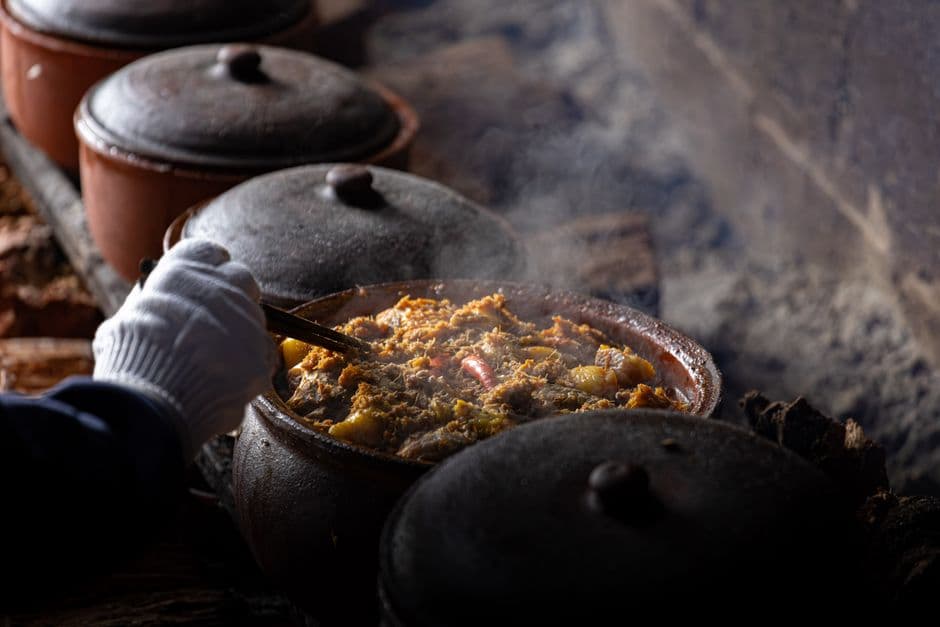
Mopane Worm Stew
A rich, protein-packed Namibian stew of rehydrated mopane worms simmered with tomatoes, onion, and spices.
About This Recipe
Mopane worms (Gonimbrasia belina) are the caterpillars of the Emperor Moth, harvested from mopane trees across southern Africa and considered a prized delicacy and vital protein source in Namibia, Botswana, and Zimbabwe. They are collected, gutted, and sun-dried or smoked before sale. When rehydrated and cooked into a stew with tomatoes, onion, and aromatic spices they develop a savoury, earthy, slightly nutty flavour that pairs beautifully with oshifima or rice. For many Namibian families the harvest season is a joyful community event tied to cultural identity.
Ingredients
Serves 4
- 200 gdried mopane worms
- 2 tbspcooking oil
- 1large onion, finely chopped
- 3 clovesgarlic, minced
- 1green chilli, chopped
- 400 gcanned chopped tomatoes
- 1 tspground coriander
- 1 tspground cumin
- 0.5 tspturmeric
- 200 mlwater or vegetable stock
- Salt and pepper(to taste)
- Fresh corianderto garnish
Instructions
- 1
Rehydrate mopane worms
Soak dried mopane worms in warm water for 20–30 minutes until plump and pliable. Drain and rinse well.
- 2
Fry the worms
Heat 1 tbsp oil in a skillet over high heat. Fry the drained worms for 3–4 minutes, stirring, until lightly crisped. Remove and set aside.
- 3
Build the base
In the same pan, heat remaining oil over medium heat. Sauté onion for 5 minutes. Add garlic and chilli, cook 1 minute. Add coriander, cumin, and turmeric; stir for 30 seconds.
- 4
Add tomatoes and simmer
Pour in canned tomatoes and stock. Simmer for 10 minutes until slightly thickened.
- 5
Add worms and finish
Return fried worms to the pan. Stir to combine and simmer for 10 more minutes so the worms absorb the sauce. Season with salt and pepper.
- 6
Serve
Garnish with fresh coriander and serve with oshifima, sadza, or steamed rice.
Did you make this?
Rate it and help other cooks find the recipes that actually work.
One tap to sign in, and we'll save the rating you just picked.
Everything you need to plan your week — free
- Meal calendar
- Grocery list
- AI recipe ideas
Track what you eat
Snap your meal to log calories and macros, run fasting timers and track water in the free SnapCal app.
Pro Tips
- →
Frying the worms before adding to the stew gives them a pleasantly firm texture.
- →
Smoked mopane worms add an even richer, woodier depth of flavour.
- →
The stew is more flavourful the next day as the worms fully absorb the sauce.
- →
Taste and adjust salt at the very end — flavors concentrate as liquids reduce, and a final pinch of flaky salt sharpens the whole dish.
Variations
- •
Dry-fried mopane: simply fry rehydrated worms with chilli and salt as a crunchy snack.
- •
Mopane worms in groundnut sauce: substitute peanut butter base for the tomato for a richer stew.
- •
Vegetarian: swap the protein for roasted king oyster mushrooms, smoked tofu or cooked chickpeas — adjust seasoning slightly upward to compensate.
- •
Spicier: add a finely chopped fresh chile or a teaspoon of crushed Aleppo/Urfa pepper to the aromatics for warm, layered heat instead of a single sharp hit.
Storage
Refrigerate for up to 3 days. The stew freezes well for up to 1 month.
History & Origin
Mopane worms have been harvested and eaten in southern Africa for thousands of years, documented in oral histories and archaeological sites. Commercial trade of dried mopane worms is now a significant industry, with millions of kilograms harvested annually. They are increasingly recognised globally as a sustainable, low-environmental-impact protein source.
Frequently Asked Questions
Where can I buy dried mopane worms outside Africa?
They are available from speciality African grocery stores and online retailers that focus on edible insects.
What do mopane worms taste like?
They are earthy, savoury, and mildly nutty — somewhat similar to dried mushrooms or smoked fish when cooked in a sauce.
Can I make this ahead of time?
Yes — most of the components can be prepared up to a day in advance and refrigerated separately. Reheat gently and assemble just before serving so textures stay distinct.
What can I substitute if I don't have all the ingredients?
Stay close to the role each ingredient plays: swap aromatics for similar ones (shallot for onion, lime for lemon), and keep the fat-acid-salt balance intact. Spice blends can usually be approximated with what's in the cupboard.
Nutrition Facts
Per serving (280g / 9.9 oz) · 4 servings total
Time Summary
Have Questions?
Ask our AI cooking assistant anything about this recipe — substitutions, techniques, scaling.
Chat with AI Chef →More Namibian Recipes
You Might Also Like
Similar dishes from other cuisines around the world.
Free Kitchen Tools
Calculators and converters that pair with this page — no signup needed.
Put This Into a Plan
Schedule it, shop for it, and track what you already have.
Read Next
Longer reads that go deeper on the ideas behind this dish.
Community
Join the conversation
Sign in to leave a comment and save your favourite recipes