
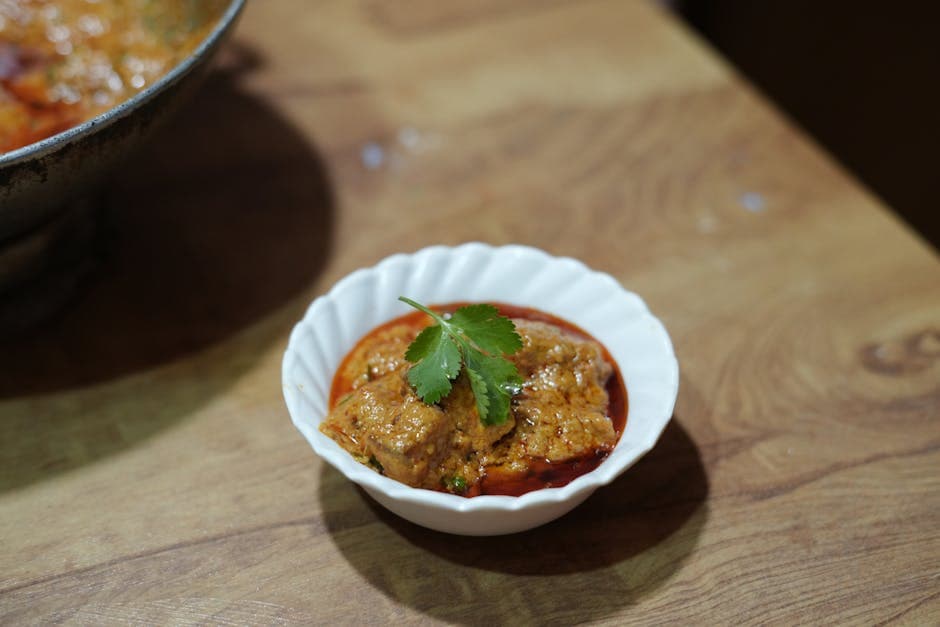
Naga Pork Curry (Northeast India)
Smoked pork belly stewed with axone (fermented soybean), bamboo shoot and the ferocious Naga king chili — a fiery, smoky stew from Nagaland.
About This Recipe
Naga pork curry — known locally as smoked pork with axone — is the defining dish of Nagaland in India's far northeast, a meal that speaks to a cuisine entirely unlike the curry traditions of mainland India. There is no onion-tomato-ginger base, no garam masala, no cream. Instead, the cooking pot holds chunks of pork belly that have been smoked over a kitchen hearth for weeks, fermented soybean (axone, pronounced akhuni) for a funky umami punch, bamboo shoot (cooked or sour), and the legendary Naga king chili (also called bhut jolokia) — once recognized by Guinness as the world's hottest pepper. The dish is built around three ferocious ingredients that all need taming and balance: smoke, funk and heat. Long, slow simmering breaks down the pork's collagen, dissolves the axone into a thick gravy, and softens the chili's brutal heat into a complex slow burn. Served with sticky red rice and a side of raw cabbage or wild greens, this curry is the kind of meal that converts skeptics in a single bite — pungent, primal, and unforgettable. It is also a window into Naga food culture: a cuisine of preservation, smoke, fermentation and bold expression, shaped by the hills, forests and tribal traditions of one of India's most distinctive regions.
Ingredients
Serves 4
- 700 gsmoked pork belly (or fresh pork belly with 1 tsp added smoked paprika), cut into 4 cm cubes
- 3 tbspaxone (fermented soybean paste — substitute Japanese natto or Korean cheonggukjang if unavailable)
- 200 gbamboo shoot (fresh boiled or canned, sliced)
- 2–4fresh Naga king chilies (bhut jolokia), slit lengthwise — or 4 bird's-eye chilies as substitute
- 2 mediumtomatoes, roughly chopped
- 1 largeonion, sliced
- 1 thumbfresh ginger, julienned
- 6 clovesgarlic, lightly smashed
- 2 tbspmustard oil (or any neutral oil)
- 1 tspsalt (axone is already salty — adjust to taste)
- 600 mlwater
Instructions
- 1
Sear the smoked pork
Heat the mustard oil in a heavy pot until it just begins to smoke — this removes the raw pungency of mustard oil. Add the pork cubes in a single layer and sear hard for 5–6 minutes until edges are browned and any fat is rendering. Smoked pork has a head start on flavor; this step concentrates it.
- 2
Add aromatics
Push the pork to one side. Add onion, ginger, garlic and slit chilies to the open space. Fry 4–5 minutes until the onion softens and turns golden at the edges. Stir everything together so the pork is coated in the aromatic base.
- 3
Tomato and water
Add chopped tomatoes and stir for 2 minutes until they begin to break down. Pour in the water, scrape any browned bits off the bottom of the pot, and bring to a strong simmer.
- 4
Simmer slowly
Reduce heat to low, cover partially, and simmer 40 minutes. The pork should become tender enough to yield to gentle pressure but still hold its shape. Stir every 10 minutes; if it looks dry, add 50 ml hot water at a time.
- 5
Add axone and bamboo shoot
Stir in the axone and bamboo shoot. The axone will give off its characteristic pungent funk — this is normal and will mellow during cooking. Simmer uncovered another 15–20 minutes until the gravy thickens and the pork is meltingly tender.
- 6
Adjust salt and rest
Taste and adjust — axone provides most of the salt. If the chili heat is overwhelming, fish out one or two of the chilies (don't add yogurt or cream; not Naga tradition). Rest off-heat 10 minutes before serving so the flavors marry.
- 7
Serve
Spoon into shallow bowls and serve with sticky red rice (Naga staple), steamed jasmine rice, or even plain boiled rice. A side of raw shredded cabbage or wild greens balances the richness. Eat slowly — the heat builds.
Did you make this?
Rate it and help other cooks find the recipes that actually work.
One tap to sign in, and we'll save the rating you just picked.
Everything you need to plan your week — free
- Meal calendar
- Grocery list
- AI recipe ideas
Track what you eat
Snap your meal to log calories and macros, run fasting timers and track water in the free SnapCal app.
Pro Tips
- →
If you can't find axone, fermented soybean substitutes work surprisingly well: Japanese natto, Korean cheonggukjang, or a tablespoon of miso plus 1 tsp fish sauce.
- →
Smoked pork is essential to authentic Naga flavor. If using fresh pork, hot-smoke it 30 minutes in a stovetop smoker, or add 1 tsp smoked paprika and a few drops of liquid smoke to mimic the depth.
- →
Naga king chili is fearsomely hot — start with one chili, taste after 30 minutes, add more if you dare. Always wear gloves when slitting them.
- →
Mustard oil is traditional and adds a sharp, pungent character. If using, always heat it until smoking first to mellow the raw bite.
Variations
- •
With anishi (fermented yam leaves) instead of axone — even more pungent and earthy.
- •
Naga chicken curry — same technique with bone-in chicken thighs, reduce simmer time to 25 minutes.
- •
Mild family version — use only one chili and add a teaspoon of jaggery to round out the funk.
- •
Naga style without bamboo — replace bamboo shoot with sour fruit like green mango or unripe tomato for a different acidic backbone.
Storage
Refrigerate up to 4 days in a sealed container — the flavor deepens overnight. Freezes 2 months. Reheat gently in a saucepan with a splash of water; never microwave high (cracks the rich fat emulsion). Serve only at piping hot — Naga curries are unpleasant lukewarm.
History & Origin
Naga pork with axone is a staple across the Naga tribes of Nagaland, Manipur and parts of Myanmar, where smoke-curing meat and fermenting soy are ancient preservation techniques developed for the cold, damp hill climate. Axone itself is mentioned in Naga oral histories as a clan delicacy passed mother to daughter, and remains a defining flavor of Sümi and Lotha cooking in particular.
Frequently Asked Questions
Is this dish actually edible for non-spice-tolerant people?
Yes, if you reduce to one bird's-eye chili (not bhut jolokia) and use less. The dish without much heat still has the smoke-funk-pork-fermentation interplay that makes it special.
What does axone smell like?
Like aged blue cheese mixed with miso — pungent and divisive. The cooked dish smells much milder than the raw paste; have faith in the simmer.
Where can I buy axone outside Northeast India?
Northeast India specialty grocers online (Naga Bazaar, Hornbill Foods). Otherwise the natto/cheonggukjang substitutes get close to the right note.
Why mustard oil specifically?
Traditional in Northeast Indian cooking. Its sharp pungency stands up to smoke and fermentation in a way neutral oils don't. Always smoke it first to remove raw bite.
Nutrition Facts
Per serving (320g / 11.3 oz) · 4 servings total
Time Summary
Have Questions?
Ask our AI cooking assistant anything about this recipe — substitutions, techniques, scaling.
Chat with AI Chef →More Indian Recipes
You Might Also Like
Similar dishes from other cuisines around the world.
Browse by Ingredient
More recipes built around the same core ingredients.
Free Kitchen Tools
Calculators and converters that pair with this page — no signup needed.
Put This Into a Plan
Schedule it, shop for it, and track what you already have.
Read Next
Longer reads that go deeper on the ideas behind this dish.
Community
Join the conversation
Sign in to leave a comment and save your favourite recipes