
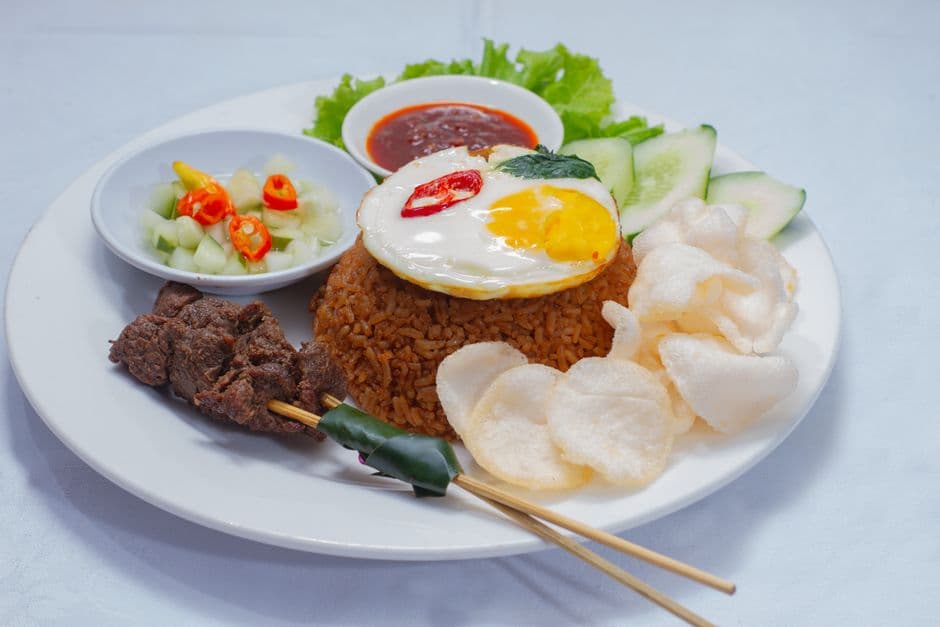
Nasi Goreng
Indonesia's iconic wok-fried rice with kecap manis, shrimp paste and chillies — topped with a fried egg and crispy shallots for the perfect finish.
About This Recipe
Nasi Goreng (literally 'fried rice') is considered by many Indonesians to be their national dish, and it is extraordinary in its depth of flavour for something so simple. The secret lies in two uniquely Indonesian ingredients: kecap manis, a thick, sweet soy sauce with a molasses-like richness, and terasi, the fermented shrimp paste that provides an incomparable savoury, almost smoky backbone. Day-old rice is essential — freshly cooked rice steams rather than fries and turns mushy. The dish is traditionally served topped with a lacy, crisp-edged fried egg, a scattering of crispy fried shallots and wedges of tomato and cucumber. Street vendors across Java serve it from smoking woks at all hours; it is equally at home as a midnight snack or a restaurant centrepiece.
Ingredients
Serves 2
- 400 gcooked jasmine rice(day-old, refrigerated)
- 150 gchicken breast or prawns(diced or peeled)
- 3 tablespoonskecap manis (sweet soy sauce)
- 1 tablespoonsoy sauce
- 1 teaspoonterasi (shrimp paste)(or 1 teaspoon fish sauce)
- 3shallots(thinly sliced)
- 3 clovesgarlic(minced)
- 2red chillies(sliced; adjust to taste)
- 2 tablespoonsvegetable oil
- 2eggs
- 2spring onions(sliced)
- 50 gcrispy fried shallots(store-bought or homemade)
Instructions
- 1
Make the spice paste
Pound or blend the shallots, garlic, chillies and terasi into a rough paste using a mortar and pestle or small blender. If using fish sauce instead of terasi, add it later with the soy sauces.
A mortar and pestle gives a more textured, authentic result than a blender.
- 2
Fry the paste
Heat the oil in a wok over high heat until very hot. Add the spice paste and fry, stirring constantly, for 2–3 minutes until deeply fragrant and the paste has darkened.
- 3
Add protein
Add the chicken or prawns and stir-fry over high heat until cooked through, about 3–4 minutes for chicken or 2 minutes for prawns.
- 4
Fry the rice
Break up the cold rice and add it to the wok. Toss and press with a spatula to break up any clumps. Fry over maximum heat for 3–4 minutes, pressing and tossing, until the rice is well coated and heated through with some slightly charred, crispy bits.
- 5
Season
Add the kecap manis and soy sauce and toss vigorously for 1–2 minutes until the rice is an even deep brown. Taste and adjust seasoning. Stir in the spring onions.
- 6
Fry the eggs and serve
In a separate pan, fry the eggs in a little oil over medium-high heat until the whites are set and crispy at the edges but the yolks are still runny. Divide the rice between plates, top each with a fried egg and a generous handful of crispy fried shallots. Serve with cucumber and tomato wedges.
Did you make this?
Rate it and help other cooks find the recipes that actually work.
One tap to sign in, and we'll save the rating you just picked.
Everything you need to plan your week — free
- Meal calendar
- Grocery list
- AI recipe ideas
Track what you eat
Snap your meal to log calories and macros, run fasting timers and track water in the free SnapCal app.
Pro Tips
- →
Day-old refrigerated rice is non-negotiable — the low moisture ensures each grain stays separate when fried.
- →
Maximum wok heat is essential for 'wok hei', the smoky, slightly charred flavour of authentic fried rice.
- →
Kecap manis is available in most Asian supermarkets; do not substitute with regular soy sauce or the flavour will be completely different.
- →
Taste and adjust salt at the very end — flavors concentrate as liquids reduce, and a final pinch of flaky salt sharpens the whole dish.
Variations
- •
Add a tablespoon of sambal oelek for a spicier version.
- •
Make it vegetarian by omitting the protein and terasi and adding extra vegetables such as cabbage and corn.
- •
Nasi Goreng Kambing uses diced mutton with additional spices — a Javanese speciality.
- •
Vegetarian: swap the protein for roasted king oyster mushrooms, smoked tofu or cooked chickpeas — adjust seasoning slightly upward to compensate.
Storage
Best eaten immediately. Leftovers can be stored in the fridge for up to 2 days and re-fried briefly in a hot wok.
History & Origin
Fried rice techniques arrived in Indonesia through centuries of Chinese trade and migration, but Indonesians transformed the dish with their own flavour arsenal — particularly kecap manis, which was invented in Java, and terasi, which has been produced along Indonesian coastlines for over a thousand years.
Frequently Asked Questions
Can I use freshly cooked rice?
Freshly cooked rice has too much moisture and will steam rather than fry, resulting in sticky, clumped rice. Spread leftover rice on a tray and refrigerate uncovered overnight to dry it out.
Can I make this ahead of time?
Yes — most of the components can be prepared up to a day in advance and refrigerated separately. Reheat gently and assemble just before serving so textures stay distinct.
What can I substitute if I don't have all the ingredients?
Stay close to the role each ingredient plays: swap aromatics for similar ones (shallot for onion, lime for lemon), and keep the fat-acid-salt balance intact. Spice blends can usually be approximated with what's in the cupboard.
How do I know it's authentic?
Authenticity sits on a spectrum — what matters more is honoring the technique and balance of flavors. If the dish tastes harmonious and respects how cooks in its home region would build it, you're on solid ground.
Nutrition Facts
Per serving (480g / 16.9 oz) · 2 servings total
Time Summary
Have Questions?
Ask our AI cooking assistant anything about this recipe — substitutions, techniques, scaling.
Chat with AI Chef →Featured in Guides
This recipe is featured in the following curated guides:
More Indonesian Recipes
You Might Also Like
Similar dishes from other cuisines around the world.
Browse by Ingredient
More recipes built around the same core ingredients.
Free Kitchen Tools
Calculators and converters that pair with this page — no signup needed.
Put This Into a Plan
Schedule it, shop for it, and track what you already have.
Read Next
Longer reads that go deeper on the ideas behind this dish.
Community
Join the conversation
Sign in to leave a comment and save your favourite recipes