
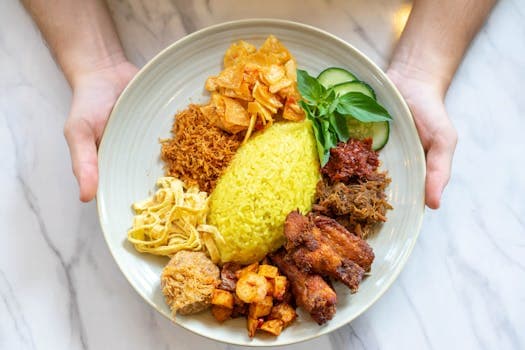
Nasi Kuning
Indonesian golden turmeric rice — fragrant, warm, celebratory.
About This Recipe
Nasi kuning is Indonesia's rice of celebration — jasmine rice simmered in coconut milk stained brilliant gold with turmeric and perfumed with bruised lemongrass, ginger, and bay leaves (ideally Indonesian salam leaves). The color carries meaning: yellow symbolizes gold, prosperity, and good fortune, which is why the rice is molded into a towering cone called tumpeng for birthdays, weddings, and Indonesia's Independence Day, surrounded by fried chicken, sambal, egg, and vegetables. The coconut milk does double duty, lending richness while keeping every grain tender and slightly clingy. Made on the stovetop in under an hour, it turns even an ordinary weeknight plate of chicken and vegetables into something festive.
Ingredients
Serves 6
- 3 cupsjasmine or basmati rice
- 1 cancoconut milk (400ml)
- 1.5 cupswater
- 2 tbspturmeric
- 3 tbspfresh ginger, grated
- 4 clovesgarlic, minced
- 2shallots, sliced
- 3 stalkslemongrass, bruised
- 2bay leaves
- 1 tspsalt
- 2 tbspoil
- 2 tbspfresh cilantro for garnish
Instructions
- 1
Sauté aromatics
Heat the oil in a heavy-bottomed pot over medium heat and sauté the sliced shallots, garlic, and ginger until soft, fragrant, and just turning golden, about 2 minutes. This brief fry wakes up the aromatics before they meet the rice.
- 2
Toast rice
Add the rinsed, well-drained rice and stir for 2 minutes until every grain glistens with oil and smells faintly nutty. Coating the grains in fat helps them cook up separate rather than gummy in the rich coconut liquid.
Rinse the rice until the water runs nearly clear first — surface starch plus coconut milk is a recipe for stodge.
- 3
Add liquid
Pour in the coconut milk and water, then add the turmeric, bruised lemongrass stalks, bay leaves, and salt. Stir thoroughly so the turmeric dissolves evenly and no yellow streaks remain — uneven stirring now means patchy color later.
- 4
Cook
Bring to a boil over medium-high heat, give one final stir, then immediately drop to the lowest heat, cover tightly, and cook 18-20 minutes without lifting the lid. Coconut milk scorches easily, so the gentlest flame matters here.
If your stove runs hot, slide a heat diffuser or second pan underneath to protect the bottom layer.
- 5
Fluff
Remove from the heat and let the covered pot rest 5 full minutes so the moisture redistributes. Discard the lemongrass and bay leaves, then fluff gently with a fork, lifting from the bottom rather than stirring, to keep the grains intact.
- 6
Serve
Mound the rice onto a platter — or pack it into a bowl or cone mold and unmold for a festive tumpeng-style presentation. Garnish with cilantro and crispy fried shallots, and serve with fried chicken, sambal, cucumber, and boiled egg.
Did you make this?
Rate it and help other cooks find the recipes that actually work.
One tap to sign in, and we'll save the rating you just picked.
Everything you need to plan your week — free
- Meal calendar
- Grocery list
- AI recipe ideas
Track what you eat
Snap your meal to log calories and macros, run fasting timers and track water in the free SnapCal app.
Pro Tips
- →
Resist opening the lid or stirring during the 18-20 minute steam — every peek releases the trapped steam the rice needs.
- →
Fresh turmeric root (about 4 cm, grated) gives a brighter color and earthier flavor than powder if you can find it.
- →
Smash the lemongrass stalks firmly with the back of a knife before adding; bruising releases their citrus oils.
- →
Properly cooked nasi kuning is moist and slightly rich, never wet — if it looks soupy at 20 minutes, steam 5 more minutes off the heat.
- →
Indonesian salam leaves (daun salam) are the authentic 'bay'; regular bay leaf works but use kaffir lime leaf too if you have it.
Variations
- •
Steam the rice with a few pandan leaves knotted in for the classic Indonesian fragrance.
- •
Add kaffir lime leaves and a cinnamon stick for a spicier, Sumatran-leaning aroma.
- •
Make tumpeng: pack the hot rice into a cone mold and surround it with fried chicken, tempeh, sambal goreng, and sliced omelet.
- •
Cook it in a rice cooker — sauté the aromatics separately, then add everything to the cooker and press start.
Storage
Best the day it's made, since coconut rice stales faster than plain. Refrigerate leftovers up to 2 days in a sealed container and reheat with a sprinkle of water, covered, in the microwave or a steamer to revive the texture.
History & Origin
Nasi kuning's golden color has symbolized prosperity and divine blessing in the Indonesian archipelago since Hindu-era Java, where yellow was associated with gold and the gods. It remains the centerpiece of the tumpeng ceremony — the cone of yellow rice cut at birthdays, weddings, and gratitude celebrations (syukuran). Every region keeps its own version, from Javanese to Manadonese nasi kuning sold as breakfast street food.
Frequently Asked Questions
Why is my rice mushy?
Almost always too much liquid or insufficient rinsing. Measure the coconut milk and water exactly — this recipe uses slightly less liquid than plain rice because coconut milk is heavy — and rinse the raw rice until the water runs clear. Also keep the heat at its absolute lowest once covered; vigorous bubbling breaks the grains apart.
Can I make nasi kuning in a rice cooker?
Yes, and many Indonesian households do exactly that. Sauté the shallots, garlic, and ginger in a small pan first, then combine them with the rinsed rice, coconut milk, water, turmeric, lemongrass, bay leaves, and salt in the cooker pot. Use the regular white-rice setting and fluff well at the end, removing the aromatics.
What do you traditionally serve with nasi kuning?
A celebratory plate typically includes ayam goreng (fried chicken), telur balado or sliced omelet ribbons, fried tempeh or tofu, anchovies with peanuts (teri kacang), cucumber slices, sambal, and a shower of fried shallots. For everyday meals, any grilled or fried protein with sambal and fresh vegetables makes it a complete, balanced dish.
Why didn't my rice turn evenly yellow?
Turmeric powder needs to fully dissolve in the liquid before the rice starts absorbing it, so stir very thoroughly at step 3. Clumpy or old turmeric also distributes poorly — whisk it into a little warm water first if in doubt. Fresh grated turmeric, strained into the cooking liquid, produces the most even, vibrant gold.
Nutrition Facts
Per serving (300g / 10.6 oz) · 6 servings total
Time Summary
Have Questions?
Ask our AI cooking assistant anything about this recipe — substitutions, techniques, scaling.
Chat with AI Chef →Featured in Guides
This recipe is featured in the following curated guides:
More Indonesian Recipes
You Might Also Like
Similar dishes from other cuisines around the world.
Browse by Ingredient
More recipes built around the same core ingredients.
Free Kitchen Tools
Calculators and converters that pair with this page — no signup needed.
Put This Into a Plan
Schedule it, shop for it, and track what you already have.
Read Next
Longer reads that go deeper on the ideas behind this dish.
Community
Join the conversation
Sign in to leave a comment and save your favourite recipes