spanishdinner✨ New
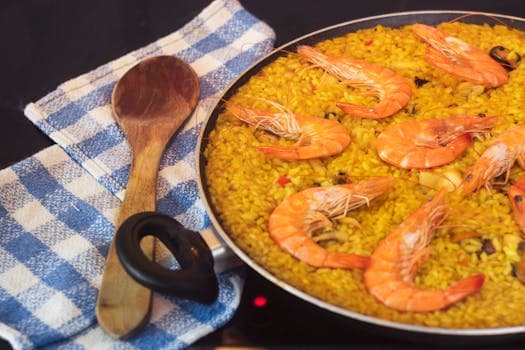
Paella Valenciana
Authentic Spanish rice with chicken, rabbit, and saffron.
Prep
30 min
Cook
60 min
Servings
6
Difficulty
Hard
★★★★★
4.8(2,800 ratings)#spanish#rice#chicken#saffron#paella#valenciana
About This Recipe
True Valencian paella contains no seafood — it is a dish of the inland farmlands, combining free-range chicken, rabbit, fresh rosemary, flat green beans, butter beans, and saffron-stained bomba rice, cooked uncovered in a wide paella pan over an open fire until the iconic socarrat — the crispy, caramelised rice crust — forms on the bottom.
Ingredients
Serves 6
- 400 gbomba or Calasparra rice
- 500 gchicken thighs, bone-in, cut into pieces
- 400 grabbit pieces (or additional chicken)
- 200 gflat green beans (bajoqueta), trimmed and cut into 3 cm lengths
- 150 gbutter beans, drained if canned
- 4 mediumripe tomatoes, grated (discard skin)
- 0.5 tspsaffron threads, crumbled and dissolved in 2 tbsp warm water
- 1 tspsweet smoked paprika
- 4 clovesgarlic, minced
- 5 tbspextra-virgin olive oil
- 1.2 Lhot chicken stock
- 2 sprigsfresh rosemary
- 1.5 tspsalt
- 1 wholelemon, cut into wedges, to serve
Instructions
- 1
Sear the meat
Heat olive oil in a 40 cm paella pan or widest oven-safe skillet over medium-high heat. Season chicken and rabbit with salt. Sear on all sides until deeply golden, about 10 minutes total. Push meat to the edges of the pan.
- 2
Make the sofrito
In the centre of the pan, add green beans and cook for 3 minutes. Add grated tomato, garlic, and paprika. Cook, stirring, for 5 minutes until the tomato reduces to a thick, dark paste.
- 3
Add rice
Add rice to the pan and stir to coat in the sofrito for 2 minutes. Add butter beans, saffron water, and hot stock. Distribute rice and meat evenly. Tuck rosemary sprigs in and do not stir again from this point.
- 4
Cook the paella
Cook over medium-high heat for 10 minutes, then reduce to medium-low for 10 more minutes. Rotate the pan if needed for even cooking. When the liquid is absorbed and rice is tender, increase heat to high for 90 seconds to form the socarrat (crispy bottom). Listen for a light crackling sound.
- 5
Rest and serve
Remove from heat. Cover loosely with newspaper or foil and rest for 5 minutes. Remove rosemary and serve directly from the pan with lemon wedges.
Pro Tips
- →
Never stir the paella once the stock is added — movement releases starch and ruins the texture.
- →
The socarrat is a badge of honour, not a mistake. Listen for the crackle and smell for nutty caramel.
- →
Taste and adjust salt at the very end — flavors concentrate as liquids reduce, and a final pinch of flaky salt sharpens the whole dish.
- →
Mise en place pays for itself: chop, measure and pre-mix everything before the heat goes on, especially for any step that moves fast.
Variations
- •
Seafood paella: replace meat with prawns, mussels, and squid.
- •
Paella negra: add squid ink to turn the rice dramatically black.
- •
Vegetarian: swap the protein for roasted king oyster mushrooms, smoked tofu or cooked chickpeas — adjust seasoning slightly upward to compensate.
- •
Spicier: add a finely chopped fresh chile or a teaspoon of crushed Aleppo/Urfa pepper to the aromatics for warm, layered heat instead of a single sharp hit.
Storage
Best eaten immediately. Refrigerate up to 2 days; reheat with a splash of water over low heat.
History & Origin
Paella originated in the wetlands around Valencia in the 18th century among farmworkers who cooked rice with whatever was available over an open wood fire.
Frequently Asked Questions
Can I make this ahead of time?
Yes — most of the components can be prepared up to a day in advance and refrigerated separately. Reheat gently and assemble just before serving so textures stay distinct.
What can I substitute if I don't have all the ingredients?
Stay close to the role each ingredient plays: swap aromatics for similar ones (shallot for onion, lime for lemon), and keep the fat-acid-salt balance intact. Spice blends can usually be approximated with what's in the cupboard.
How do I know it's authentic?
Authenticity sits on a spectrum — what matters more is honoring the technique and balance of flavors. If the dish tastes harmonious and respects how cooks in its home region would build it, you're on solid ground.
Why didn't mine turn out as expected?
The two most common issues are under-seasoning and rushing the heat. Taste as you go, season in layers, and give aromatics and proteins the time they need to develop color and depth before moving on.
Nutrition Facts
Per serving (480g / 16.9 oz) · 6 servings total
Calories560kcal
Protein38g
Carbohydrates58g
Fat18g
Fiber5g
Protein38g
Carbs58g
Fat18g
Time Summary
Prep time30 min
Cook time60 min
Total time90 min
Have Questions?
Ask our AI cooking assistant anything about this recipe — substitutions, techniques, scaling.
Chat with AI Chef →More Spanish Recipes
Community
Join the conversation
Sign in to leave a comment and save your favourite recipes