
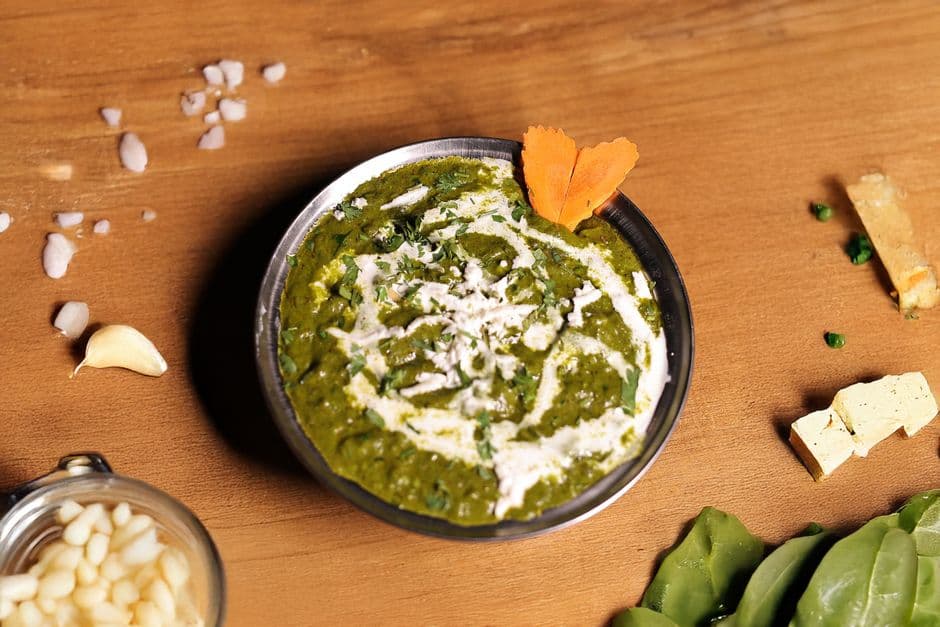
Palak Paneer (Punjabi Spinach & Fresh Cheese Curry)
Velvety Punjabi spinach gravy laced with ginger, green chili and warm garam masala, holding cubes of golden pan-seared paneer in a rich, emerald-green sauce.
About This Recipe
Palak paneer is the green ambassador of Punjabi vegetarian cooking — a dish so embedded in North Indian dhabas, household weeknights, and global Indian restaurant menus that it has become shorthand for 'Indian vegetarian' the world over. At its best it is not the dark, muddy puree that often arrives on a buffet line, but a vibrant, near-fluorescent green gravy with a silky, almost mousse-like body; cubes of fresh paneer cheese seared until their edges turn the color of toasted hay then folded in at the end so they keep their tender chew rather than melting away. The trick that separates restaurant-grade palak paneer from the home version is treatment of the spinach itself: blanching the leaves for just 90 seconds and shocking them immediately in ice water locks the chlorophyll and prevents the iron-grey overcook that haunts so many homemade attempts. The base masala is a classic Punjabi onion-tomato bhuna built on ghee, with ginger and green chili providing heat and brightness rather than dry chili powder, and a finishing knob of butter plus a swirl of cream rounding the spinach's slight mineral edge. Garam masala goes in at the end, never at the beginning, so its perfumed top notes — cardamom, clove, cinnamon — survive. Served with hot tandoori roti or naan tearing into the pool of green sauce, a wedge of lemon, sliced raw onion and a pickle on the side, palak paneer is everything a great Indian vegetable dish should be: deeply seasoned, technique-driven, and so satisfying you don't notice the absence of meat.
Ingredients
Serves 4
- 500 gfresh spinach leaves, stems trimmed(baby spinach works; mature spinach has more flavor)
- 300 gpaneer, cut into 2 cm cubes(homemade or fresh from an Indian grocer for best texture)
- 1 largeyellow onion, finely chopped
- 2 mediumtomatoes, pureed (about 250 g)
- 1 tbspginger-garlic paste (or 4 cloves garlic + 3 cm ginger, grated)
- 2green chilies, slit (Indian or serrano)(remove seeds for milder heat)
- 3 tbspghee, divided(or half ghee, half neutral oil)
- 1 tspcumin seeds
- 1 tspground coriander
- 1 tspgaram masala, to finish
- 60 mlheavy cream, plus extra to swirl
- 1 tbspkasuri methi (dried fenugreek leaves), crushed between palms
- salt to taste
Instructions
- 1
Blanch and shock the spinach
Bring a large pot of salted water to a rolling boil. Drop in the spinach for 90 seconds — no longer — pushing the leaves under with a spoon. Drain immediately and plunge into a bowl of ice water for 2 minutes. This 90-second shock is the single most important step for that signature emerald color; longer cooking will turn the gravy army-green.
If you skip the ice bath, residual heat will keep cooking the leaves and dull the color.
- 2
Puree to silk
Squeeze out excess water, but not all of it — a little moisture helps blending. Transfer to a blender with one slit green chili and a splash of cold water. Blitz on high for 60 seconds until completely smooth, almost like green pesto. Set aside. Do not strain; the fiber gives the gravy body.
- 3
Sear the paneer
Heat 1 tablespoon ghee in a wide skillet over medium-high. Add the paneer cubes in a single layer and let them sit undisturbed 60 seconds until the underside turns golden. Flip and brown a second side. Transfer to a bowl of warm salted water; this soak keeps the seared cubes soft instead of rubbery.
- 4
Build the masala base
In the same skillet add the remaining 2 tablespoons ghee and the cumin seeds; let them sizzle 20 seconds until fragrant. Add the chopped onion and a pinch of salt, cook 7–8 minutes over medium heat until deep golden brown — this caramelization is the backbone of the gravy. Stir in ginger-garlic paste and the second green chili; cook 90 seconds until the raw smell disappears.
- 5
Add tomato and bloom spices
Pour in the pureed tomato and ground coriander. Cook over medium 6–8 minutes, stirring often, until the mixture thickens, darkens, and ghee starts to separate at the edges — Indian cooks call this 'bhunao,' and it is non-negotiable for depth. The kitchen should smell sweet and toasted, not raw and acidic.
- 6
Combine spinach and masala
Lower heat to medium-low. Add the spinach puree and 80 ml of water. Stir well, bring to a gentle simmer and cook only 4 minutes — extended simmering at this stage dulls the color. Taste and adjust salt now; spinach absorbs a surprising amount.
- 7
Finish with paneer, cream and garam masala
Drain the paneer and slide it into the gravy. Stir in the cream and crushed kasuri methi. Simmer 2 more minutes just to warm the cheese through. Kill the heat, sprinkle the garam masala over the top, cover for 1 minute so the spices steam-bloom into the gravy.
Garam masala added off-heat keeps its perfume; boiled, it goes flat.
- 8
Serve hot
Transfer to a warm serving bowl, swirl a tablespoon of cream on top and finish with a thin slice of butter. Serve immediately with hot tandoori roti, butter naan or basmati rice, plus sliced red onion, a wedge of lemon and a spoon of mango pickle on the side.
Did you make this?
Rate it and help other cooks find the recipes that actually work.
One tap to sign in, and we'll save the rating you just picked.
Everything you need to plan your week — free
- Meal calendar
- Grocery list
- AI recipe ideas
Track what you eat
Snap your meal to log calories and macros, run fasting timers and track water in the free SnapCal app.
Pro Tips
- →
Use fresh paneer if you can possibly find it — supermarket vacuum-packed paneer is dense and squeaky. Soaking in warm salted water revives it.
- →
Do not let the spinach puree boil for more than 5 minutes total or the color will fade from emerald to olive.
- →
Kasuri methi is not optional — its musky, hay-like aroma is what makes the dish taste 'Indian restaurant' rather than just 'creamed spinach with cheese.'
- →
If your gravy splits or looks grainy, a final 30-second blend with an immersion blender brings it back to silk.
Variations
- •
Saag paneer: use a mix of spinach, mustard greens and a handful of fenugreek leaves for the deeper, more rustic Amritsari version.
- •
Vegan version: swap paneer for pan-seared firm tofu and use coconut cream in place of dairy cream; finish with a drop of mustard oil for authenticity.
- •
Add 1 teaspoon Kashmiri chili powder with the coriander for a redder, smokier gravy without raising heat.
- •
Palak makhani: double the cream, add 30 g butter at the finish and skip the cubed paneer — serve with a poached egg instead for a brunch riff.
Storage
Refrigerate up to 3 days in a sealed container; reheat gently with a splash of water and a fresh pinch of kasuri methi to revive aroma. Freezing is possible but cream may split on thaw — better to freeze the spinach-tomato base without cream or paneer and finish fresh.
History & Origin
Palak paneer rose to prominence in 20th-century Punjab as a way to combine the region's love of fresh dairy with the abundant winter spinach harvest. Punjabi farmers traditionally pressed their own paneer at home and folded it into a hearty saag of mixed greens; restaurant cooks in Delhi and Amritsar refined the technique in the 1950s, smoothing the gravy and replacing mixed bitter greens with pure spinach for a cleaner, sweeter dish that traveled well across India and into the global Indian restaurant repertoire.
Frequently Asked Questions
Why is my palak paneer dark green instead of bright?
The spinach was overcooked. Blanch for only 90 seconds, ice-shock immediately, and limit the final simmer with the puree to under 5 minutes. Acid (tomato) added before the spinach also helps preserve color.
Can I use frozen spinach?
Yes — 400 g of thawed and squeezed frozen spinach works in a pinch. Skip the blanch and ice bath, but the color will be slightly duller and the flavor a touch grassier.
Is paneer the same as halloumi?
No. Paneer is unaged, non-melting fresh cheese with no salt or rennet; halloumi is salted and has a much firmer chew. Halloumi will work as an emergency substitute but rinse off excess salt first and cube small.
How do I keep paneer soft?
Two tricks: sear only briefly until just golden (a long fry makes it rubbery), then soak the seared cubes in warm salted water for 10 minutes before adding to the gravy. Hot water relaxes the cheese protein.
Nutrition Facts
Per serving (320g / 11.3 oz) · 4 servings total
Time Summary
Have Questions?
Ask our AI cooking assistant anything about this recipe — substitutions, techniques, scaling.
Chat with AI Chef →Featured in Guides
This recipe is featured in the following curated guides:
More Indian Recipes
You Might Also Like
Similar dishes from other cuisines around the world.
Browse by Ingredient
More recipes built around the same core ingredients.
Free Kitchen Tools
Calculators and converters that pair with this page — no signup needed.
Put This Into a Plan
Schedule it, shop for it, and track what you already have.
Read Next
Longer reads that go deeper on the ideas behind this dish.
Community
Join the conversation
Sign in to leave a comment and save your favourite recipes