
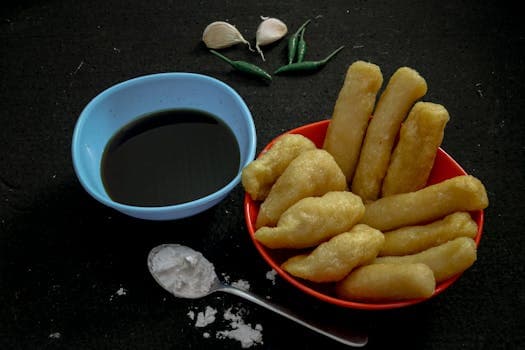
Pempek
Indonesian fish and tapioca cake from Palembang — bouncy, chewy, legendary.
About This Recipe
Pempek is the pride of Palembang, the river city of South Sumatra, where fish from the Musi River — traditionally belida, now usually Spanish mackerel (tenggiri) — is kneaded with tapioca flour into a smooth dough, shaped, boiled until it floats, then fried to a golden shell around a bouncy, springy interior. What completes the dish is cuko, the jet-dark dipping sauce of palm sugar, tamarind, chilies, and garlic that hits sour, sweet, and hot all at once; Palembang people judge a pempek stall by its cuko first. The most celebrated shape, pempek kapal selam ('submarine'), hides a whole egg inside. Local lore ties the dish to Palembang's centuries-old Chinese fishball traditions married to Sumatran ingredients.
Ingredients
Serves 6
- 400 gfish fillet, finely minced
- 200 gtapioca flour
- 100 grice flour
- 2eggs
- 1 tspsalt
- 1/2 tspwhite pepper
- 6 cupswater for boiling
- 1/4 cuptamarind paste
- 2 tbspchili paste
- 3 clovesgarlic, minced
- 1 tbspbrown sugar
- 2 cupswater for sauce
- 2 tbspfried garlic
- oil for frying
Instructions
- 1
Make dough
Stir the minced fish with the eggs, salt, and white pepper until sticky, then fold in the tapioca and rice flours with a light hand, mixing only until the dough comes together into a smooth, slightly tacky mass. Keep everything cold and stop the moment it's uniform.
Overworking the dough develops the tapioca into rubber — fold, don't knead, and the pempek will stay tender-bouncy.
- 2
Boil
With oiled hands, shape the dough into 10cm cylinders (lenjer) or balls and slide them into a large pot of gently boiling water with a spoonful of oil added. Boil 15–20 minutes; they sink first, then float when cooked — give them 2 extra minutes after floating, then drain on a rack.
Oil your hands and the water lightly so the dough doesn't stick to your palms or to each other in the pot.
- 3
Fry
Once the boiled pempek have cooled and dried slightly — even 15 minutes makes a difference — fry them at 170°C until the skin is golden, lightly blistered, and crisp, about 3–4 minutes, turning once. Drain well. Frying straight from the boil makes the oil spit.
- 4
Make sauce (cuko)
Simmer the tamarind, chili paste, minced garlic, brown sugar, and water together for at least 5 minutes, until the sugar dissolves fully and the sauce turns glossy and dark. It should taste assertively sour, sweet, and hot in that order — adjust each element before serving.
- 5
Serve
Slice the fried pempek into bite-sized rounds, arrange on plates, and pour the warm cuko generously over or serve it in bowls for dunking. Top with fried garlic, and add the traditional accompaniments of chopped cucumber and a sprinkle of dried shrimp powder (ebi) if you have them.
Did you make this?
Rate it and help other cooks find the recipes that actually work.
One tap to sign in, and we'll save the rating you just picked.
Everything you need to plan your week — free
- Meal calendar
- Grocery list
- AI recipe ideas
Track what you eat
Snap your meal to log calories and macros, run fasting timers and track water in the free SnapCal app.
Pro Tips
- →
Use very cold, very fresh white fish — Spanish mackerel (tenggiri) is the gold standard; the colder the flesh, the smoother the dough.
- →
Fold the flour in minimally; overmixing is the number one cause of rubbery pempek.
- →
Let boiled pempek dry 15 minutes before frying so the skin crisps instead of spitting.
- →
The cuko should be boldly sour and sweet — timid sauce is the most common mistake outside Palembang.
- →
Ice water in the dough (2–3 tablespoons) keeps the texture springy rather than dense.
Variations
- •
Pempek kapal selam: wrap the dough around a whole raw egg before boiling — the famous 'submarine'.
- •
Pempek lenjer: long cylinders, sliced after frying, the everyday classic.
- •
Pempek adaan: mix in sliced scallions and fry directly without boiling for a richer, rougher ball.
- •
Add minced shrimp to the fish for a sweeter, more aromatic dough.
Storage
Boiled (unfried) pempek keep 3 days refrigerated brushed with oil, or freeze for 2 months — fry straight from the fridge. Cuko keeps a week refrigerated and many say it improves after a day.
History & Origin
Pempek is the signature dish of Palembang, South Sumatra, and is generally traced to the city's long-established Chinese community adapting fishball-making to local river fish and tapioca; popular legend credits an elderly vendor called 'apek,' from which the name supposedly derives, though the etymology is folklore rather than documented fact. Originally made with belida, a now-scarce Musi River fish, modern pempek relies on Spanish mackerel. In Palembang it's eaten at any hour, including breakfast.
Frequently Asked Questions
Why are my pempek rubbery or tough?
Almost always overmixing — once the tapioca flour goes in, fold just until combined, because kneading develops a dense, rubbery chew. Too much flour relative to fish has the same effect, as does boiling far past the floating point. Cold fish, minimal mixing, and a gentle boil give the ideal springy-tender bite.
What fish should I use outside Indonesia?
Spanish mackerel is the authentic modern choice and widely available frozen at Asian markets. Failing that, any white fish that grinds into a sticky paste works: ladyfish, featherback, cod, or even basa. Avoid oily dark fish like salmon or sardines — the flavor overwhelms and the paste won't bind the same way.
What is cuko and can I substitute the sauce?
Cuko is pempek's inseparable partner: a thin, dark sauce of palm sugar, tamarind, garlic, and chilies simmered together, hitting sour-sweet-spicy in one mouthful. There's no real substitute — pempek without cuko is considered incomplete in Palembang — but the recipe here takes ten minutes. Adjust chili freely; children drink it mild.
Can I skip the frying step?
Yes — boiled pempek, served warm straight into cuko, is a legitimate lighter style (and how pempek lenggang variants often start). Frying adds the contrast of a crisp golden skin against the bouncy interior, which is how it's most commonly sold, but the flavor is fully developed after the boil.
Nutrition Facts
Per serving (300g / 10.6 oz) · 6 servings total
Time Summary
Have Questions?
Ask our AI cooking assistant anything about this recipe — substitutions, techniques, scaling.
Chat with AI Chef →Featured in Guides
This recipe is featured in the following curated guides:
More Indonesian Recipes
You Might Also Like
Similar dishes from other cuisines around the world.
Browse by Ingredient
More recipes built around the same core ingredients.
Free Kitchen Tools
Calculators and converters that pair with this page — no signup needed.
Put This Into a Plan
Schedule it, shop for it, and track what you already have.
Read Next
Longer reads that go deeper on the ideas behind this dish.
Community
Join the conversation
Sign in to leave a comment and save your favourite recipes